
SYLLABUS
GS-2: Issues relating to development and management of Social Sector/Services relating to Health, Education, Human Resources.
Context: The World Health Organization (WHO) released its first-ever guidelines for diagnosing and managing Type 1 diabetes in adults to improve access to affordable insulin, blood glucose monitoring and quality healthcare.
Key Guidelines for Diagnosing and Managing Type 1 Diabetes in Adults
- Diagnosis and Classification: Emphasises accurate diagnosis of Type 1 diabetes in adults and distinguishing it from Type 2 diabetes and other forms of diabetes to prevent misdiagnosis and delays in insulin treatment.
- It recognises that Type 1 diabetes can develop at any age, not just during childhood.
- Insulin Therapy: Recommends multiple daily insulin injections, with doses adjusted according to blood glucose levels.
- Human insulin is identified as an appropriate and effective option, while other insulin formulations may be used when required.
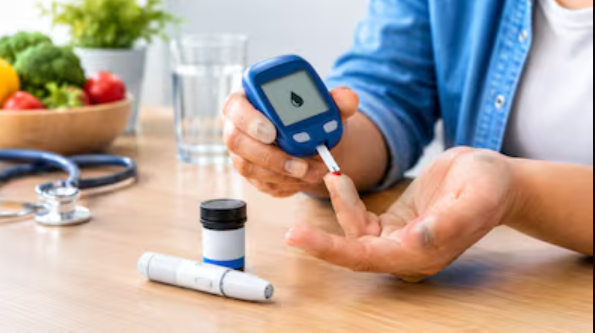
- Blood Glucose Monitoring: Recommends regular monitoring through clinical blood tests measuring average glucose levels over the preceding few months, finger-prick tests or Continuous Glucose Monitoring (CGM) devices using sensors worn on the skin.
- Urine glucose testing may be considered where blood glucose testing is unavailable.
- Insulin Delivery and Individualised Management: Addresses appropriate insulin regimens and delivery methods, with treatment adjusted according to individual requirements, blood glucose levels and available healthcare resources.
- Access to Essential Diabetes Care: Emphasises affordable and uninterrupted access to insulin and glucose-monitoring equipment, particularly in resource-limited settings and during emergencies or humanitarian crises when healthcare services may be disrupted.
- Implementation and Patient Participation: WHO will provide practical tools and guidance to help countries implement the recommendations and monitor progress.
- It also encourages involving people with Type 1 diabetes in designing, implementing and evaluating diabetes programmes.
About Diabetes
- Diabetes mellitus is a chronic metabolic disease characterised by high blood glucose (hyperglycaemia), occurring when the pancreas does not produce enough insulin or the body cannot effectively use the insulin it produces.
- Types of Diabetes:
- Type 1 Diabetes
- Type 2 Diabetes
- Gestational Diabetes: Hyperglycaemia that develops during pregnancy, with blood glucose levels above normal but below the threshold for diagnosing diabetes.
- Other Specific Types: Include:
- Monogenic Diabetes: Caused by a single gene defect affecting insulin secretion, such as Maturity-Onset Diabetes of the Young (MODY) and Neonatal Diabetes Mellitus (NDM).
- Pancreatic Diabetes: Caused by diseases of the pancreas, such as Fibrocalculous Pancreatic Diabetes (FCPD).
- Mitochondrial Diabetes: A genetic form associated with mitochondrial DNA mutations, often characterised by maternally inherited diabetes and hearing impairment.
- Other causes: Endocrine disorders, infections, genetic syndromes and certain medications.
About Type 1 Diabetes
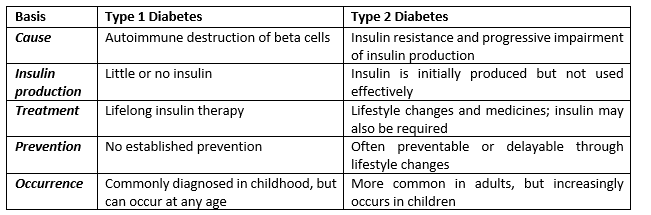
- Type 1 diabetes mellitus (T1DM) is a chronic autoimmune disease in which the immune system destroys insulin-producing beta cells of the pancreas.
- This results in little or no insulin production, causing elevated blood glucose (hyperglycaemia).
- People with Type 1 diabetes require lifelong insulin therapy to survive.
- Causes and Risk Factors:
- Autoimmune response: The immune system mistakenly attacks insulin-producing beta cells.
- Genetic susceptibility: Certain genetic factors, particularly Human Leukocyte Antigen (HLA) genes, increase the risk.
- Environmental factors: Certain viral infections and other environmental factors may contribute to disease development, although the exact causes remain unclear.
- Symptoms: Common symptoms include increased thirst (polydipsia), frequent urination (polyuria), unexplained weight loss, persistent fatigue and blurred vision.
- Diagnosis: Diagnosis involves assessing clinical symptoms and measuring blood glucose levels through tests such as Fasting Plasma Glucose (FPG), Oral Glucose Tolerance Test (OGTT) and Glycated Haemoglobin (HbA1c).
- Diabetes-specific autoantibody tests and C-peptide measurements may help distinguish Type 1 diabetes from other forms of diabetes.
Type 1 Diabetes vs Type 2 Diabetes
Global Burden of Diabetes
- Around 9.5 million people were living with Type 1 diabetes globally in 2025.
- Approximately 5 lakh new cases were diagnosed in 2025.
- In 2022, around 830 million people were living with diabetes worldwide, predominantly Type 2 diabetes.
- More than 40% of people with diabetes were unaware of their condition and remained undiagnosed.
Related WHO Initiatives
- Global Diabetes Compact (2021): Launched by WHO to improve diabetes prevention, diagnosis and treatment, particularly in low- and middle-income countries.
- Global Diabetes Coverage Targets (2022): The World Health Assembly endorsed five global diabetes coverage targets to be achieved by 2030.
- World Diabetes Day: Observed on 14 November every year to raise awareness about diabetes. The 2026 theme is Early Action on Diabetes.