

Sri Aurobindo’s Birth Anniversary
Context: Prime Minister Narendra Modi paid tribute to Sri Aurobindo on his birth anniversary on 15 August 2026, recalling his contribution to India’s freedom struggle, philosophy and human progress.
About Sri Aurobindo
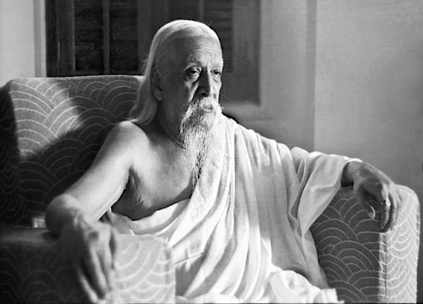
- Sri Aurobindo Ghose (1872–1950) was a philosopher, nationalist, poet and spiritual thinker who played an important role in India’s freedom movement.
- Born in Calcutta on 15 August 1872, he was educated in England at St. Paul’s School, London, and King’s College, Cambridge.
- After returning to India in 1893, he served in Baroda State and worked as a professor at Baroda College.
- Following the Partition of Bengal in 1905, he moved to Calcutta in 1906 and became a prominent nationalist leader.
- Through Bande Mataram and other writings, he advocated complete independence from British rule.
- He was imprisoned during the Alipore Bomb Case in 1908 but was released for lack of evidence.
Legacy of Sri Aurobindo
- Sri Aurobindo gradually shifted from active politics towards spirituality.
- In 1910, he moved to Pondicherry and devoted himself to spiritual practice, developing the philosophy of Integral Yoga, which sought not merely individual liberation but the transformation of human consciousness and nature.
- In 1926, he founded the Sri Aurobindo Ashram with his spiritual collaborator, Mirra Alfassa, known as “The Mother”.
- His major works include The Life Divine, The Synthesis of Yoga, Savitri, Essays on the Gita and The Human Cycle.
- His ideas on nationalism, spirituality, human evolution and transformation continue to influence intellectual and spiritual thought worldwide.
Voyager 2 Mission
Context: NASA has implemented a power-saving modification on Voyager 2, allowing its scientific mission to continue for at least another year despite the spacecraft’s declining power supply.
More on the News
- Power-saving upgrade: NASA engineers carried out a modification that reduces Voyager 2’s power consumption while keeping its key scientific operations running.
- Science instruments preserved: The intervention allows three instruments — Cosmic Ray Subsystem, Magnetometer and Plasma Wave Subsystem — to continue collecting data.
- Why needed: Voyager 2’s radioisotope thermoelectric generator (RTG) gradually produces less electricity as its plutonium fuel decays. NASA has therefore been progressively switching off non-essential systems.
- Mission extension: The modification is expected to provide at least one additional year of science operations, extending the spacecraft’s ability to study the interstellar environment.
About Voyager 2
- Launch: Voyager 2 was launched on 20 August 1977 and conducted flybys of Jupiter, Saturn, Uranus and Neptune.
- Unique achievement: It remains the only spacecraft to have visited Uranus and Neptune.
- Interstellar mission: Voyager 2 crossed the heliopause in November 2018 and entered interstellar space.
- Power source: It uses an RTG, which generates electricity from the heat released by radioactive decay.
Significance of Voyager 2
- Outer Solar System: It provided humanity’s only close-up observations of Uranus and Neptune, transforming understanding of these ice giants.
- Interstellar science: Its instruments provide direct measurements of magnetic fields, charged particles and plasma waves beyond the heliosphere.
- Scientific legacy: Continued observations from beyond the heliopause provide a rare opportunity to study the boundary between the Sun’s influence and the interstellar medium.
India Leases MQ-9B Sea Guardian
Context: The Ministry of Defence signed a ₹1,943-crore contract with General Atomics Aeronautical Systems Inc. (GA-ASI) to lease two MQ-9B Sea Guardian High-Altitude Long-Endurance (HALE) Remotely Piloted Aircraft Systems (RPAS) for the Indian Navy for 30 months.
About the MQ-9B Sea Guardian
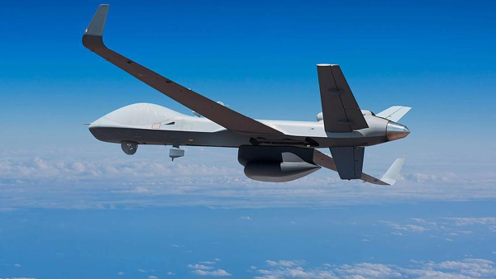
- The MQ-9B Sea Guardian is a maritime-focused High-Altitude Long-Endurance (HALE) Remotely Piloted Aircraft System (RPAS) designed for persistent Intelligence, Surveillance and Reconnaissance (ISR) and Maritime Domain Awareness.
- It can remain airborne for 40+ hours, enabling long-duration surveillance over vast maritime areas.
- It is equipped with advanced systems, including Lynx Multi-mode Radar, electro-optical/infrared sensors and sophisticated payloads.
- Its SeaGuardian mission kit can support anti-surface warfare, anti-submarine warfare and airborne mine countermeasures.
- Its open architecture allows integration of systems such as the Sonobuoy Management and Control System and Sonobuoy Dispenser System, supporting submarine tracking.
- It features automatic take-off and landing, satellite-based over-the-horizon operations and a Detect and Avoid System, enabling integration into civil airspace.
Significance
- Enhanced Maritime Domain Awareness: Strengthens the Indian Navy’s ability to monitor vast maritime areas through persistent ISR coverage.
- Indian Ocean Region: Enhances India’s ability to monitor maritime developments and respond to emerging security challenges.
- Capability Continuity: Helps ensure uninterrupted long-range surveillance capability as the earlier leased platforms approach the end of their lease.
- Bridge to Permanent Induction: Provides continuity until deliveries begin of the 31 MQ-9B SkyGuardian and SeaGuardian systems contracted by India in 2024.
- Indo-Pacific Security: Strengthens India–U.S. defence cooperation and contributes to the shared objective of a free, open and secure Indo-Pacific.
Indian Pharmacopoeia Commission (IPC) Recognized by WHO SEARN
Context: The Indian Pharmacopoeia Commission (IPC) has been recognised by the WHO South-East Asia Regulatory Network (SEARN) as a Regional Centre of Excellence in Pharmacovigilance and a Technical Centre in Quality of Medicines.
More on the News
- Dual recognition: The recognition acknowledges IPC’s expertise in medicine safety monitoring and quality standards for medicines.
- Regional role: As a Centre of Excellence, IPC will contribute to capacity building, knowledge sharing and regulatory strengthening across the WHO South-East Asia Region.
- IPC’s contribution: Its work showcased to SEARN included the Indian Pharmacopoeia (IP), Indian Pharmacopoeia Reference Substances (IPRS), Impurity Reference Standards (IMPRS), Pharmacovigilance Programme of India (PvPI) and Materiovigilance Programme of India (MvPI).
- Significance for India: The recognition strengthens India’s role in regional pharmaceutical regulatory cooperation and highlights its expertise in medicine quality and pharmacovigilance.
About Indian Pharmacopoeia Commission (IPC)
- Institutional status: IPC is an autonomous institution under the Ministry of Health & Family Welfare, Government of India.
- Indian Pharmacopoeia: It develops and publishes the Indian Pharmacopoeia, the official book of standards for the identity, purity and strength of medicines in India. The 10th edition, IP 2026, was released in 2026.
- Pharmacovigilance: IPC hosts the National Coordination Centre–Pharmacovigilance Programme of India (NCC-PvPI), which coordinates India’s system for monitoring adverse drug reactions and medicine safety.
- Reference standards: IPC develops Indian Pharmacopoeia Reference Substances (IPRS) and Impurity Reference Standards (IMPRS) to support testing and quality control of medicines.
About South-East Asia Regulatory Network (SEARN)
- Established in 2016: The South-East Asia Regulatory Network (SEARN) is a collaborative, Member-State-led platform established by WHO South-East Asia Regional Office (SEARO) to strengthen regulatory systems in the region.
- Core functions: It facilitates regulatory cooperation, information and knowledge sharing, capacity building, regulatory convergence and reliance among National Regulatory Authorities (NRAs).
- Secretariat: WHO SEARO serves as the secretariat of SEARN; SEARO itself is headquartered in New Delhi, India.
New Security Rules for Renewable Energy Projects Near Borders
Context: The Ministry of Home Affairs (MHA) has issued guidelines for national security clearance of solar, wind and hybrid renewable-energy projects in border areas, balancing renewable-energy development with national-security considerations.
Key Highlights of the Guidelines
- 1-km restricted zone: No new solar, wind or hybrid renewable-energy project is permitted within 1 km of the International Border (IB), Line of Control (LoC) or Line of Actual Control (LAC).
- Security-clearance zone: Projects proposed within 1–50 km of the IB, LoC or LAC require MHA security clearance.
- Projects within 1–20 km of the IB additionally require a No-Objection Certificate (NOC) from the Ministry of Defence (MoD).
- Height restrictions: Civil infrastructure for project maintenance and operation is capped at 3 m within 1–8 km, 5 m within 8–20 km and 15 m within 20–50 km of the border.
- Security safeguards: Projects must provide comprehensive security measures, including anti-drone systems, and a dedicated police post for monitoring construction and operations. The project proponent bears the cost of such security equipment.
- Foreign personnel: Engineers, staff, employees and labour from countries sharing a land border with India require Central Government permission for project implementation.
- Application and clearances: Applications are submitted through the Ministry of New and Renewable Energy (MNRE), which coordinates the security-clearance process with MHA and MoD.
Why Are Renewable-Energy Projects Near Borders Sensitive?
- Surveillance and visibility: Large renewable-energy installations, particularly wind turbines and associated infrastructure, can affect the surveillance environment and visibility in strategically sensitive border zones.
- Impact on border operations: Construction, access roads and associated infrastructure may interfere with movement, patrolling and operational requirements of security forces near the border.
- Protection of critical infrastructure: Power-generation and transmission assets located close to sensitive borders can become strategically important infrastructure, requiring enhanced protection against security threats.
Significance of the Guidelines
- Security–energy balance: They seek to balance renewable-energy expansion with national-security requirements.
- Regulatory clarity: Uniform security parameters provide greater predictability for project developers in border regions.
- Integrated planning: The guidelines bring security considerations into renewable-energy and infrastructure planning.
Indian Physicist Deepak Dhar Wins 2026 Dirac Medal
Context: Indian theoretical physicist Deepak Dhar has been awarded the 2026 Dirac Medal by the Abdus Salam International Centre for Theoretical Physics (ICTP) for his seminal contributions to theoretical physics, particularly statistical mechanics.
More on the News
- Joint recipients: Dhar shares the 2026 Dirac Medal with Bernard Derrida, Marc Mézard and Haim Sompolinsky.
- Citation: The four scientists were recognised for pioneering contributions to equilibrium statistical mechanics and for extending its concepts and methods to non-equilibrium statistical mechanics, optimisation, theoretical neuroscience and artificial intelligence.
- Dhar’s contribution: His influential work on the Abelian sandpile model made major contributions to the understanding of self-organised criticality, where complex collective behaviour can emerge from simple local interactions.
- Rare distinction: Dhar becomes the 10th scientist to receive both the Dirac Medal and the Boltzmann Medal. He was also the first Indian recipient of the Boltzmann Medal in 2022.
About Deepak Dhar
- Research: His work spans statistical mechanics, stochastic processes, disordered systems and self-organised criticality. His research has included exactly solvable models of self-organised criticality.
- Major recognitions: He received the Shanti Swarup Bhatnagar Prize in Physics (1991), TWAS Prize in Physics (2002), Boltzmann Medal (2022) and Padma Bhushan (2023).
About the Dirac Medal
- Awarding institution: The Dirac Medal is awarded annually by the ICTP, based in Trieste, Italy.
- Established: It was instituted in 1985 in honour of renowned theoretical physicist Paul Dirac.
- Purpose: It recognises scientists who have made significant contributions to theoretical physics.
DRI Dismantles Major Areca Nut Import Network Using Fraudulent SAFTA
Context: The Directorate of Revenue Intelligence (DRI) has dismantled a major network involved in importing South-East Asian areca nuts into India by falsely declaring them as Bangladeshi origin and fraudulently availing concessional duty benefits under the South Asian Free Trade Area (SAFTA).
About the South Asian Free Trade Area (SAFTA)
- The South Asian Free Trade Area (SAFTA) is the free trade arrangement of the South Asian Association for Regional Cooperation (SAARC).
- The agreement came into force in 2006, succeeding the 1993 SAARC Preferential Trading Arrangement.
- SAFTA signatory countries are Afghanistan, Bangladesh, Bhutan, India, Maldives, Nepal, Pakistan and Sri Lanka.
- SAFTA recognizes the need for special and differential treatment for Least Developed Countries (LDCs) in its preamble.
- LDCs benefit from smaller sensitive lists in some of the SAFTA members and less stringent rules of origin.
- LDCs were allowed smaller initial tariff reductions and longer implementation periods under trade liberalization programmes.
About the Areca Nut
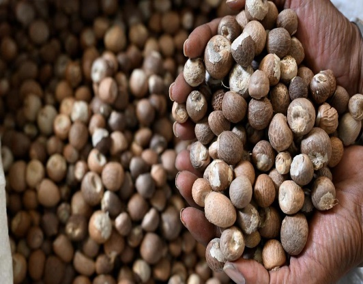
- Areca nut is the fruit of the Areca catechu palm tree, mainly grown in South-East Asia and Pacific islands.
- It is chewed in various forms, including plain supari, sweet supari, pan masala and gutkha.
- The International Agency for Research on Cancer (IARC) in 2004 classified areca nut as a Group I carcinogen, and its consumption is associated with oral submucous fibrosis and oral cancer.
India-Thailand Joint Military Exercise MAITREE-XV 2026
Context: The Indian Army contingent departed for Thailand to participate in the15th edition of the India-Thailand Joint Military Exercise MAITREE-XV (2026)from18 to 31 August 2026.
About MAITREE-XV
- The exercise will be conducted at Vibhavadi Rangsit Camp, Surat Thani, Thailand.
- The company-level exercise will focus on joint counter-insurgency and counter-terrorist operations in jungle and semi-urban environments under Chapter VII of the United Nations Charter.
- Training will include field exercises, combat discussions, lectures, demonstrations and a culminating validation exercise.
- Instituted in 2006, MAITREE aims to enhance military cooperation, interoperability, mutual understanding and camaraderie between the two Armies.
- The previous edition was held at Umroi, Meghalaya, in September 2025.