

DRDO Successfully Tests Indigenous Long Range Land Attack Cruise Missile (LRLACM)
Context: The Defence Research and Development Organisation (DRDO) successfully flight-tested the indigenously developed Long Range Land Attack Cruise Missile (LRLACM) from Dr APJ Abdul Kalam Island, Odisha.
About the Long-Range Land Attack Cruise Missile (LRLACM)
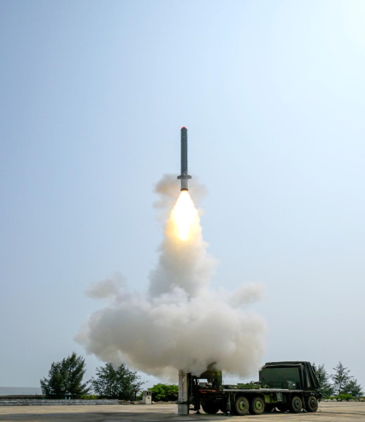
- The Long-Range Land Attack Cruise Missile (LRLACM) is an indigenously developed long-range precision strike cruise missile designed to attack land-based targets with high accuracy.
- It has been developed by the Defence Research and Development Organisation (DRDO) with active participation of Indian industry partners under the vision of Aatmanirbhar Bharat.
- The Aeronautical Development Establishment (ADE), Bengaluru, serves as the nodal laboratory for the programme.
- The missile’s critical subsystems have been developed by various DRDO laboratories and Indian defence industries.
- Performance of the missile was monitored and validated through tracking instruments deployed by the Integrated Test Range (ITR), Chandipur.
- During the test, all mission objectives were successfully achieved, validating critical technologies associated with long-range precision strike capabilities.
- The successful test demonstrated the missile’s operational effectiveness and reliability.
- The missile is expected to significantly enhance India’s indigenous long-range precision strike capability and strategic deterrence.
Joint UNESCO Nominations among BRICS Nations
Context: BRICS countries are exploring joint nominations for UNESCO heritage lists to accelerate the safeguarding and recognition of their shared civilisational heritage.
More on the News
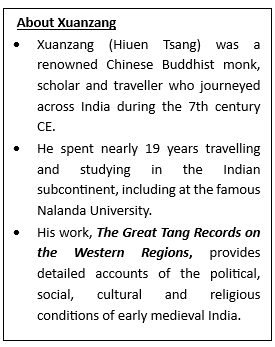
- During the recent BRICS Culture Working Group meetings held under India’s chairmanship, member countries discussed collaborative nominations under UNESCO’s heritage mechanisms.
- As part of this initiative, India and China are in advanced discussions regarding a joint nomination of The Great Tang Records on the Western Regions.
- The proposal, led by China and supported by India, is currently under consideration by the Ministry of External Affairs.
- The idea behind joint nominations is to overcome UNESCO’s limitation that allows each country to submit only two dossiers during a two-year nomination cycle.
- Since there is no restriction on the number of countries participating in a joint nomination, such collaborations can help preserve and promote shared cultural traditions more effectively.
- BRICS countries also discussed coordinating nominations to avoid competing claims over similar heritage elements.
- India is additionally exploring joint nominations of the Panchatantra with Iran and the philosophy of Satyagraha with South Africa.
Kishau Multipurpose Dam Project
Context: The Union Home Minister chaired a meeting in New Delhi where six states reached a consensus on the long-pending Kishau Multipurpose Dam Project, paving the way for its implementation and contributing to the rejuvenation of the Yamuna River.
More on the News
- Himachal Pradesh, Uttarakhand, Delhi, Uttar Pradesh, Haryana, and Rajasthan agreed to sign a Memorandum of Understanding (MoU) for the implementation of the project.
- After the signing of the MoU, the proposal will be placed before the Union Cabinet for approval.
- It was decided that 90% of the water component cost will be provided by the Central Government as Central Assistance, while the remaining 10% will be shared among the six participating states.
About the Kishau Multipurpose Dam Project
- Proposed on the Tons River, the largest tributary of the Yamuna, along the Himachal Pradesh–Uttarakhand border.
- The project site is located in the Sirmaur district of Himachal Pradesh and near Dakpathar in Uttarakhand.
- Estimated project cost: approximately ₹11,500 crore.
- Installed hydropower capacity: 660 MW (4 × 165 MW).
- Intended benefits include hydropower generation, irrigation, drinking water supply, flood moderation, and augmentation of the Yamuna River flows.
- A Joint Venture MoU between Himachal Pradesh and Uttarakhand was signed on 20 June 2015.
- Once operational, the project is expected to provide substantial water benefits to northern states and generate revenue through hydropower production.
Govt to set up 700 SHE-MARTs, 1,000 district fulfilment centres to boost ‘Lakhpati Didis’
Context: The Government has announced plans to establish 700 SHE-MARTs and 1,000 District Fulfilment Centres to strengthen market access for products made by women Self-Help Groups (SHGs).
More on the News
- The initiative aims to support the Government’s vision of creating 6 crore Lakhpati Didis under the Deendayal Antyodaya Yojana–National Rural Livelihoods Mission (DAY-NRLM).
- The proposed SHE-MARTs, District Fulfilment Centres, and Centres of Excellence will provide marketing, logistics, branding, training, and enterprise-support infrastructure for women-led enterprises.
- The government is also working towards strengthening State-Level Federations, expanding the e-SARAS platform, promoting SHG products through ONDC, and creating a unified national marketing identity under “Saras Aajeevika”.
- The initiative seeks to help SHG members transition from livelihood activities to sustainable and professionally managed enterprises.
About SHE-MARTs and Lakhpati Didi
- What are SHE-MARTs?
- SHE-MART stands for Self Help Entrepreneur Mart.
- Announced in the Union Budget 2026–27, it is a Government of India initiative aimed at strengthening market access for products made by women-led SHGs.
- These are envisaged as structured, community-owned retail platforms where SHG products can be showcased and sold directly to consumers.
- The initiative seeks to move women from credit-linked livelihood activities to enterprise ownership and organised retail participation.
- Who is a Lakhpati Didi?
- A Lakhpati Didi is a member of a Self-Help Group whose household earns a sustainable annual income of at least ₹1 lakh through diversified livelihood activities.
- The Government has set a target of creating 6 crore Lakhpati Didis through SHG-led entrepreneurship, enterprise promotion, and market integration under DAY-NRLM.
IAF to Participate in Exercise Pitch Black 2026 in Australia
Context: The Indian Air Force (IAF) will participate in Exercise Pitch Black 2026, a major multinational air combat exercise hosted by Australia, reaffirming India’s growing defence engagement in the Indo-Pacific region.
More on the News
- Exercise Pitch Black 2026 will be held from 20 July to 7 August 2026 in Australia’s Northern Territory.
- The IAF contingent will include Su-30MKI fighter aircraft, IL-78 air-to-air refuelling aircraft, and C-17 Globemaster transport aircraft.
- It aims to enhance interoperability, coalition warfare capabilities, and operational cooperation through realistic combat-training scenarios, including complex air operations and night-flying missions.
About Exercise Pitch Black
- Exercise Pitch Black is a biennial multinational air warfare exercise hosted by the Royal Australian Air Force (RAAF).
- It was first conducted in 1981 and has evolved into one of the world’s largest and most sophisticated air combat training exercises.
- The name “Pitch Black” reflects the exercise’s traditional emphasis on night-time flying operations in the vast training areas of northern Australia.
- The exercise focuses on:
- Large Force Employment (LFE) missions,
- Offensive and Defensive Counter Air operations,
- Coalition and interoperability training among participating air forces.
- The IAF first participated in the exercise in 2018, reflecting the growing strategic partnership between India and Australia.