SYLLABUS
GS-3: Achievements of Indians in science & technology; indigenization of technology and developing new technology; Awareness in the fields of IT, Space.
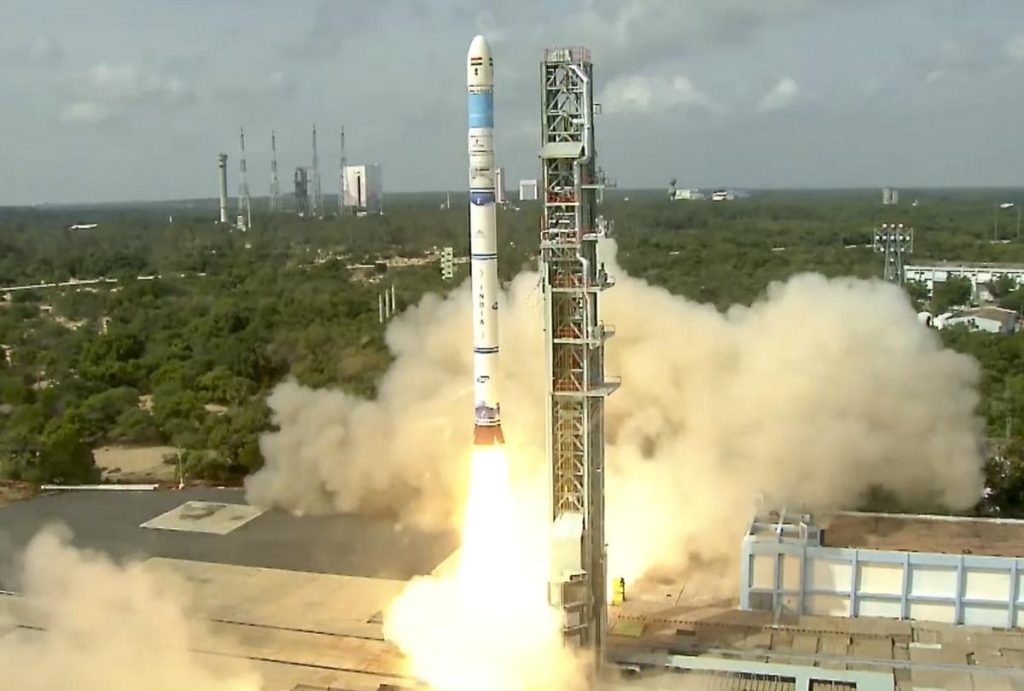
Context: ISRO successfully launched EOS-05, India’s first imaging satellite designed to operate from geosynchronous orbit, aboard GSLV-F17 on 4 September 2026.
More on the News
- Successful launch: GSLV-F17 lifted off from the Second Launch Pad at Satish Dhawan Space Centre, Sriharikota, at 2:55 AM IST and placed the 2,367-kg EOS-05 into Sub-Geosynchronous Transfer Orbit (Sub-GTO).
- Mission milestone: GSLV-F17 was the 19th GSLV flight and successfully carried the heaviest payload yet flown by the GSLV.
- Earth-observation milestone: EOS-05 is India’s first imaging satellite designed to operate from geosynchronous orbit, enabling frequent observation of large geographical areas.
- First successful mission of 2026: The launch marked ISRO’s first successful orbital mission of 2026, following the unsuccessful PSLV-C62/EOS-N1 mission in January 2026.
About EOS-05
- Identity: EOS-05, also known as GISAT-1A, is a state-of-the-art Earth-observation and geo-imaging satellite developed by ISRO.
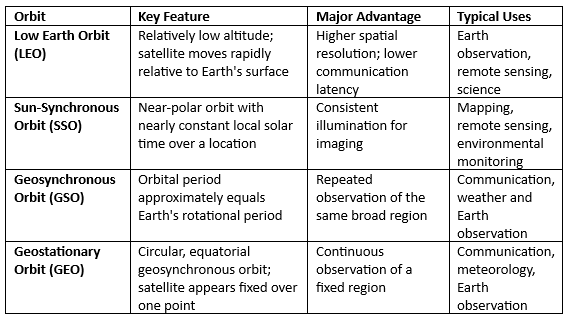
- Orbital innovation: It is India’s first imaging satellite designed for operation from geosynchronous orbit, around 36,000 km above Earth.
- Frequent imaging: Its high-altitude vantage point enables frequent/near-real-time imaging of large areas, reducing the revisit limitations associated with conventional low-Earth-orbit imaging satellites.
- Imaging capabilities: The satellite employs multispectral and hyperspectral imaging across different spectral bands, enabling the collection of richer information about land and environmental features.
- Applications: Its data will support agriculture, forestry, water resources, disaster management, environmental monitoring and strategic applications.
- Operational transition: GSLV-F17 injected EOS-05 into Sub-GTO; the satellite will subsequently use its onboard propulsion system to manoeuvre towards its intended operational geosynchronous orbit.
- Mission continuity: EOS-05 carries forward the geo-imaging objective of GISAT-1/EOS-03, which was lost during the failed GSLV-F10 mission in 2021.
About GSLV-F17
- Launcher: GSLV-F17 is the 19th flight of India’s Geosynchronous Satellite Launch Vehicle (GSLV).
- Three-stage configuration: It comprises a solid first stage, liquid second stage and cryogenic upper stage.
- Propulsion configuration: The mission used an S139 solid core with four L40H liquid strap-ons, a GL40HT liquid second stage and a CUS15 indigenous cryogenic upper stage.
- Payload milestone: At 2,367 kg, EOS-05 is the heaviest satellite carried by the GSLV to date.
- Mission performance: The launcher injected EOS-05 into Sub-GTO with an achieved apogee of about 31,000 km, higher than the nominal target of around 29,000 km.
- Payload fairing: GSLV-F17 used a 4-metre-diameter composite ogive payload fairing to protect the spacecraft during atmospheric flight.
Significance of the EOS-05 Mission
- High-frequency Earth observation: Geosynchronous imaging enables repeated observation of large geographical areas at short intervals, particularly valuable for monitoring rapidly changing events.
- Strengthens disaster management: Frequent imaging can support monitoring of cyclones, floods, cloudbursts, thunderstorms and other episodic events, improving preparedness and response.
- Expands developmental applications: Multispectral and hyperspectral observations can strengthen applications in agriculture, forestry, water-resource management, environmental monitoring and mapping/planning.
- Adds strategic observation capability: The ability to repeatedly observe the Indian landmass and surrounding regions from a geosynchronous vantage point can provide strategically useful Earth-observation data.
- Strengthens GSLV capability: Successfully placing the 2,367-kg spacecraft into Sub-GTO demonstrates improved GSLV performance and adds another successful mission using its indigenous cryogenic upper stage.
Understanding Different Satellite Orbits