

FIU-India Signs MoU with PFRDA and SEBI to Combat Money Laundering and Financial Crimes
Context: In a significant step towards strengthening India’s fight against money laundering and financial crimes, the Financial Intelligence Unit-India (FIU-IND) signed Memoranda of Understanding (MoUs) with the Pension Fund Regulatory and Development Authority (PFRDA) and Securities and Exchange Board of India (SEBI).
Key Highlights of MoUs
- The MoUs focus on real-time information sharing and intelligence exchange between FIU-IND and the two regulators to detect suspicious financial activities.
- The collaboration includes joint training and outreach programmes to enhance Anti-Money Laundering and Combating Financing of Terrorism (AML/CFT) capabilities.
- The initiative aims to strengthen India’s financial surveillance framework and combat money laundering and terror financing through enhanced inter-agency coordination.
About Financial Intelligence Unit-India (FIU-IND)
- Established in November 2004 under the Ministry of Finance, FIU-IND is the central national agency responsible for receiving, analysing, and disseminating information related to suspicious financial transactions.
- It plays a key role in combating money laundering and financing of terrorism by coordinating with domestic and international agencies.
- The unit also acts as a repository of financial intelligence and supports enforcement agencies in financial investigations.
About Pension Fund Regulatory and Development Authority (PFRDA)
- The PFRDA is a statutory body established under the PFRDA Act, 2013.
- It regulates and supervises the pension sector, including the National Pension System (NPS) and Atal Pension Yojana.
- It ensures the orderly growth of pension markets and protection of subscriber interests through a comprehensive regulatory framework.
About Securities and Exchange Board of India (SEBI)
- The SEBI is the statutory regulator of India’s securities market, established under the SEBI Act, 1992.
- It oversees market intermediaries, listed companies, and investor protection mechanisms.
- SEBI plays a critical role in ensuring the transparency, integrity, and orderly functioning of the securities market in India.
Government Expands Coverage of RELIEF Scheme
Context: In response to the ongoing West Asia crisis, which has disrupted shipping routes and increased freight and insurance costs, the Government of India has expanded the coverage of the RELIEF (Resilience & Logistics Intervention for Export Facilitation) scheme.
More on the News
- The government has expanded the list of eligible destinations under the scheme to include additional countries such as Egypt and Jordan, thereby widening its geographical coverage.
- The revised framework continues to cover both completed shipments during the disruption period and forward-looking exports, with special emphasis on Micro, Small and Medium Enterprises (MSMEs).
- In addition, exporters obtaining a fresh ECGC Whole Turnover Policy on or after 16 March 2026 shall also be eligible for support under Component II of the Scheme.
About RELIEF Scheme
- RELIEF (Resilience & Logistics Intervention for Export Facilitation) is a time-bound scheme launched in March 2026 under the Export Promotion Mission with an outlay of ₹497 crore.
- It is being implemented through the Export Credit Guarantee Corporation of India (ECGC), which provides enhanced insurance coverage and reimbursement support for eligible shipments to or through impacted West Asian countries.
- The scheme also offers partial reimbursement of elevated freight and insurance costs, particularly for MSME exporters.
- It aims to mitigate logistics disruptions, prevent order cancellations, and maintain India’s export competitiveness during geopolitical uncertainty.
India to Host BRICS & Quad Foreign Ministers’ Meetings (May 2026)
Context: India will host Foreign Ministers’ meetings of both BRICS and the Quadrilateral Security Dialogue (Quad) in May 2026 amid escalating West Asia tensions and shifting global geopolitics.
More on the News
- The BRICS Foreign Ministers’ meeting will mark the first direct interaction between Iran and the UAE since the escalation of conflict following the February 28, 2026, U.S.-Israel strikes on Iran, highlighting rising tensions within the grouping.
- The meeting is particularly significant as Iran, UAE, and Saudi Arabia—inducted during the 2023 Johannesburg Summit of BRICS—are now directly involved in the ongoing West Asian conflict.
- The BRICS Summit is scheduled from September 7–11, 2026, with leaders expected to participate during September 9–11, indicating India’s continued central role as chair.
- The Quad Leaders’ Summit remains uncertain, largely dependent on the schedule of U.S. President Donald Trump, especially in view of the upcoming U.S. mid-term elections.
About BRICS
- The term “BRIC” (Brazil, Russia, India, China) was first coined by Goldman Sachs economist Jim O’Neill in 2001.
- The BRIC was formally established in 2009.
- The first official BRIC (Brazil, Russia, India, and China) summit was held in Russia’s Yekaterinburg in 2009, and South Africa joined the group in 2010.
- At the 2023 BRICS summit in South Africa, BRICS announced the admission of 6 countries, namely Saudi Arabia, Iran, the United Arab Emirates, Egypt, Ethiopia, and Argentina.
- Saudi Arabia has yet to convey its decision to BRICS about formal acceptance of its joining while Argentina (under its new President) announced not to join the organization.
- Indonesia joined BRICS as a full member on January 6, 2025.
- Due to this expansion, the grouping is often referred to as BRICS+.
- Current Members: Brazil, Russia, India, China, South Africa, Egypt, Ethiopia, Iran, United Arab Emirates, and Indonesia.
About the Quad (Quadrilateral Security Dialogue)
- The Quad is an informal security grouping of Australia, India, Japan, and the United States, first formed in 2007, became inactive in 2008, and revived in 2017.
- It aims to promote a free, open, and inclusive Indo-Pacific and is often viewed as a response to China’s growing regional influence.
- The grouping originated from cooperation during the 2004 Indian Ocean tsunami and evolved into a strategic dialogue through initiatives like the Malabar Exercise.
- Today, the Quad functions as a flexible “minilateral” platform with no formal structure, cooperating on security, climate change, technology, and other global challenges.
F414 fighter jet engine
Context: Recently,India and the United States have reached a major milestone as GE Aerospace and Hindustan Aeronautics Limited conclude technical talks for co-producing F414 fighter jet engines in India.
More on the News
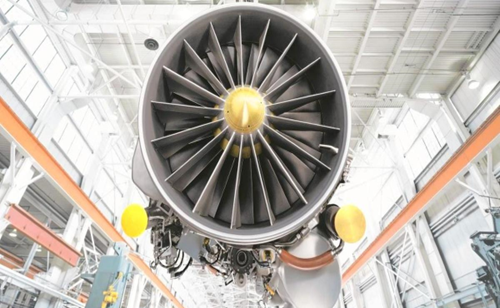
- The two sides have finalised technical negotiations, paving the way for a commercial contract to be signed, with production expected to begin within two years.
- The deal involves an unprecedented transfer of advanced aero-engine manufacturing technology—reportedly up to ~80%—marking a first-of-its-kind cooperation from the U.S. to India.
- The engines will power India’s next-generation fighters, including the HAL Tejas Mk-2 and initial variants of the Advanced Medium Combat Aircraft.
- Additionally, a domestic MRO facility for F404 engines will be set up in India to support the HAL Tejas Mk-1A fleet, reducing dependence on foreign repair pipelines.
About F414 Jet Engine
- The F414-GE-400 is an afterburning turbofan engine developed by GE Aerospace and is an advanced evolution of the F404 engine used in earlier fighters.
- It generates ~98 kN thrust with afterburner, with a thrust-to-weight ratio of ~9:1and a pressure ratio of ~30:1, reflecting high efficiency and power density.
- The engine incorporates FADEC (Full Authority Digital Electronic Control), which enables precise digital control, improved fuel efficiency, and reduced pilot workload.
- It uses advanced materials, thermal coatings, and cooling technologies, significantly enhancing durability, component life, and high-temperature performance.
- A key feature is its modular design, allowing easier maintenance, quicker replacement of parts, and lower lifecycle costs—crucial for operational readiness.
- The engine is combat-proven, powering aircraft like the Boeing F/A-18 Super Hornet and EA-18G Growler, and has been in service with the U.S. Navy for decades.
- It supports multi-role operations, improving aircraft capabilities in terms of range, payload, survivability, and mission flexibility.
- The Enhanced Durability Engine (EDE) upgrade offers up to ~20% higher thrust or improved fuel efficiency, along with reduced maintenance costs.
Global Wildlife Trade and Zoonotic Disease Risk
Context: A recent study published in Science highlights that global wildlife trade—both legal and illegal—is accelerating Zoonotic Spillover (transmission of pathogens from animals to humans), raising concerns about future epidemics and pandemics.
Key Findings
- Elevated Risk: Traded mammals are 1.5 times more likely (~50% higher probability) to share pathogens (virus, bacteria, fungi, parasites) with humans.
- Strong Evidence Base: Analysis of 2,000+ mammal species and 40 years of global trade data (1980–2019)shows 41% of traded species vs 6.4% of non-traded share at least one pathogen.
- Time in Trade Matters: Each 10 years in trade adds one additional shared pathogen, indicating cumulative zoonotic risk.
- Live & Illegal Trade Hotspots:
- Live-animal markets → 1.34–1.5× higher pathogen exchange.
- Illegal trade → ~1.4× higher pathogen sharing.
- Supply Chain Amplification: Hunting, breeding, transport, storage, and sale create multiple human–animal contact points, increasing transmission probability.
- Scale of Impact: Wildlife trade involves ~25% of all mammal species globally, expanding the pool of potential zoonotic hosts.
- Additional Drivers:
- Synanthropy (species adapting to human environments)
- Wild meat consumption (secondary but linked factor)
- Historical Linkages: Outbreaks such as HIV/AIDS, Ebola virus disease, Mpox, and COVID-19 are associated with wildlife-human interfaces.
- Governance Gap: The Convention on International Trade in Endangered Species of Wild Fauna and Flora focuses on conservation, not zoonotic disease risk.
Tibetan Antelope
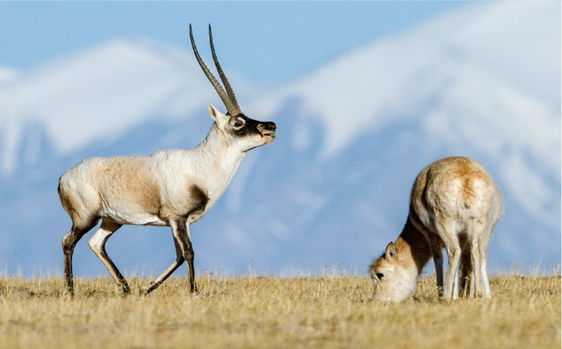
Context: In a landmark ruling for wildlife law enforcement in India, a New Delhi court has convicted a Jaipur art gallery owner for attempting to illegally export Shahtoosh shawls, made from the hair of the critically endangered Tibetan Antelope, in violation of the Wildlife Protection Act, 1972.
More on the News
- The Court delivered the verdict, concluding a 17-year-long case that began with the seizure of 1,290 shawls at Indira Gandhi International Airport in 2008.
- The case is notable as the first wildlife crime prosecuted through the Central Bureau of Investigation, based on a complaint by the Wildlife Crime Control Bureau.
About the Tibetan Antelope (Pantholops hodgsonii)
- Taxonomy & Identity:
- Scientific name: Pantholops hodgsonii
- Common name: Chiru (Tibetan Antelope)
- Native to the high-altitude Qinghai-Xizang Plateau.
- Key Features: Possesses extremely fine underfur (Shahtoosh), one of the lightest and warmest natural fibres.
- Males have long, upright horns (up to ~60 cm).
- Adapted to extreme cold environments (temperatures below –40°C).
- Habitat & Distribution: Found in alpine steppe and meadow regions at elevations of 3,250–5,500 m.
- Major stronghold: Chang Tang region of northwestern Tibet.
- Highly migratory, travelling up to 400 km seasonally.
- Ecology & Behaviour: Herbivorous grazer feeding on grasses and shrubs.
- Plays a key ecological role in nutrient cycling and supports predators like snow leopards and wolves.
- Females migrate to specific birthing grounds; calves can stand within minutes of birth.
- Conservation Status & Threats:
- Schedule I of the Wildlife Protection Act, 1972.
- International ban under CITES (since 1975).
- Currently listed as Near Threatened (recovering but still vulnerable).
- Major threats: illegal wildlife trade, habitat loss, infrastructure expansion, and climate change.
AI Governance and Economic Group (AIGEG)
Context: The Ministry of Electronics and Information Technology (MeitY) has constituted the AI Governance and Economic Group (AIGEG) as a high-level inter-ministerial body to serve as India’s central institutional mechanism for Artificial Intelligence (AI) governance.
More on the News
- The move gives formal effect to recommendations made in India’s AI Governance Guidelines and the Economic Survey.
- Both emphasised the need for a coordinated, whole-of-government approach to AI governance.
- The Economic Survey highlighted the necessity of aligning AI deployment with labour market realities and social stability.
About the AI Governance and Economic Group (AIGEG)
- The AIGEG is designed as the apex inter-ministerial body within India’s AI governance framework.
- It is the apex inter-ministerial body for AI governance in India, constituted by the Ministry of Electronics and Information Technology (MeitY).
- It serves as the central institutional mechanism for AI policy coordination.
- It aims to ensure a whole-of-government approach, aligning ministries, regulators, and advisory bodies under a coherent national AI strategy.
- Leadership and Composition
- Chairperson: Union Minister for Electronics & IT, Railways, and Information & Broadcasting.
- Vice-Chairperson: Minister of State for Electronics & IT and Commerce & Industry.
- Membership includes senior representatives from government sectors such as policy development, science & technology, security, and economic affairs.
- It functions as the central coordinating authority for cross-sectoral AI governance and plays a key role in shaping India’s AI strategy.
- The group is supported by a Technology and Policy Expert Committee (TPEC), which provides expert inputs on global trends, emerging technologies, risks, and regulatory frameworks.
Terms of Reference (ToR) of AIGEG
- Policy Coordination: Harmonise AI policies across ministries and regulators while overseeing cross-sectoral governance issues.
- Regulatory Oversight: Ensure compliance with laws and identify regulatory gaps with suggestions for legal reforms.
- Responsible AI Promotion: Encourage ethical AI innovation and support its deployment in key sectors.
- Risk & Strategy: Assess emerging AI risks and shape India’s global AI governance position.
- Labour & Economic Impact: Anticipate job disruptions due to AI and design mitigation and transition strategies considering informality and regional diversity.
- Deployment Roadmap: Develop a 10-year AI roadmap with industry, analysing job impact, geography, and automation levels.
- Use-case Classification: Categorise AI applications as deploy, pilot, or defer based on data readiness, skills, legal frameworks, and labour adjustment capacity.