
SYLLABUS
GS-2: Bilateral, regional and global groupings and agreements involving India and/or affecting India’s interests.
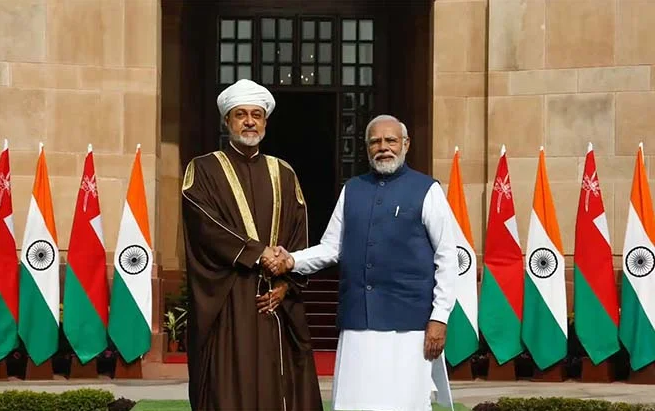
Context: Recently, India’s External Affairs Minister met his counterpart in Muscat, Oman and reviewed the full spectrum of the India–Oman Strategic Partnership and exchanged views on regional and global issues of mutual interest.
More on the News
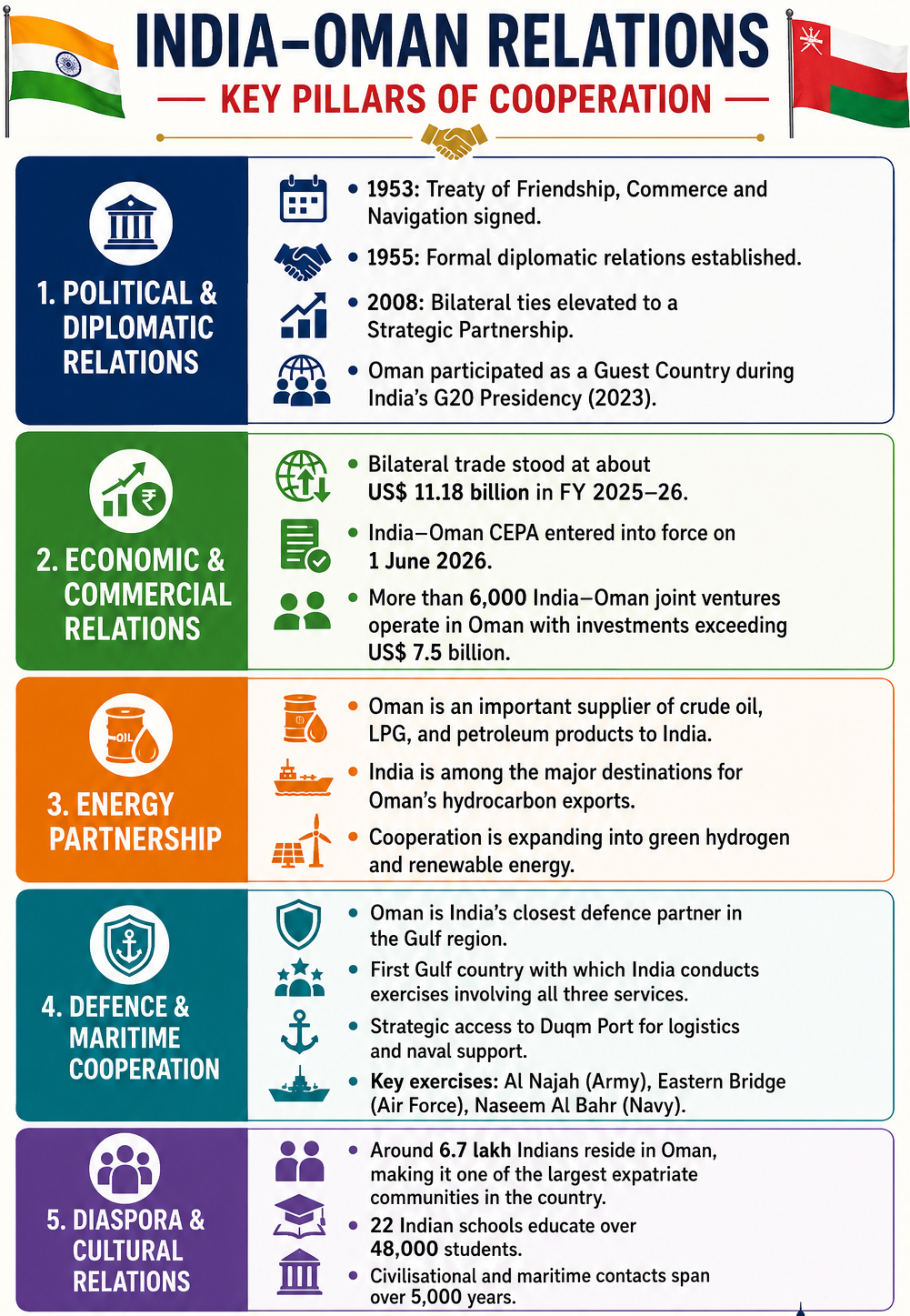
• Both sides reviewed progress in implementing the India–Oman Comprehensive Economic Partnership Agreement (CEPA), which entered into force on 1 June 2026.
• The visit reaffirmed the commitment of both countries to further strengthen the India–Oman Strategic Partnership amid evolving regional and global challenges.
Strategic Significance and Emerging Areas of Cooperation
• Strategic Maritime Partner
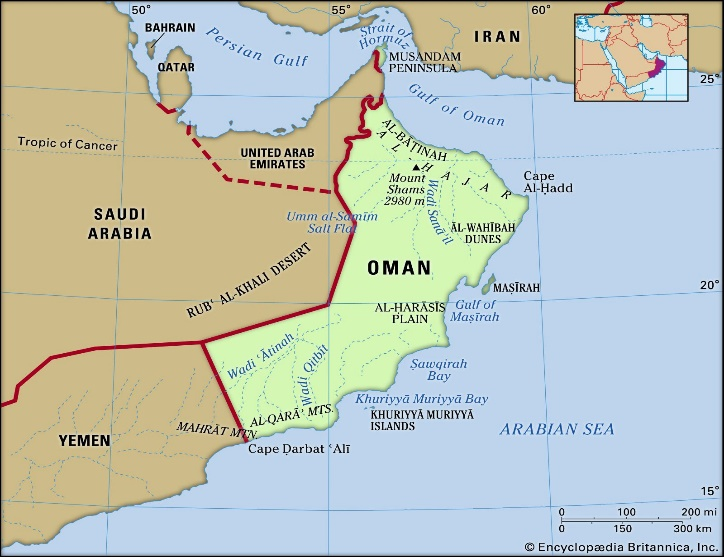
- Oman is located at the entrance of the Strait of Hormuz, a critical maritime chokepoint through which a significant share of global oil trade passes.
- Access to Duqm Port enhances India’s operational reach in the Western Indian Ocean and supports its SAGAR/MAHASAGAR vision.
• Economic Gateway to the Gulf
- The CEPA provides a framework for expanding trade, investments, services, and supply-chain integration.
- Oman serves as a gateway to GCC, West Asian, and East African markets through major ports such as Duqm, Sohar, and Salalah.
• Reliable Energy and Supply-Chain Partner
- Oman contributes significantly to India’s energy security through long-term hydrocarbon supplies.
- Cooperation is expanding into green hydrogen, clean energy technologies, and energy-transition initiatives.
• Future-Oriented Partnership
- Growing collaboration in digital payments, fintech, logistics, space, cybersecurity, and emerging technologies.
- Both countries are exploring synergies between Viksit Bharat 2047 and Oman Vision 2040 for sustainable and innovation-driven growth.
Challenges and Areas of Concern
• Trade and Investment Below Potential: Despite strong economic ties and the operationalisation of CEPA, bilateral trade and investments remain below their full potential.
• Regional Geopolitical Instability: Tensions in West Asia and disruptions in key maritime corridors can affect trade, shipping, and energy supplies.
• Competition from Other Major Powers: Expanding economic and infrastructure engagement by countries such as China has intensified strategic competition in the Gulf region.
• Energy Transition Uncertainties: As both countries diversify their economies and move towards cleaner energy systems, adapting the traditional hydrocarbon-based partnership to new energy realities will be crucial.
Way Forward
• Maximise Gains from CEPA: Facilitate greater utilisation of CEPA provisions by exporters, MSMEs, startups, and service providers.
• Strengthen Maritime and Defence Cooperation: Expand collaboration in maritime domain awareness, naval logistics, defence manufacturing, and Indian Ocean security.
• Leverage Connectivity and Logistics Networks: Integrate Indian businesses with Oman’s ports, logistics corridors, and supply chains to access wider GCC, West Asian, and East African markets.
• Institutionalise Vision 2040–Viksit Bharat 2047 Synergies: Align long-term development priorities in logistics, manufacturing, clean energy, innovation, and the digital economy.