

New Blue-Spotted Damselfly Discovered in the Andaman Islands
Context: Scientists from the Zoological Survey of India and the University of Madras have discovered a new species of damselfly, Mortonagrion santha, in the Andaman Islands.
More on the News
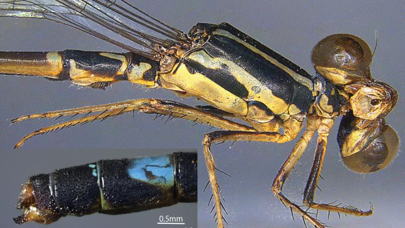
- The species was discovered in Dasarathpur, Rangat Tehsil in the Andaman and Nicobar Islands.
- It was first observed in 2017 and subsequently confirmed through specimen collections in 2019.
- The species is named after Indian entomologist P. Santhakumar.
About Mortonagrion santha
- Belongs to the genus Mortonagrion, comprising small and secretive damselflies inhabiting freshwater wetlands and vegetated habitats.
- It differs from its closest known relative, Mortonagrion arthuri, by:
- Pale-blue crescent-shaped spots behind the eyes.
- A distinctive blue marking on the ninth abdominal segment.
- Unique prothorax and male appendage structures.
Eechathalakenda incognita: New Fish Species Discovered in Western Ghats
Context: Scientists have discovered a new freshwater fish species, Eechathalakenda incognita, from the Periyar Tiger Reserve, resolving a decades-old taxonomic puzzle.
More on the News
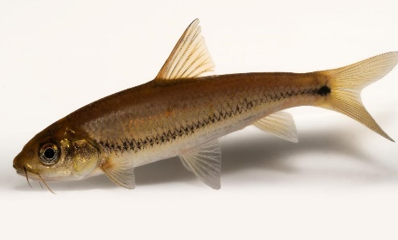
- The species was discovered in streams within the Periyar Tiger Reserve, Kerala, in the Western Ghats.
- It had been mistakenly identified as Eechathalakenda ophicephala for nearly 70 years.
- Detailed morphological and DNA analyses confirmed that the Periyar population represents a distinct species.
- The discovery makes E. incognita the ninth point-endemic fish species known from Periyar Tiger Reserve.
About Eechathalakenda incognita
- E. ophicephala possesses rhomboid-shaped scales.
- E. incognita is distinguished by:
- Circular scales on the upper body.
- A prominent dark lateral stripe.
- Differences in fin-ray counts and genetic makeup.
- Both species are narrowly endemic, with E. ophicephala restricted to the upper Pamba River and E. incognita to streams within the Periyar Tiger Reserve.
Bascanichthys chepakakiensis: New Snake Eel Species Discovered
Context: Scientists have discovered a new species of snake eel, Bascanichthys chepakakiensis, from the Bay of Bengal, taking the total number of known species in the genus Bascanichthys to 20.
More on the News
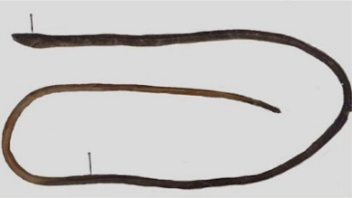
- The specimen was collected from catches landed at Kakinada Fishing Harbour on India’s east coast.
- The discovery was made by researchers from the ICAR-National Bureau of Fish Genetic Resources, Kerala University of Fisheries and Ocean Studies, and the Zoological Survey of India.
- The species name combines the Telugu word “chepa” (fish) and “Kaki” (derived from Kakinada), referring to its place of discovery.
About the Species
- Belongs to the snake eel family (Ophichthidae).
- An extremely long and slender eel with a distinctive bicoloured body.
- Characterised by a shorter snout, unique tooth arrangement, fewer pre-anal vertebrae, and tiny flap-like pectoral fins.
- Differs from its closest known relative, Bascanichthys deraniyagalai, in fin position, tail length, and snout morphology.
ZSI Discovers 2 New Hoverfly Species
Context: Scientists from the Zoological Survey of India (ZSI) have discovered two new species of hoverflies—Eristalinus sapphirinus and Eristalinus brunettii—from the Gangetic Plains of West Bengal.
About the New Species
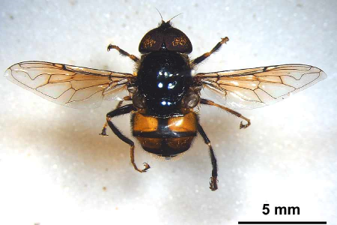
- Eristalinus sapphirinus is named for its striking sapphire-blue metallic colouration.
- Eristalinus brunettii honours Enrico Adelelmo Brunetti, recognising his pioneering contributions to the study of Indian flies (Diptera).
Significance
- The discoveries, published in the European Journal of Taxonomy, represent the first major addition to India’s Eristalinus diversity since Brunetti’s landmark work in 1923.
- Hoverflies (Family: Syrphidae) are important pollinators and contribute to ecosystem health.
Ecological Role of Hoverflies
- Adult hoverflies help pollinate both wild and cultivated plants.
- Their larvae, known as “rat-tailed maggots”, inhabit aquatic environments where they decompose organic matter and recycle nutrients.
Anaphalis sahyadrica: New Plant Species Discovered in the Western Ghats
Context: A new plant species, Anaphalis sahyadrica, belonging to the Asteraceae (sunflower/daisy family), has been discovered in the southern Western Ghats.
More on the News
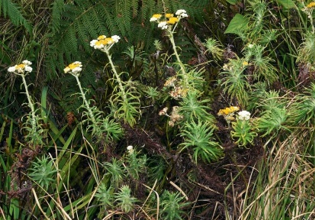
- The species was found in high-altitude montane grasslands and shola forest margins, including Anamudi and Meesapulimala in Kerala.
- The discovery enriches the known floral diversity of the Western Ghats, one of the world’s major biodiversity hotspots.
About Anaphalis Sahyadrica
- It is a subshrub that grows at elevations above 2,200 metres above sea level.
- Possesses smooth, hairless leaves with three distinct veins.
- The plant grows up to about one metre in height and produces 90 to 120 white, hemispherical flower heads (capitula).