
SYLLABUS
GS-3: Indian Economy and issues relating to Planning, Mobilization of Resources, Growth, Development and Employment.
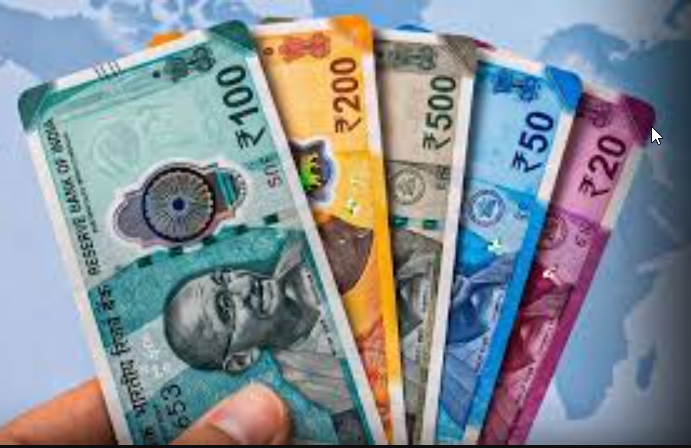
Context: The Reserve Bank of India (RBI) is set to trial polymer currency notes through its wholly-owned subsidiary, Bharatiya Reserve Bank Note Mudran Pvt. Ltd. (BRBNMPL), to assess their durability, security and cost-effectiveness.
More on the News
- Global tender floated: BRBNMPL has invited a Global Expression of Interest (EOI) to procure 68,000 reams of Biaxially Oriented Polypropylene (BOPP)-based opacified polymer substrate embedded with advanced security features for printing banknotes at its own presses and that of Security Printing and Minting Corporation of India Ltd. (SPMCIL).
- Field trial, not rollout: The procurement is intended solely for field trials. Based on the outcomes, the RBI may consider larger procurement and gradual adoption in future.
- Likely lower denominations: Media reports indicate that the pilot is likely to begin with lower denominations of ₹10 and ₹20 notes, although the tender itself does not specify the denominations.
- Strict security conditions: The tender mandates that bidders should not source raw materials from China or Pakistan, while entities from countries sharing a land border with India must comply with prescribed security requirements.
- Revival of earlier proposal: The initiative revives India’s earlier attempt to introduce polymer notes. A pilot proposed in 2012–13 did not progress due to technical challenges identified during evaluation.
What are Polymer Currency Notes?
- Polymer banknotes are printed on Biaxially Oriented Polypropylene (BOPP), a durable plastic-based substrate, instead of conventional 100% cotton-based paper.
- They incorporate advanced security features such as:
- Transparent windows
- Holographic or metallic elements
- Micro-text and micro-optic features
- Iridescent patterns
- Advanced security threads
- The world’s first polymer banknotes were introduced by Australia in 1988. Today, they are used in over 50 countries, including Australia, Canada, the United Kingdom, New Zealand, Singapore, Vietnam and Malaysia.
Why is RBI Reviving the Proposal?
- Reduce currency replacement costs: Polymer notes typically last 2.5–4 times longer than paper notes, reducing the need for frequent replacement.
- This is significant as the RBI spent ₹4,875 crore on currency printing in 2025–26, while billions of soiled banknotes are replaced annually under the Clean Note Policy.
- Strengthen anti-counterfeiting measures: Polymer notes incorporate advanced security features such as transparent windows, micro-optics and holographic elements, making counterfeiting significantly more difficult.
- The need for stronger security is underscored by the detection of about 2.3 lakh counterfeit notes in 2025–26, higher than the previous year.
- Improve durability: Polymer notes are resistant to moisture, dirt, tearing and microbial contamination, making them better suited to India’s diverse climatic conditions and frequent handling.
- Lower lifecycle costs: Although their initial production cost is higher, their longer lifespan reduces replacement frequency, resulting in lower costs over the long term.
- Lower environmental footprint: Longer note life reduces the frequency of printing, transportation and disposal. Worn polymer notes can also be recycled into plastic products.
Challenges/Concerns
- Higher initial investment: Polymer substrates and specialised printing technologies are more expensive than conventional paper-based currency.
- Infrastructure adaptation: ATMs, cash sorting machines, vending machines and other cash-handling infrastructure may require recalibration to efficiently process polymer notes.
- Import dependence and supply risks: Polymer notes require polypropylene-based substrates, for which India continues to rely partly on imports. This could expose currency production to global supply-chain disruptions and petrochemical price volatility until adequate domestic manufacturing capacity is developed.
- Environmental concerns: While recyclable, polymer notes are plastic-based and require robust collection and recycling systems to ensure environmentally sound disposal.
- Coexistence with digital payments: With the rapid growth of digital payment platforms such as UPI, questions remain over the long-term cost-effectiveness of large-scale investment in polymer currency, even as cash continues to play an important role in India’s payment ecosystem.
Global Experience & Way Forward
- Countries that have adopted polymer currency have generally reported improved durability, enhanced security against counterfeiting and lower replacement costs over the lifecycle of banknotes.
- For India, the ongoing field trial offers an opportunity to evaluate the performance of polymer notes under diverse climatic conditions, machine compatibility, public acceptance and overall cost-effectiveness before any wider rollout.
- Simultaneously, strengthening domestic manufacturing capacity for polymer substrates and security features would reduce import dependence and enhance India’s currency security ecosystem.
- A phased, evidence-based adoption, supported by infrastructure upgrades, efficient recycling mechanisms and public awareness, can modernise India’s currency management system while improving resilience against counterfeiting.