
Indian Navy Received Vindhyagiri, Final Ship of the Nilgiri-class (Project 17A)
Context: The Indian Navy received Vindhyagiri (Yard 3024), the seventh and final Nilgiri-class stealth frigate under Project 17A, from Garden Reach Shipbuilders and Engineers Limited (GRSE), Kolkata, marking the completion of the Project 17A ship delivery programme.
About Vindhyagiri (Yard 3024)
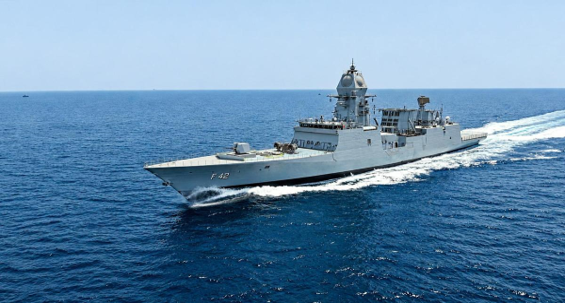
- It is the seventh and final ship of the Nilgiri-class (Project 17A) and the third frigate built by GRSE, Kolkata.
- Designed by the Indian Navy’s Warship Design Bureau (WDB) and overseen by the Warship Overseeing Team, Kolkata.
- Named after the Vindhyagiri mountain range in Karnataka, it is a reincarnation of the erstwhile INS Vindhyagiri, a Leander-class frigate that served the Navy for 31 years (8 July 1981–11 June 2012).
- Its construction period was reduced to 68 months, compared with 84 months for the first-of-class INS Nilgiri.
- It features a Combined Diesel or Gas (CODOG) propulsion system, comprising a diesel engine and a gas turbine that drive Controllable Pitch Propellers (CPPs) on each shaft.
- It is equipped with an Integrated Platform Management System (IPMS) and advanced weapons and sensors supporting anti-surface, anti-air and anti-submarine warfare.
About Project 17A (Nilgiri-Class Stealth Frigates)
- Project 17A is an Indian Navy programme to build seven next-generation indigenous stealth frigates for multi-mission naval operations.
- Designed by the Navy’s Warship Design Bureau, these frigates represent an advancement over the Shivalik-class (Project 17) in weapons, sensors, stealth, automation and survivability.
- Four ships have been built by Mazagon Dock Shipbuilders Limited (MDL), Mumbai, and three by GRSE, Kolkata.
- They feature reduced radar, infrared (thermal) and acoustic signatures, making them difficult to detect and enhancing combat survivability.
- Their advanced weapons and sensors support Anti-Surface Warfare (ASuW), Anti-Air Warfare (AAW) and Anti-Submarine Warfare (ASW).
- The programme has 75% indigenous content, involves over 200 Micro, Small and Medium Enterprises (MSMEs) and has generated approximately 4,000 direct and more than 10,000 indirect jobs.
Kashi Tamil Sangamam 5.0
Context: Vice-President C. P. Radhakrishnan inaugurated the fifth edition of Kashi Tamil Sangamam (KTS 5.0) in Varanasi to strengthen the cultural, linguistic and civilisational ties between Tamil Nadu and Kashi.
About Kashi Tamil Sangamam 5.0
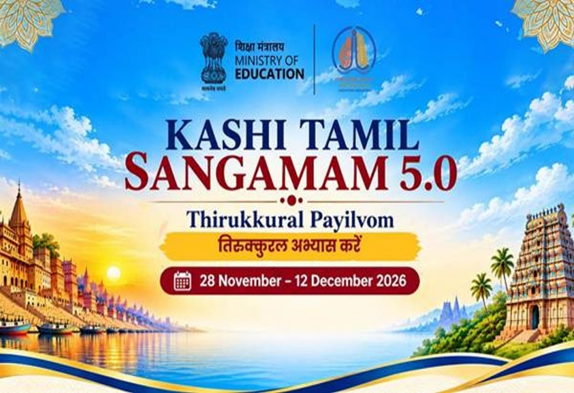
- Duration: 28 November to 12 December 2026.
- Theme: “Thirukkural Payilvom – Thirukkural Abhyas Karen”, meaning “Let us Learn the Thirukkural”.
- Thirukkural: An ancient Tamil literary work authored by the poet and philosopher Thiruvalluvar
- It comprises 1,330 couplets divided into three sections:
- Aram: Virtue.
- Porul: Wealth.
- Inbam: Love.
- The edition aims to promote awareness of the Thirukkural’s teachings on ethics, governance, compassion and responsible living, particularly among students and youth.
- Organisation: Organised by the Department of Higher Education, Ministry of Education, in collaboration with IIT Madras, Banaras Hindu University (BHU), Central Institute of Classical Tamil (CICT) and the Uttar Pradesh Government.
About Kashi Tamil Sangamam
- KTS is an initiative inspired by the Prime Minister’s vision to strengthen the historical and civilisational connections between Kashi and Tamil Nadu.
- It promotes the spirit of Ek Bharat Shreshtha Bharat through cultural exchanges, academic interactions and people-to-people connections.
- The first edition was held in 2022, followed by the second in 2023, third in February 2025 and fourth in December 2025.
Mahatma Jyotirao Phule (1827–1890)
Context: Vice-President C. P. Radhakrishnan and Union Home Minister Amit Shah paid tributes to social reformer Mahatma Jyotirao Phule on his death anniversary (28 November), recalling his contributions to social equality, education and the upliftment of marginalised communities.
About Mahatma Jyotirao Phule
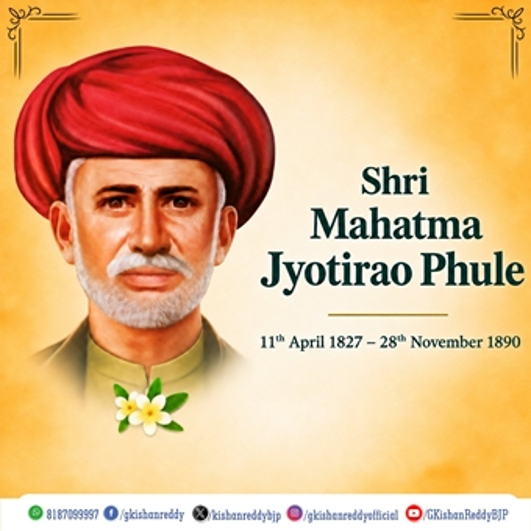
- Early Life: Born on 11 April 1827 in Maharashtra, he belonged to the Mali community, traditionally engaged in farming and gardening. He passed away on 28 November 1890 in Pune.
- Social Reform: He challenged caste-based discrimination, untouchability and Brahmanical dominance and advocated equality and dignity for oppressed communities, particularly Shudras and women.
- Women’s Education: In 1848, he established a pioneering girls’ school in Pune with his wife, Savitribai Phule, who became its teacher. He also opened schools for marginalised communities, including Mahars and Mangs.
- Women’s Welfare: He supported widow remarriage and established an Infanticide Prevention Centre (1863) to shelter pregnant widows and prevent female infanticide.
- Satyashodhak Samaj (1873): Founded the Society of Truth Seekers to eradicate caste discrimination, untouchability and social inequality and promote education and social justice.
- Major Works: Gulamgiri (1873), criticising caste-based oppression; Shetkaryacha Asud (1883), highlighting farmers’ exploitation; and Tritiya Ratna (1855).
- Other Initiatives: Opened his personal water well to oppressed communities to challenge untouchability.
Legacy of Mahatma Jyotirao Phule
- He was conferred the title Mahatma on 11 May 1888 by social reformer Vitthalrao Krishnaji Vandekar.
- His ideas of equality, education and social justice influenced subsequent anti-caste movements, particularly the work of Dr. B. R. Ambedkar.
- He remains an important figure in India’s social reform movement and the struggle for caste equality, women’s empowerment and inclusive education.