
Context:
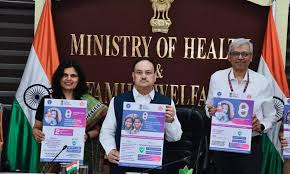
Recently, the Union Minister of Health and Family Welfare virtually launched the National Zero Measles-Rubella Elimination Campaign 2025-26 on the first day of World Immunization Week (24-30 April), marking a major step towards India’s goal of eliminating Measles and Rubella (M-R) by 2026.
More on the News
• The Union Health Minister released multi-language M-R IEC materials (posters, radio jingles, MR elimination, and official U-WIN launch film) to create awareness in communities.
- These IEC materials were shared with all States/UTs for adaptation and rollout during the MR Elimination Campaign 2025-26.
• The campaign aims to achieve 100% immunization coverage by administering two doses of the Measles and Rubella vaccine to all children.

• India received the Measles and Rubella Champion Award from the Measles and Rubella Partnership in 2024.
• Emphasis on:
- Keeping the Integrated Disease Surveillance Programme (IDSP) activated.
- Strengthening surveillance and targeting MR elimination with the same rigor as polio and maternal and neonatal tetanus elimination.
- Adopting an ‘ACT NOW’ policy — being attentive, alert, and proactive.
• States/UTs were urged to:
- Conduct public and press meetings to promote awareness through Jan Bhagidari (people’s participation).
- Ensure inclusive participation of MLAs, MPs, local, and Panchayat leaders.
- Deploy frontline workers to cover remote, hard-to-reach, migratory, slum, and outbreak-prone areas.
About the Measles
- Measles is one of the most contagious diseases ever known and is an important cause of death and disability among young children worldwide.
- The measles virus is a paramyxovirus of the genus Morbillivirus.
- It is a genome of single-stranded, negative-sense RNA, and is closely related to the rinderpest and canine distemper viruses.
• Signs and Symptoms:
- Early flu-like symptoms (fever, cough, runny nose, red eyes) lasting 4-7 days.
- Distinctive red rash appears 7-18 days after exposure, starting on the face and spreading
• Complications:
- like pneumonia, encephalitis (brain swelling), and death.
- Children under 5 and adults over 30 are most at risk.
• Transmission: Spreads through coughing, sneezing, or sharing contaminated objects.
• Prevention: Two doses of the MMR vaccine (measles, mumps, rubella) are recommended for children.
• Treatment: There is no specific treatment for measles, but supportive care can help manage symptoms and prevent complications.
Rubella (German Measles)
- It was first described as distinct disease in German literature in 1814 (hence it is known as “German measles”)
- Rubella virus is the sole member of the genus Rubivirus, in the family Matonaviridae.
- It is an enveloped virus with a single-stranded RNA of positive polarity and has a single antigenic type.
- The first rubella vaccines were licensed in 1969. In 1971, a combined measles, mumps, and rubella (MMR) vaccine was licensed for use in the United States.
• It is usually mild but dangerous for pregnant women.
- Infection in early pregnancy can cause Congenital Rubella Syndrome (CRS) in babies.
- CRS leads to birth defects like heart problems, deafness, and blindness.