
SYLLABUS
GS-3: Conservation, environmental pollution and degradation, environmental impact assessment.
Context: On World Environment Day (5th June), the Union Government has announced the designation of Jai Prakash Narayan Bird Sanctuary (Surha Tal) in Ballia district of Uttar Pradesh as India’s 100th Ramsar Site.
More on the News
• With this addition, India’s tally of Ramsar Sites has reached 100, while Uttar Pradesh’s tally of Ramsar sites has increased to 13, making it one of the leading states in wetland conservation.
• The designation comes shortly after the inclusion of Shekha Jheel Bird Sanctuary (Aligarh) as India’s 99th Ramsar Site, reflecting the growing momentum of wetland conservation efforts in the country.
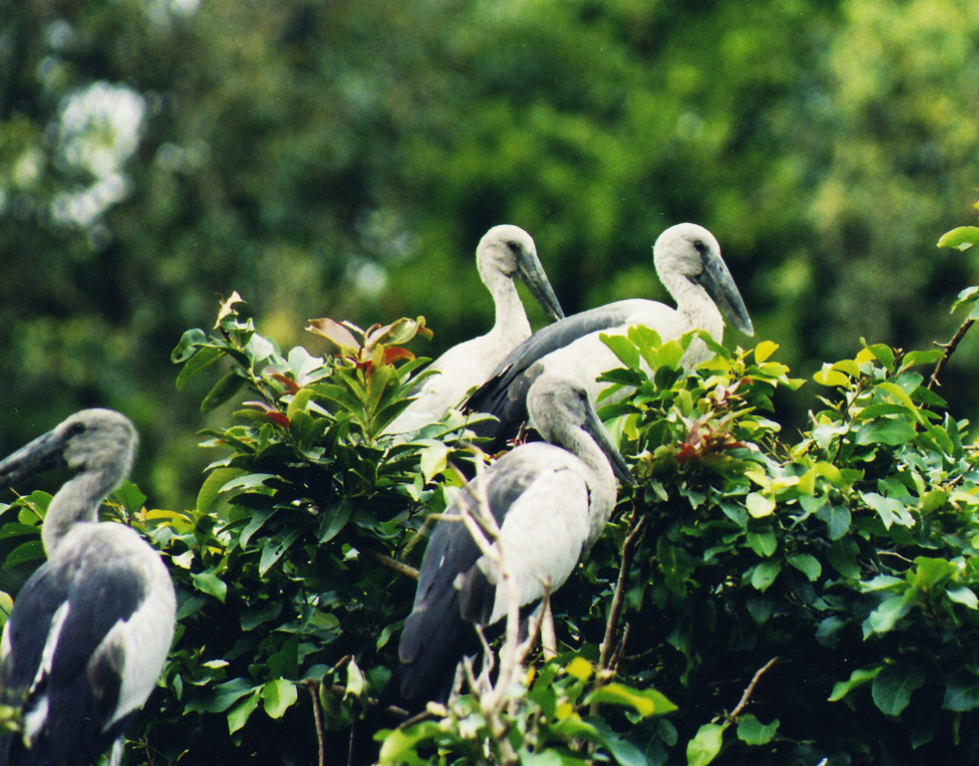
• The designation acknowledges Surha Tal’s ecological significance as an important habitat for migratory birds, aquatic biodiversity and wetland-dependent communities.
About Jai Prakash Narayan Bird Sanctuary
• Surha Tal, also known as Jai Prakash Narayan Bird Sanctuary, is a large natural freshwater wetland located in Ballia district of eastern Uttar Pradesh.
• It is a natural perennial oxbow lake (also called a meander lake) formed by the meandering of the Ganga River and is situated near the confluence of the Ganga and Ghaghara river systems.
• Surha Tal was originally declared a Bird Sanctuary in 1991. It was later officially renamed the Jai Prakash Narayan Bird Sanctuary in 2002. It is among the largest natural wetlands in eastern Uttar Pradesh.
• The wetland supports rich biodiversity, including numerous species of migratory and resident birds, fishes, reptiles and aquatic vegetation.
• It serves as an important wintering and breeding ground for waterbirds and forms part of the broader Gangetic floodplain ecosystem.
• Besides its ecological significance, the wetland supports local livelihoods through fisheries, agriculture and other ecosystem services.
About the Ramsar Convention
• The Ramsar Convention is an international treaty established in 1971 in Ramsar (Iran).
• Its aim is the conservation and sustainable use of wetlands to preserve biodiversity and maintain ecological balance.
• The convention promotes the concept of “wise use” of wetlands, balancing conservation with sustainable development.
• According to the Convention, Wetlands are defined as areas of marsh, fen, peatland or water, whether natural or artificial, permanent or temporary, with water that is static or flowing, fresh, brackish or salt, including areas of marine water the depth of which at low tide does not exceed six metres.
• World Wetlands Day is celebrated annually on 2nd February since 1997.
Ramsar Sites in India
• India acceded to the Ramsar Convention on Wetlands on February 1, 1982.
• India has the highest number of Ramsar sites in Asia (100, including the recent one) and the third highest in the world after the United Kingdom (176) and Mexico (144).
• Tamil Nadu has the highest number of Ramsar Sites in India, with 20 designated wetlands, followed by Uttar Pradesh at 13.
• The Sundarban Wetland in West Bengal, covering 4,230 square kilometres, is India’s largest Ramsar site, while Renuka Lake in Himachal Pradesh, with an area of 0.2 square kilometres, is the smallest.
• These wetlands are protected under various national laws, including the Forest (Conservation) Act (1980), the Environment (Protection) Act, 1986, the Indian Wildlife (Protection) Act (1972), and Wetlands (Conservation and Management) Rules, 2017.