
SYLLABUS
GS-3: Conservation, environmental pollution and degradation, environmental impact assessment.
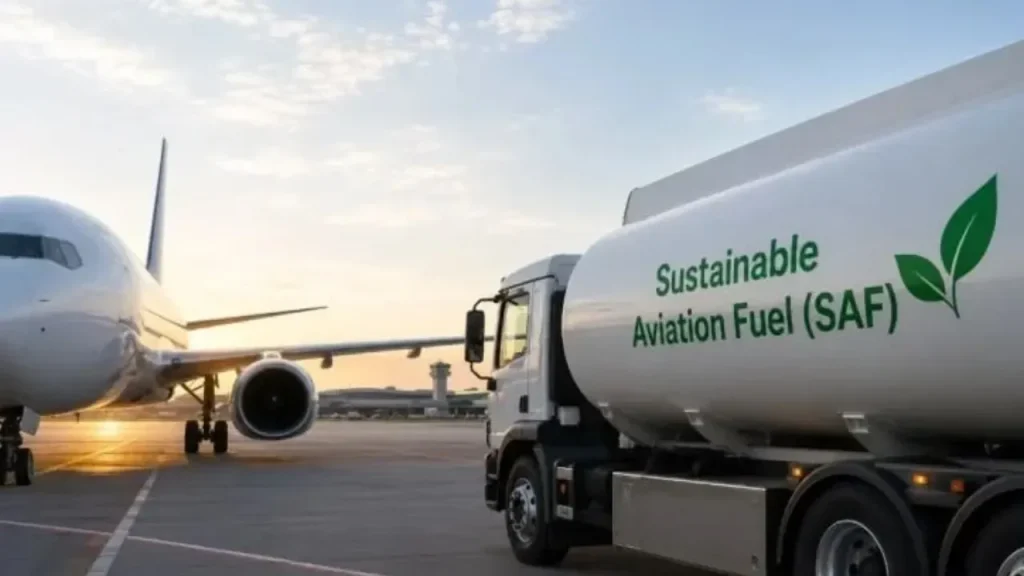
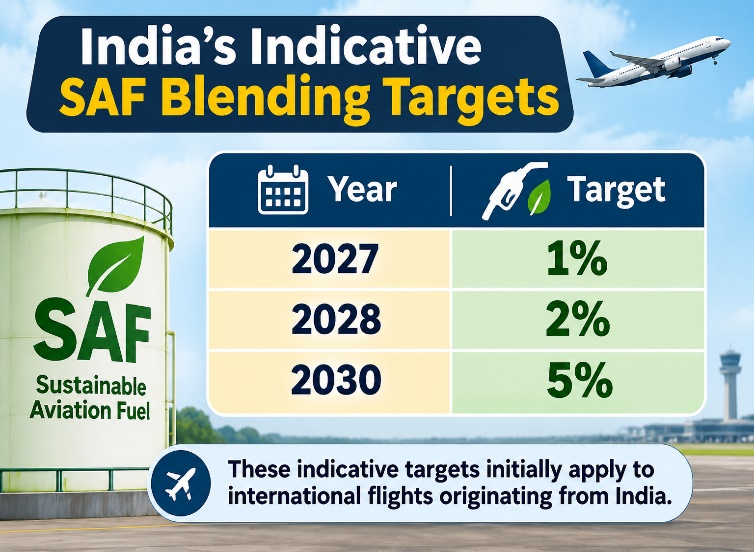
Context: India’s first commercial-scale Sustainable Aviation Fuel (SAF) plant at Indian Oil Corporation’s Panipat Refinery is ready for commercial production, ahead of the proposed SAF blending targets for international flights from 2027.
About the Sustainable Aviation Fuel Plant
- Located at IOC’s Panipat Refinery in Haryana, the plant has an annual production capacity of 30,000 tonnes.
- It uses Used Cooking Oil (UCO) as its primary feedstock.
- Its capacity is expected to meet nearly India’s entire SAF requirement for the 2027 blending target.
- The first batch was produced on 16 November 2026, and the facility received the necessary approvals from the Directorate General of Civil Aviation (DGCA).
- Other Projects: BPCL is developing a 41,000-tonne-per-year SAF facility at its Mumbai refinery.
- Ethanol-to-Jet Initiative: GPS Renewables is constructing India’s first Ethanol-to-Jet (ETJ) SAF plant at NTPC’s Green Hydrogen Hub in Pudimadaka, Andhra Pradesh.
- It will produce 1,800 tonnes annually using ethanol derived from captured CO₂. Lummus Technology is providing the technology, and completion is targeted for March 2029.
About Sustainable Aviation Fuel (SAF)
- SAF, also called aviation biofuel, is an alternative aviation fuel produced from sustainable, renewable and non-petroleum feedstocks.
- Feedstocks: These include UCO, animal fats, vegetable oils, algae, agricultural and forestry residues, sugarcane bagasse and Municipal Solid Waste (MSW).
- Production Pathways: Major technologies include HEFA (Hydroprocessed Esters and Fatty Acids), Fischer-Tropsch (FT), Alcohol-to-Jet (AtJ) and Power-to-Liquid (PtL).
- Drop-in Fuel: SAF has chemical properties similar to conventional Aviation Turbine Fuel (ATF).
- It can be blended with jet fuel without modifying existing aircraft engines.
- Blending Limit: Approved production pathways generally permit blending of up to 50%, depending on the technology.
Need and Significance
- Aviation Decarbonisation: SAF can reduce lifecycle greenhouse gas emissions by up to 80%, helping decarbonise the hard-to-abate aviation sector.
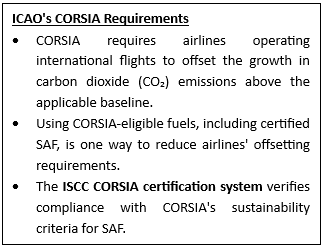
- Global Commitments: SAF adoption will help Indian airlines meet ICAO’s CORSIA requirements from 2027 and reduce their carbon-offsetting obligations.
- Energy Security: Domestic SAF production can reduce dependence on imported fossil fuels and protect airlines from global crude oil price fluctuations.
- Circular Economy: Converting used cooking oil and agricultural residues into aviation fuel promotes waste utilisation, generates employment and creates additional income opportunities.
Challenges
- High Production Cost: SAF can cost more than twice as much as conventional jet fuel, increasing airline operating costs and potentially raising airfares.
- Feedstock Availability: Ensuring an affordable, sustainable and reliable year-round supply of UCO and agricultural residues remains difficult.
- Infrastructure Constraints: Production, processing, storage, blending and transportation require specialised infrastructure and substantial investment.
- Environmental Concerns: Unsustainable feedstock sourcing can cause deforestation, biodiversity loss and food-versus-fuel competition.
Way Forward
- Financial Incentives: Introduce production-linked incentives, viability gap funding and supportive policies to reduce the cost difference between SAF and conventional ATF.
- Feedstock Diversification: Promote agricultural residues, forestry waste, UCO and municipal waste to reduce dependence on food-based feedstocks.
- Strengthen Supply Chains: Develop decentralised collection networks through Public-Private Partnerships (PPPs), Farmer Producer Organisations (FPOs) and waste-management agencies.
- Technology and Certification: Accelerate advanced SAF technologies, including AtJ, FT and PtL, and strengthen sustainability certification under ICAO’s CORSIA framework.