
SYLLABUS
GS-3: Conservation, environmental pollution and degradation; Infrastructure: Energy.
Context: India has proposed amendments to the Central Motor Vehicles Rules, 1989, to enable vehicles compatible with higher ethanol blends such as E85 and E100, signalling a shift toward a 100% ethanol-based fuel ecosystem.
Key Highlights of Amendments
- The draft formally introduces higher ethanol blends such as E85 (85% ethanol) and E100 (near-pure ethanol) into vehicle emission and type-approval standards.
- Gasoline compatibility norms have been expanded from E10 to E20, with future-ready provisions for higher blends like E25, E27, and E35.
- Biodiesel classification has been upgraded from B10 to B100, enabling use of 100% biodiesel fuels.
- Hydrogen fuel terminology has been revised from “Hydrogen+CN” to “Hydrogen+CNG” for clarity and standardisation.
- Gross Vehicle Weight (GVW) threshold under emission norms has been increased from 3,000 kg to 3,500 kg, aligning with global light commercial vehicle standards.
- Emission metrics have been corrected (mg/kWh instead of Mg/kWh), and World-Harmonised Not-To-Exceed (WNTE) emission limits revised from 60 to 600.
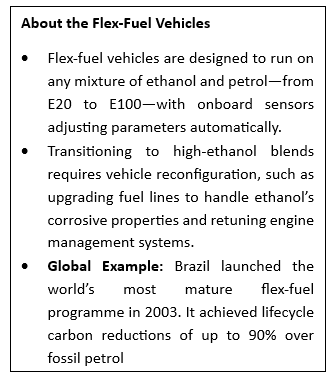
- The amendments open the regulatory pathway for flex-fuel vehicles across all categories, including two-wheelers, passenger vehicles, and heavy-duty transport.
- The draft is open for public consultation for 30 days before finalisation.
About the Ethanol Blending
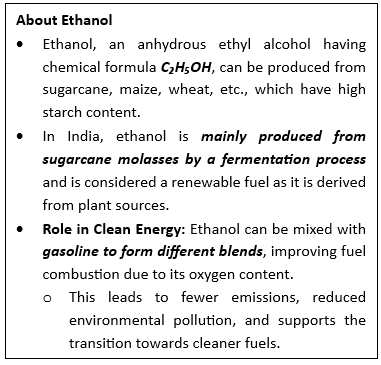
- Ethanol is mixed with petrol to reduce emissions and partially replace fossil fuels.
- E10 contains 10% ethanol, while E20 contains 20%.
- E20, or Ethanol 20, is petrol blended with 20% ethanol, a biofuel typically derived from sugarcane, corn, or surplus grain.
- The Ethanol Blending Programme has also helped reduce reliance on imported crude oil.
- The EBP was launched in January 2003 to promote alternative, environmentally friendly fuels and reduce India’s dependence on imported energy.”
- According to the oil ministry, India has saved more than ₹1.40 lakh crore in foreign exchange since 2014–15 through petrol substitution.
- India achieved 10% ethanol blending in petrol in June 2022, ahead of schedule, and subsequently advanced its 20% blending target from 2030 to 2025–26. Many fuel stations already sell E20 in several parts of the country.
- India has committed to reducing its GDP emissions intensity by 45% by 2030 (from 2005 levels) and achieving net-zero emissions by 2070, as part of its Panchamrit strategy announced at COP26.
Initiatives of the Government towards Ethanol Blending
- Ethanol Blending Roadmap (2020–25): A “Roadmap for Ethanol Blending in India 2020–25” was released in 2021, which lays out a detailed pathway for achieving 20% ethanol blending (E20).
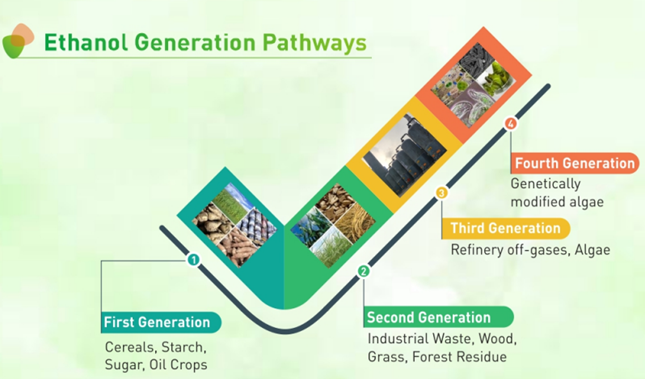
- Pradhan Mantri JI-VAN Yojana: Pradhan Mantri JI-VAN (Jaiv Indhan–Vatavaran Anukool fasal awashesh Nivaran) Yojana provides financial support to Integrated Bioethanol Projects using lignocellulosic biomass and other renewable feedstock.
- National Policy on Biofuels, 2018: Aims to promote domestic biofuel production from renewable feedstocks to reduce fossil fuel dependence, enhance energy security, support environmental sustainability, and achieve targets of 20% ethanol and 5% biodiesel blending.