SYLLABUS
GS 3: Infrastructure: Energy, Ports, Roads, Airports, Railways, etc.; Conservation, environmental pollution and degradation.
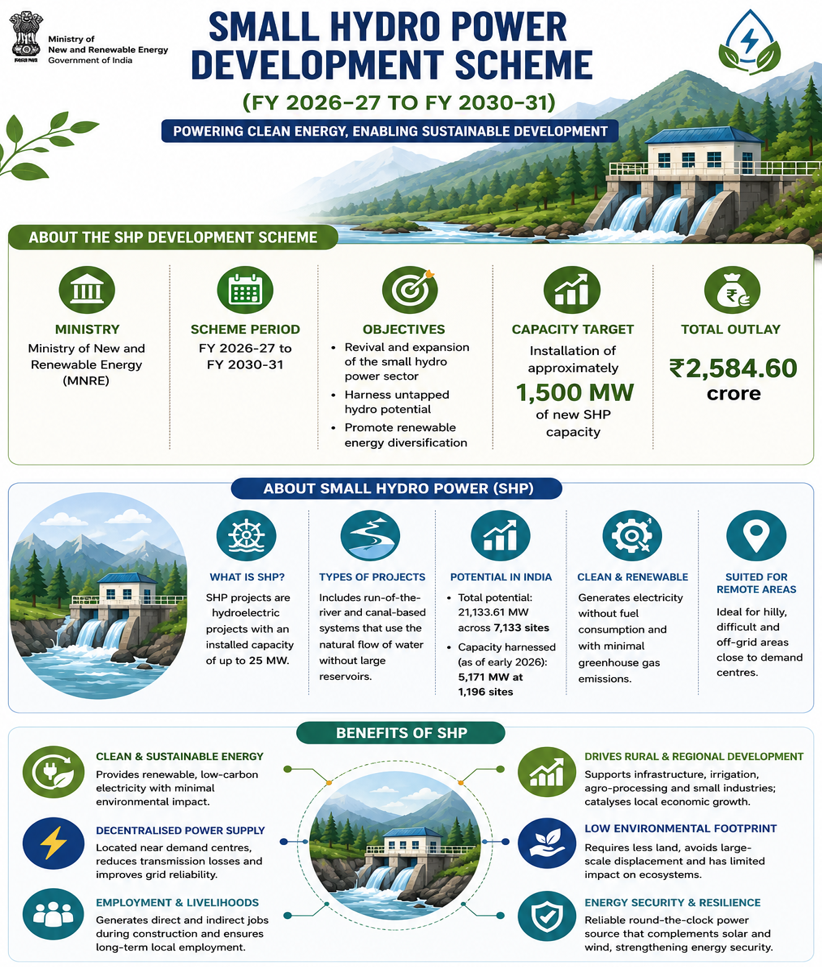
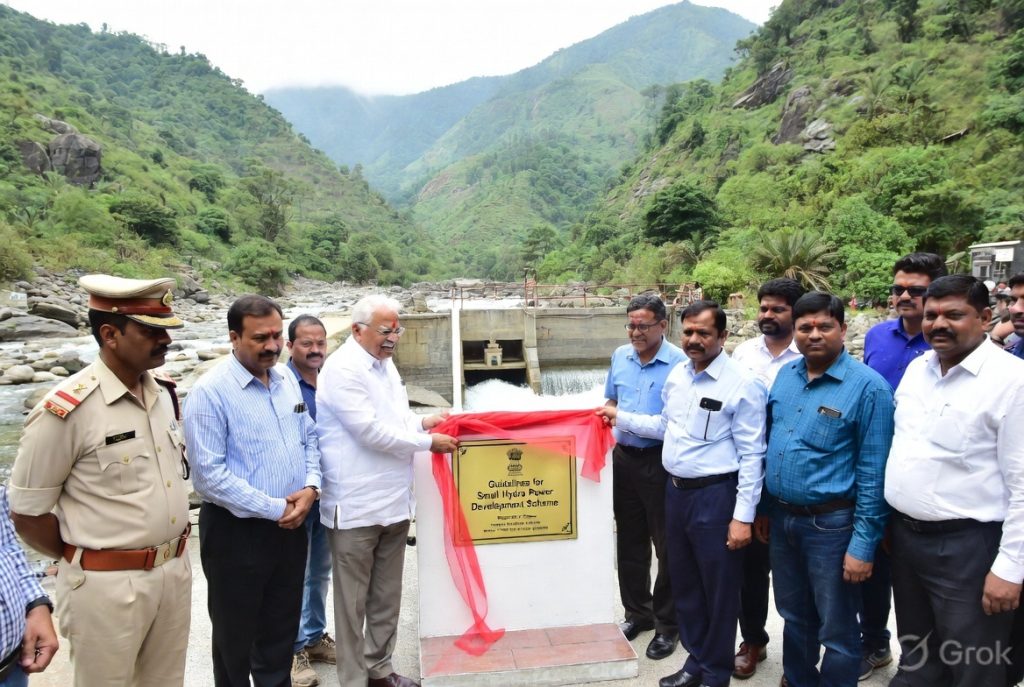
Context: Recently, the Ministry of New and Renewable Energy (MNRE) notified the operational guidelines for the Small Hydro Power (SHP) Development Scheme, aimed at accelerating the deployment of new Small Hydro Power capacity across the country and promoting clean, decentralised and reliable renewable energy generation.
More on the News
- The SHP Development Scheme was approved earlier by the Union Cabinet in March 2026, with a total outlay of ₹2,584.60 crore for the period FY 2026–27 to FY 2030–31.
- The scheme seeks to harness India’s substantial untapped small hydropower potential, particularly in North-Eastern States, hilly regions and remote areas, where access to reliable electricity remains a challenge.
- The newly issued guidelines lay down the framework for implementation of the scheme, including financial assistance, eligibility conditions, project development support and monitoring mechanisms.
- The initiative is expected to strengthen India’s renewable energy portfolio while contributing to energy security, regional development and climate goals.
About Small Hydro Power (SHP) Development Scheme
- The scheme aims to support the development of Small Hydro Power projects (1–25 MW capacity) through targeted financial incentives and policy support.
- It seeks to promote decentralised renewable energy generation, improve electricity access in remote regions and encourage greater private and public sector participation in the SHP sector.
- The scheme also focuses on creating a robust pipeline of future projects and improving the viability of SHP investments.
Key Features of the Guidelines
- Capacity Addition Target
- The scheme targets the addition of approximately 1,500 MW of new Small Hydro Power capacity during the implementation period.
- Central Financial Assistance (CFA)
- For projects located in North-Eastern States and International Border Districts, CFA will be available up to ₹3.6 crore per MW or 30% of the project cost (whichever is lower), subject to a maximum of ₹30 crore per project.
- For projects in other parts of the country, CFA will be available up to ₹2.4 crore per MW or 20% of the project cost (whichever is lower), subject to a ceiling of ₹20 crore per project.
- DPR Support for Future Projects
- To create a long-term project pipeline, the scheme provides support for preparation of Detailed Project Reports (DPRs) for at least 200 SHP projects, with a dedicated allocation of ₹30 crore.
- Eligible Beneficiaries
- Central Government entities, State Governments, State agencies, Public Sector Undertakings (PSUs) and private sector developers are eligible to participate under the scheme.
- Focus on Indigenous Manufacturing
- The scheme encourages the use of indigenous plants and machinery, supporting domestic manufacturing capabilities and the vision of Atmanirbhar Bharat.
- Monitoring and Implementation Framework
- Detailed provisions have been made for project approval, fund disbursement, progress monitoring and performance evaluation to ensure timely implementation and accountability.
Significance of the Scheme
- Unlocking Untapped Hydropower Potential: The scheme seeks to accelerate the utilisation of India’s vast untapped small hydropower resources and strengthen the country’s renewable energy basket.
- Boost to Remote and Hilly Regions: By providing enhanced financial support to North-Eastern and border areas, the scheme can improve energy access, infrastructure development and economic opportunities in geographically challenging regions.
- Supporting Renewable Energy and Climate Goals: Small hydropower provides clean, low-carbon and round-the-clock electricity, complementing solar and wind energy and contributing to India’s non-fossil fuel energy targets.
- Promoting Investment and Employment: The scheme is expected to attract around ₹15,000 crore of investment in the SHP sector and generate approximately 51 lakh person-days of employment during the construction phase.
Strengthening Energy Security: As a reliable and decentralised source of renewable energy, SHP can improve grid resilience, reduce transmission losses and enhance long-term energy security.