
SYLLABUS
GS-3: Conservation, environmental pollution and degradation, environmental impact assessment.
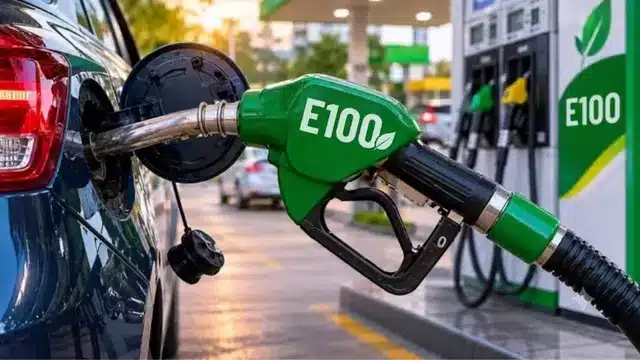
Context: The Ministry of Road Transport and Highways (MoRTH) has amended the Central Motor Vehicles Rules, 1989, to include E100 alongside E85 in emission-related provisions, enabling the certification of flex-fuel vehicles designed to use high-ethanol fuels.
More on the News
- E85 and E100 are permitted only in vehicles specifically designed and certified by manufacturers for these fuels; E20-compatible vehicles cannot automatically use them.
- The amendment revises the gross vehicle weight threshold from 3,000 kg to 3,500 kg in relevant emission standards and updates biodiesel and technical provisions.
- The rules take effect from publication in the Official Gazette; the notification does not specify a timeline for nationwide E100 availability.
About Flex-Fuel Vehicles (FFVs)
- Flex-fuel vehicles can operate on petrol, ethanol or different mixtures of both, within their certified fuel range.
- Technology: Electronic engine controls adjust the air–fuel mixture and ignition timing according to fuel composition.
- Special Components: Fuel pumps, injectors, pipes and seals are designed to withstand higher ethanol concentrations.
- Fuel Types: E20 contains 20% ethanol, E85 contains up to 85% ethanol, while E100 denotes nominally 100% ethanol.
- Global Experience: Brazil and the United States have established flex-fuel markets, with Brazil particularly experienced in using high-ethanol automotive fuels.
Ethanol Blending in India
- Ethanol blending involves mixing ethanol, an alcohol-based renewable fuel, with petrol to reduce the consumption of conventional fossil fuels.
- In India, ethanol is produced from sugarcane juice, molasses, maize, rice and other eligible feedstocks, including certain damaged food grains.
- The Ethanol Blended Petrol Programme promotes ethanol use to reduce crude oil imports and support domestic biofuel production.
- The National Policy on Biofuels, 2018, amended in 2022, advanced the target of 20% ethanol blending in petrol to Ethanol Supply Year 2025–26.
- India achieved its E20 blending target in 2025, ahead of the original 2030 deadline.
- In March 2024, Union Minister Hardeep Singh Puri launched ETHANOL 100 at 183 IndianOil retail outlets across five states and Union Territories.
Significance of Ethanol Blending
- Energy Security: Domestic ethanol reduces dependence on imported crude oil, foreign exchange outflows and exposure to international oil-price volatility.
- Environmental Benefits: Sustainable ethanol production can lower lifecycle greenhouse gas emissions and reduce certain exhaust pollutants.
- Agricultural Development: Demand for sugarcane, maize and other eligible feedstocks creates additional markets for farmers and supports rural employment.
- Industrial Growth: Ethanol production, flex-fuel technology and associated infrastructure encourage investment, innovation and domestic vehicle manufacturing.
Challenges or Concerns
- Vehicle Compatibility and Mileage: High-ethanol fuels require specially designed engines and fuel systems, while lower energy content can reduce mileage and increase running costs.
- Feedstock and Water Pressure: Crop-based ethanol production can increase water demand, compete with food production and create land-use pressures.
- Infrastructure and Supply: Wider adoption requires reliable ethanol supplies, storage and dispensing facilities, affordable compatible vehicles and greater consumer awareness.
- Environmental and Consumer Concerns: Lifecycle emissions depend on production methods, while uncertainty about fuel availability, vehicle warranties, compatibility and cost per kilometre may affect consumer confidence.
Way Forward
- Diversify Feedstocks: Expand sustainable ethanol production from agricultural residues and other suitable non-food biomass to reduce pressure on food crops and water resources.
- Strengthen Production and Research: Improve production capacity, engine efficiency, fuel-system durability and lifecycle emissions assessment.
- Develop Infrastructure Gradually: Expand ethanol storage, transportation and dispensing facilities alongside the availability of certified flex-fuel vehicles.
- Protect Consumer Interests: Ensure clear fuel labelling, manufacturer guidance, transparent running-cost information and strict fuel-quality standards while developing ethanol alongside other low-emission transport technologies.