SYLLABUS
GS-2: Welfare Schemes for Vulnerable Sections of the Population by the Centre and States and the Performance of These Schemes.
GS-3: Public Distribution System- objectives, functioning, limitations, revamping; issues of buffer stocks and food security.
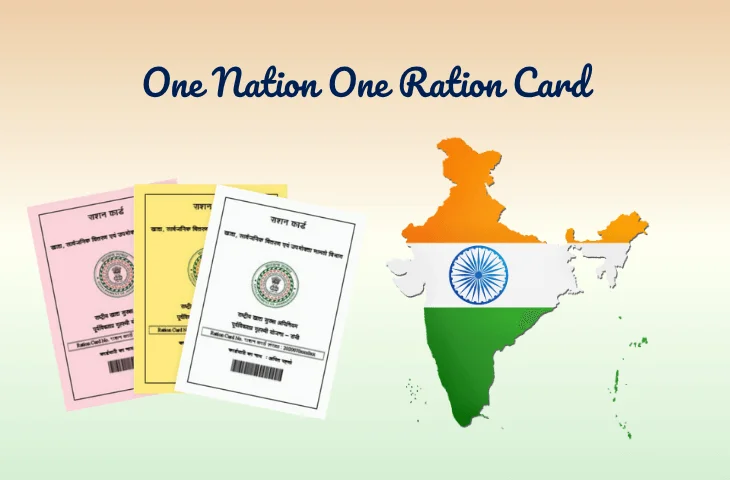
Context: The One Nation, One Ration Card (ONORC) initiative has achieved nationwide implementation across all 36 States/UTs, enabling beneficiaries to access their foodgrain entitlements from any Fair Price Shop (FPS) across the country.
About One Nation, One Ration Card (ONORC)
- Launch: Introduced in August 2019 by the Department of Food and Public Distribution, Ministry of Consumer Affairs, Food and Public Distribution.
- Objective: To enable nationwide portability of ration-card entitlements under the National Food Security Act (NFSA), 2013, particularly benefiting migrant workers and their families.
- How does it work?
- Beneficiaries can collect their entitled foodgrains from any FPS across the country using their existing ration card, without obtaining a new one.
- Aadhaar-based biometric authentication through electronic Point of Sale (e-PoS) devices facilitates beneficiary identification and recording of transactions.
- Intra-State portability: Beneficiaries can access their entitlements from any FPS within their own State.
- Inter-State portability: Beneficiaries can access their entitlements from an FPS in another State.
- Family members can also access their respective entitlements from different locations, allowing migrant households to collect foodgrains separately.
- Mera Ration Mobile App: Launched by the Department of Food and Public Distribution in March 2021 to facilitate access to ration-related information and services, particularly for migrant beneficiaries.
Implementation Progress and Digital PDS Reforms
- Nationwide Coverage: Enabled across all 36 States/UTs, covering the entire NFSA beneficiary population (approximately 81.35 crore persons), who currently receive free foodgrains under PMGKAY.
- Portability Milestones: Over 233 crore inter-State and intra-State portability transactions have been recorded since inception, distributing more than 614 lakh metric tonnes (LMT) of foodgrains. Approximately 3.27 crore portability transactions take place every month.
- Digitisation of Ration Cards: Ration-card and beneficiary databases are 100% digitised across all States/UTs as of October 2026, covering around 78.65 crore beneficiaries.
- Aadhaar Seeding and e-KYC:
- 98.8% of ration cards (20.27 crore out of 20.51 crore) in the Central System have been Aadhaar-seeded.
- As of 30 September 2026, e-KYC had been completed for 71.52 crore beneficiaries, representing 91% of the total.
- e-PoS-enabled FPSs: Around 99.8% of the country’s 5.51 lakh Fair Price Shops are operational with e-PoS devices.
- Computerised PDS: Online foodgrain allocation has been implemented nationwide, while supply chains have been computerised in 31 States/UTs. Online grievance systems, transparency portals and toll-free helplines operate across all States/UTs.
- SARTHAK-PDS: The Scheme for Assistance in Ration Transport and Handling-Income with Automation in PDS is an umbrella scheme under which ONORC-related technology reforms are integrated. It strengthens intra-State foodgrain movement, handling and FPS dealer margins while promoting an integrated and interoperable PDS architecture.
Significance of ONORC
- Food Security for Migrants: Ensures continuity of foodgrain entitlements despite migration or changes in residence, reducing dependence on the location where a ration card was originally issued.
- Social Inclusion: Improves access to foodgrain entitlements for migrant workers, urban poor and other vulnerable sections.
- Transparency and Accountability: Digital authentication and transaction records strengthen monitoring and help reduce duplication, diversion and leakages in PDS delivery.
- Women’s Empowerment: Enables women and other household members to access their respective foodgrain entitlements independently, even when family members migrate separately.
- Cooperative Federalism: Promotes coordination and interoperability among States/UTs for seamless delivery of food security benefits.
India’s Food Security Framework
- National Food Security Act (NFSA), 2013: Provides legal entitlements to foodgrains to up to 75% of the rural and 50% of the urban population, covering approximately 81.35 crore persons based on Census 2011.
- Targeted Public Distribution System (TPDS): Serves as the principal delivery mechanism under NFSA, through which eligible beneficiaries receive their foodgrain entitlements via Fair Price Shops.
- Antyodaya Anna Yojana (AAY): Covers the poorest of the poor households, providing an entitlement of 35 kg of foodgrains per household per month.
- Priority Households (PHH): Entitled to 5 kg of foodgrains per person per month under NFSA.
- Pradhan Mantri Garib Kalyan Anna Yojana (PMGKAY): Initially launched in 2020 during the COVID-19 pandemic to provide additional free foodgrains to NFSA beneficiaries.
- From January 2023, the regular NFSA foodgrain entitlements were made free of cost under the merged arrangement, which was extended for five years (January 2024–December 2028).