
SYLLABUS
GS-2: India and Its Neighbourhood—Relations.
Context: The launch of the Saryu-Kamala Express between Ayodhya and Janakpur highlights India’s use of cross-border railway connectivity as an instrument of neighbourhood diplomacy, strengthening cultural ties and regional integration.
India’s Cross-Border Railway Connectivity
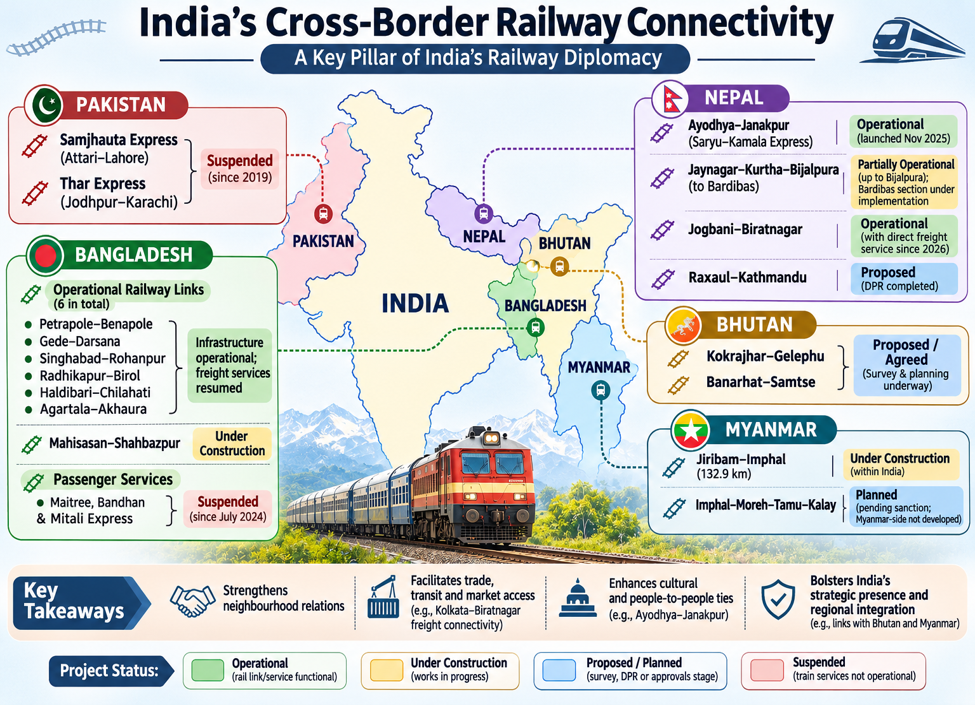
- India is expanding railway connectivity with neighbouring countries through operational, ongoing and proposed projects, including links with Nepal and Bangladesh, proposed links with Bhutan, and planned connectivity towards Myanmar.
Railway Diplomacy as an Instrument of India’s Foreign Policy
- Neighbourhood Connectivity: India is developing cross-border links with Nepal, including the Jaynagar–Bijalpura–Bardibas and Jogbani–Biratnagar projects, while the Ayodhya–Janakpur service strengthens passenger and cultural connectivity.
- Development Partnership: India supports railway development through infrastructure, rolling stock and technical assistance. It supplied DEMU train sets to Nepal for the Jaynagar–Kurtha link and is providing 200 broad-gauge coaches to Bangladesh, with the first batch of 19 coaches dispatched in 2026.
- Economic and Trade Integration: The first direct 40-wagon commercial freight train from Kolkata Port to Biratnagar Customs Yard (Nepal) in July 2026 enabled containerised cargo movement without border transshipment, reducing logistics costs and transit time.
- Regional and Global Outreach: Indian railway expertise and assistance extend beyond South Asia, including railway modernisation projects in Sri Lanka, supported through Indian development assistance and technical cooperation.
Significance of Railway Diplomacy for India
- Regional Integration: Reconnecting railway networks and developing cross-border links can strengthen regional connectivity in South Asia, where intra-regional trade remains relatively low.
- Trade and Economic Integration: Direct freight connectivity with Nepal through the Kolkata–Biratnagar corridor improves access to Indian ports and reduces cargo handling, transit time and logistics costs.
- Strategic Outreach: The proposed Kokrajhar–Gelephu and Banarhat–Samtse links with Bhutan can strengthen connectivity in India’s Northeast while integrating it with Bhutan’s emerging economic centres.
- Soft Power and Cultural Diplomacy: The Ayodhya–Janakpur railway link connects two important destinations associated with the Ramayana tradition, promoting religious tourism and people-to-people ties.
Challenges
- Political and Diplomatic Disruptions: The Maitree, Bandhan and Mitali Express services with Bangladesh remain suspended since July 2024, despite the resumption of cross-border freight operations.
- Implementation Delays: The Raxaul–Kathmandu railway has completed its Final Location Survey and Detailed Project Report but is awaiting further clearances and implementation decisions.
- Operational and Regulatory Bottlenecks: Railway infrastructure alone may not ensure connectivity; the Jogbani–Biratnagar freight corridor became commercially more effective after the 2025 revision of India’s–Nepal transit arrangements enabled direct rail-based cargo movement.
- Geographical and Financial Constraints: Difficult Himalayan terrain, environmental sensitivities, high construction costs and coordination across borders complicate railway expansion, particularly in Nepal and Bhutan.
Way Forward
- Prioritise Operational Connectivity: Focus on completing and operationalising existing infrastructure, including the remaining sections of the Jaynagar–Bardibas and Jogbani–Biratnagar links, while pursuing restoration of passenger services with Bangladesh.
- Resolve Regulatory Bottlenecks: Replicate the approach adopted through the revised India–Nepal Rail Transit Protocol, under which regulatory changes enabled direct commercial freight movement to Biratnagar.
- Ensure Timely Project Implementation: Establish clear timelines and stronger bilateral monitoring for proposed projects such as the Raxaul–Kathmandu and India–Bhutan railway links.
- Integrate Multimodal Connectivity: Link railway projects with ports, roads, inland waterways and regional initiatives such as BBIN and BIMSTEC to maximise their trade and strategic utility.