
Lachit Borphukan
Context: On 24 November 2026, Prime Minister Narendra Modi paid tribute to Lachit Borphukan on Lachit Diwas, commemorating his courage, leadership and contribution to protecting Assam from Mughal expansion.
About Lachit Borphukan
- Birth: Born on 24 November 1622 at Charaideo, Assam, to Momai Tamuli Borbarua and Kunti Moran. He was a legendary military commander of the Ahom Kingdom.
- Appointment: Ahom King Chakradhwaj Singha appointed him as Borphukan, entrusting him with military, administrative and judicial responsibilities.
- Ahom Kingdom: Founded by Sukapha in 1228, it ruled much of Assam until 1826, spanning nearly 600 years.
Battles Against the Mughals
- Background: Mughal Governor Mir Jumla invaded Ahom territory in 1662, occupying parts of the kingdom. Later, Aurangzeb dispatched Raja Ram Singh I to recapture Assam.
- Battle of Alaboi (1669): Fought on 5 August 1669 near Dadara, Guwahati. Lachit employed guerrilla warfare against the Mughals. The Ahoms suffered heavy casualties, reportedly around 10,000 soldiers.
- Battle of Saraighat (1671): Lachit defeated the Mughal forces through innovative naval warfare, feigned frontal attacks and surprise pincer manoeuvres on the Brahmaputra River, preventing Mughal expansion into Assam.
Legacy and Recognition
- Patriotism: He reportedly executed his maternal uncle for neglecting an assigned defensive task, declaring, “Dexot koi Mumai Dangor Nohoi” (My uncle is not more precious than my country).
- Death: 25 April 1672, following a prolonged illness.
- Lachit Diwas: Observed annually on 24 November, his birth anniversary. Assam has celebrated it since the 1930s.
- Lachit Borphukan Gold Medal: Instituted in 1999 and awarded to the best cadet of the National Defence Academy (NDA).
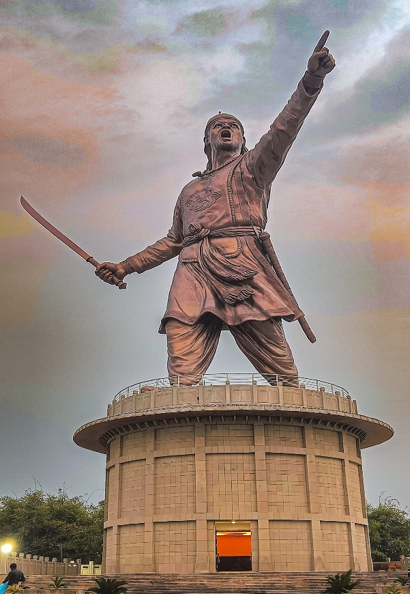
- Statue: PM Narendra Modi unveiled a 125-foot bronze statue of Lachit Borphukan at his burial site in Jorhat on 9 March 2024. It was sculpted by Ram Vanji Sutar.
- Related Heritage: Charaideo Moidams, the royal burial mounds of the Ahom dynasty, were inscribed on the UNESCO World Heritage List in 2024.
92nd Meeting of the Standing Committee of the National Board for Wildlife (SC-NBWL)
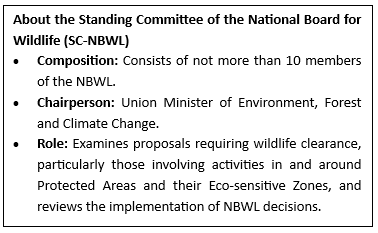
Context: Union Environment Minister chaired the 92nd meeting of the Standing Committee of the National Board for Wildlife (SC-NBWL) in New Delhi, focusing on strengthening terrestrial and marine wildlife conservation while balancing ecological protection with sustainable infrastructure development.
About the National Board for Wildlife (NBWL)
- Establishment: Statutory body constituted by the Central Government in 2003 under Section 5A of the Wild Life (Protection) Act, 1972.
- Nature: Apex advisory body to the Central Government on matters concerning wildlife conservation and protection, particularly in Protected Areas (PAs).
- Composition: A 47-member body.
- Chairperson: Prime Minister of India.
- Vice-Chairperson: Union Minister of Environment, Forest and Climate Change.
- Members: Includes government officials, representatives of institutions concerned with wildlife conservation, defence officials and 10 nominated eminent conservationists, ecologists and environmentalists.
- Member-Secretary: Additional Director General of Forests (Wildlife) and Director, Wildlife Preservation.
Major Functions
- Advises the Central and State Governments on wildlife conservation and protection.
- Promotes the conservation and development of wildlife and forests.
- Recommends the establishment and management of National Parks, Wildlife Sanctuaries and other Protected Areas.
- Reviews the progress of wildlife conservation and suggests measures for improvement.
- Recommends measures to control wildlife poaching and illegal wildlife trade.
- Examines issues concerning the impact of developmental activities on wildlife and their habitats.
- Prepares and publishes a status report on wildlife in India at least once every two years.
INS Ashank: Anti-Submarine Warfare Shallow Water Craft (ASW SWC)
Context: The Indian Navy received Ashank (Yard 3036), an indigenously designed and built Anti-Submarine Warfare Shallow Water Craft (ASW SWC), at Visakhapatnam.
About Ashank
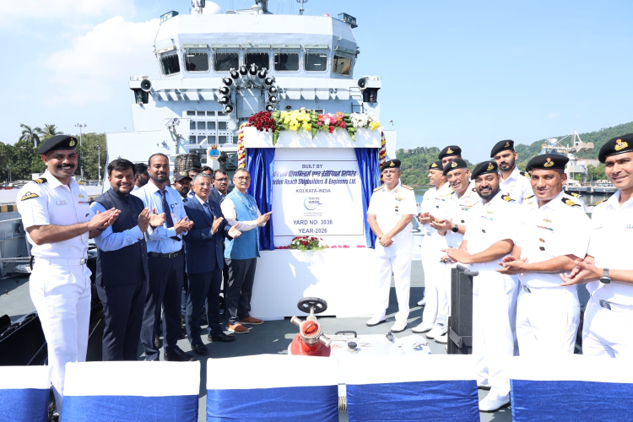
- Indigenous Construction: Designed and built by Garden Reach Shipbuilders and Engineers (GRSE), Kolkata, with over 80% indigenous content.
- Classification: Designed and constructed in accordance with the classification rules of the Indian Register of Shipping (IRS).
- Armament and Equipment:
- Advanced sonar systems for underwater surveillance.
- Lightweight torpedoes for anti-submarine operations.
- Indigenous rocket launchers.
- Propulsion: Equipped with a waterjet propulsion system, making it among the largest Indian naval warships propelled by waterjets.
- Operational Capabilities:
- Anti-submarine warfare in shallow and coastal waters.
- Underwater surveillance and coastal security.
- Low Intensity Maritime Operations (LIMO).
- Mine-laying operations.
About the ASW Shallow Water Craft (ASW SWC) Project
- Objective: Strengthen the Indian Navy’s anti-submarine warfare capabilities, particularly in shallow and coastal waters.
- Total Vessels: The programme covers 16 vessels:
- Garden Reach Shipbuilders and Engineers (GRSE): Contract signed on 29 April 2019 for the indigenous construction of eight vessels.
- Cochin Shipyard Limited (CSL): Contract awarded for the construction of another eight vessels.
- Class: Arnala class.
- Key Specifications:
- Length: Approximately 77 metres.
- Displacement: Around 900 tonnes.
- Maximum Speed: 25 knots.
- Propulsion: Waterjet propulsion system.
Shenzhou-24 Mission: Pakistan’s First Astronaut on China’s Space Station
Context: China launched the Shenzhou-24 spacecraft, carrying Pakistan’s Muhammad Zeeshan Ali, the first foreign astronaut to participate in China’s crewed space programme, marking a milestone in China–Pakistan space cooperation.
About the Tiangong Chinese Space Station
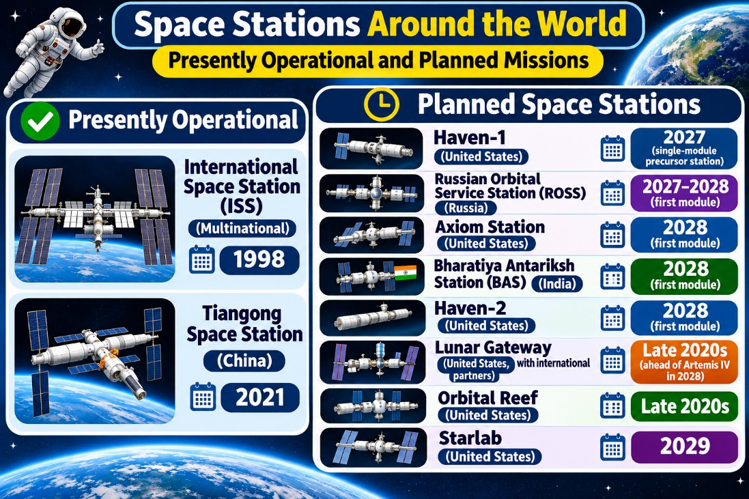
- Meaning: Tiangong means Heavenly Palace. It is China’s permanently crewed space station and a major component of its independent human spaceflight programme.
- Shenzhou-24 Mission: Launched from Jiuquan Satellite Launch Center aboard a Long March-2F rocket, carrying Pakistani astronaut Muhammad Zeeshan Ali and Chinese astronauts Tang Hongbo (commander) and Wu Yi (flight engineer).
- Significance: It marks the first joint flight involving Chinese and foreign astronauts and the first Pakistani participation in an orbital space-station mission.
- Scientific Research: The crew will conduct over 90 experiments covering aerospace medicine, combustion, ageing, biological systems and microgravity. Ali will study photosynthetic cyanobacteria and the effects of radiation and microgravity on seeds.
- Mission Duration: Ali will stay for approximately one week, while Tang and Wu will undertake a six-month mission.
- International Cooperation: The mission follows a China–Pakistan agreement signed in February 2025 and coincides with 75 years of bilateral space cooperation. China aims to develop Tiangong as an international research platform and achieve its first crewed lunar landing by 2030.
Keralam Girl Develops Kidney Ailment After Using Mercury-Laced Fairness Cream
Context: A 17-year-old girl from Malappuram, Keralam, developed membranous nephropathy after prolonged use of an online, influencer-promoted fairness cream containing 12,500 ppm (1.25%) mercury—12,500 times the permissible limit of 1 ppm for most cosmetics.
Mercury in Cosmetics: Health Risks
- Mercury in Skin-Lightening Products: Mercury may be illegally added to skin-lightening creams to inhibit melanin production and lighten skin. Prolonged exposure can cause mercury toxicity.
- Health Impacts: Mercury absorbed through the skin can damage the kidneys and nervous system, potentially causing nephrotic syndrome, neurological complications and, in severe cases, renal failure.
- Membranous Nephropathy: A kidney disorder involving damage to the glomeruli (filtering units of the kidneys), resulting in excessive protein leakage into urine. It may cause swelling (oedema) and, in severe cases, progress to chronic kidney disease.
Regulatory Framework and Government Response
- Cosmetics Rules, 2020: Limit unintentional mercury to 1 ppm in most finished cosmetics; cosmetics intended exclusively for the eye area may contain up to 70 ppm as a preservative.
- Minamata Convention on Mercury: An international treaty adopted in 2013 to protect human health and the environment from mercury pollution; India ratified it in 2018.