
SYLLABUS
GS-3: Conservation, environmental pollution and degradation, environmental impact assessment.
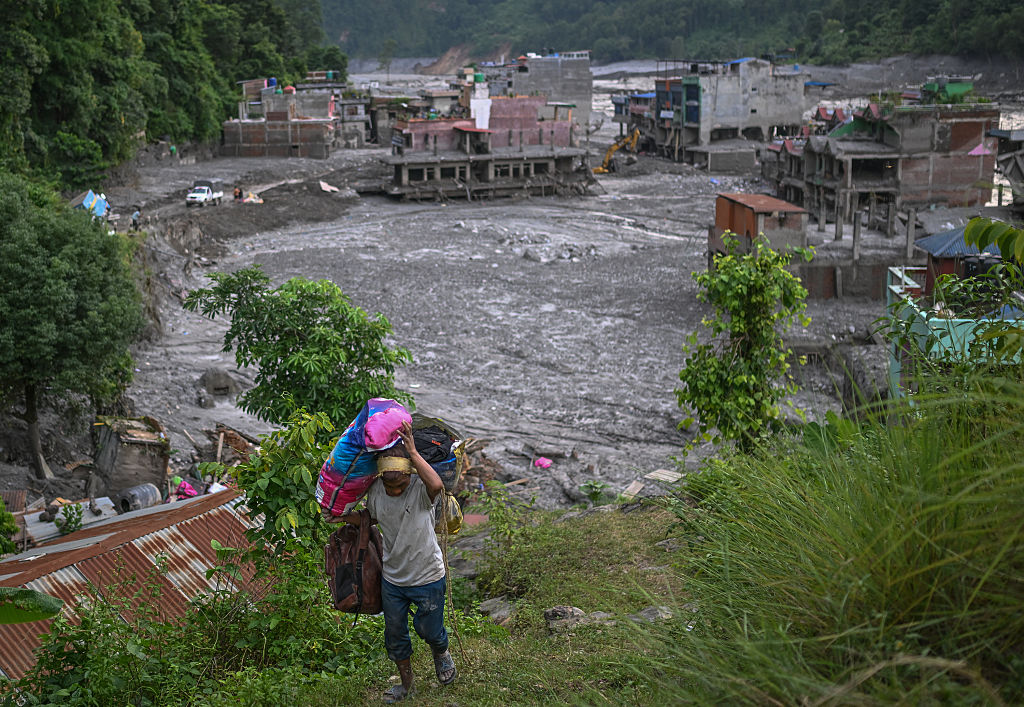
Context: The United Nations’ Fund for Responding to Loss and Damage (FRLD) has provisionally earmarked $21.6 million for Nepal to address losses caused by the devastating floods of August 2026.
More on the News
- The FRLD Board held an extraordinary virtual meeting following Nepal’s urgent request for financial assistance after the August floods.
- The Board approved a pilot approach allowing Nepal to submit a funding request outside the regular submission window under the Barbados Implementation Modalities (BIM).
- The assistance is not yet disbursed; Nepal must submit a formal funding request for consideration at the Board’s December 2026 meeting in Manila.
About the UN Loss and Damage Fund
- Official Name: Fund for Responding to Loss and Damage (FRLD).
- Establishment: Created at COP27 in 2022 in Sharm el-Sheikh, Egypt, and operationalised at COP28 in 2023 in Dubai, United Arab Emirates.
- Objective: To assist developing countries particularly vulnerable to climate change in addressing economic and non-economic losses caused by extreme weather events and slow-onset events.
- Institutional Framework: Operates under the financial mechanism of the United Nations Framework Convention on Climate Change (UNFCCC), with the World Bank serving as its interim trustee.
- Funding Commitments: As of 2026, 27 countries had pledged approximately $822 million, including around $630 million in grant contributions.
- Start-up Allocation: Approximately $342 million was allocated for the Fund’s initial phase, with at least half reserved for Small Island Developing States (SIDS) and Least Developed Countries (LDCs).
- First Funding Call: Received 176 funding requests from 119 countries, seeking approximately $2.8 billion.
- The Board deferred decisions on these requests to December 2026.
- Barbados Implementation Modalities (BIM): The Fund’s initial operational framework for providing financial assistance to vulnerable developing countries.
- Funding Limits: Under the initial funding arrangements, requests for individual events can range from $5 million to $20 million.
- Financial Constraints: The Fund’s actual available cash depends on donors fulfilling their pledges, and a significant gap remains between funding commitments and the requests received.
Significance of the Fund
- First Disaster-Specific Allocation: Marks the first time the FRLD has earmarked funds for a specific country following an immediate climate-related disaster.
- Support for Vulnerable Countries: Provides financial assistance to developing countries with limited resources to recover from climate-induced losses, including damage to infrastructure, livelihoods and communities.
- Recognition of Climate Justice: Highlights the disproportionate burden of climate disasters on vulnerable countries, particularly Least Developed Countries, despite their relatively low contribution to global emissions.
- Pilot for Emergency Funding: The exceptional submission arrangement for Nepal could provide lessons for developing a faster and more flexible mechanism to respond to future climate disasters.
- Highlights the Climate Finance Gap: Nepal estimates economic losses of approximately $2.69 billion and recovery and reconstruction needs of at least $4.71 billion.
- The proposed assistance covers only a small fraction of these needs, highlighting the need for greater contributions, faster disbursement and a permanent rapid-response mechanism.