SYLLABUS
GS-2: Important International Institutions, agencies and fora – their Structure, Mandate.
GS-3: Conservation, Environmental Pollution and Degradation, Environmental Impact Assessment.
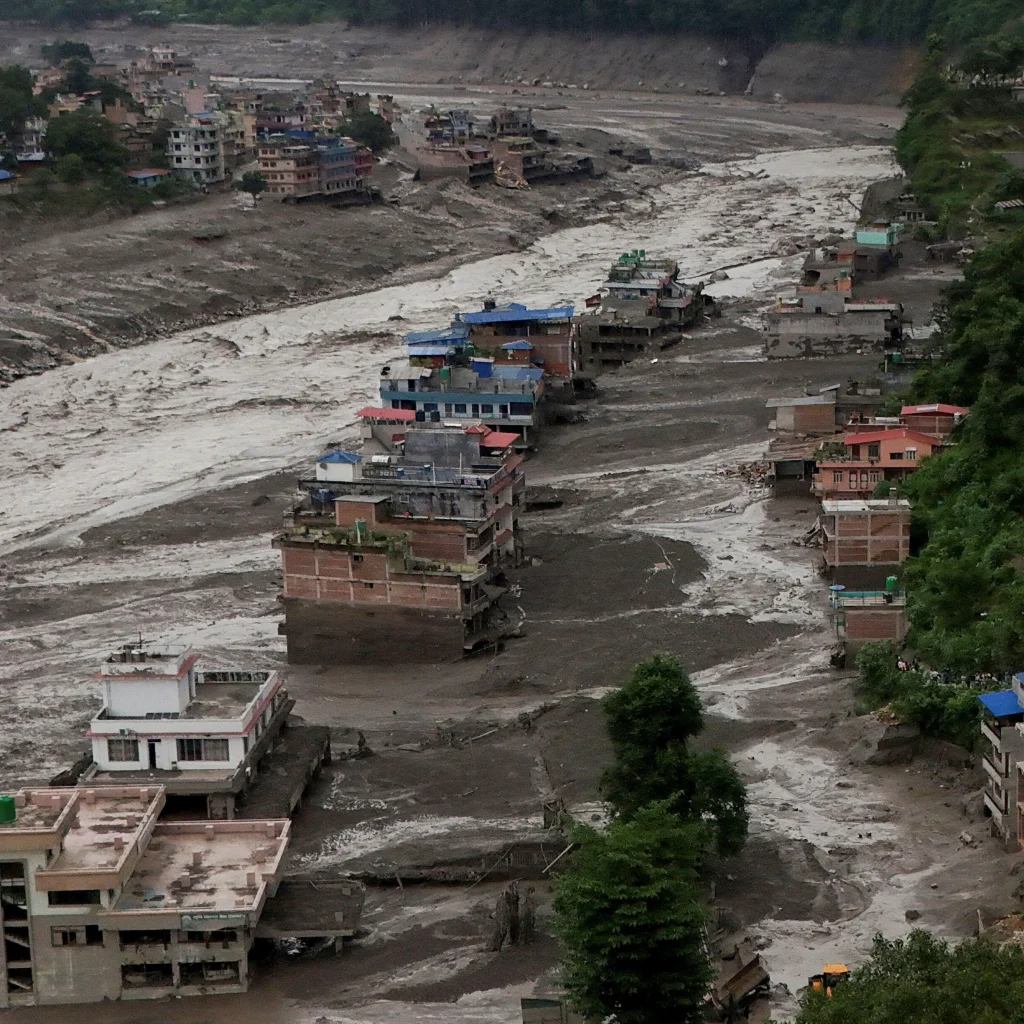
Context: Nepal is seeking climate justice and an initial $20 million from the UN Loss and Damage Fund following devastating floods that struck Nepal and Tibet on 26 August 2026.
More on the News:
- Flood Impact: More than 1,300 people died and over 5,000 remain missing.
- Cause: A major glacier and rock-ice collapse in the Langtang Lirung region triggered torrents of debris and water through the Lhende Khola, Bhote Koshi and Trishuli river systems.
Rationale Behind Nepal’s Climate Justice
- Historical Responsibility: The US is the leading contributor at 25% to the key cause of climate change—CO₂ accumulated in the atmosphere.
- Europe contributes around 20%, while China contributes 15% of the global stock. India’s contribution is under 4%.
- The “Third Pole” Paradox: Despite contributing just 0.1% of global GHG emissions, Nepal’s Hindu Kush Himalayas (HKH) are warming at nearly twice the global average due to Elevation-Dependent Warming (EDW), accelerating glacier melt to nearly 10 times historical levels.
- Per-Capita Emissions: India’s per-capita CO₂ emissions are around 2 tonnes/year, compared with the global average of 4.5 tonnes/year.
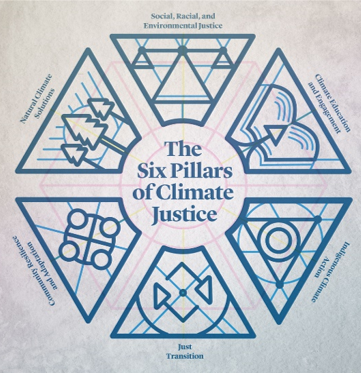
- Climate Justice: Nepal argues that this is not a matter of charity, but of legal and moral liability.
About Loss and Damage Fund
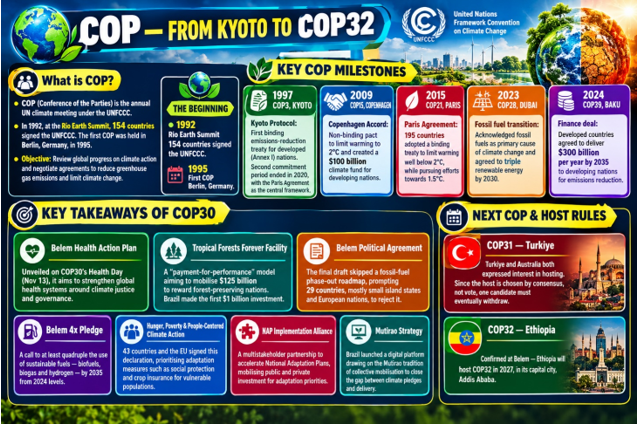
- COP27 2022: At the UN Climate Change Conference of Parties 2022 (COP27) in Egypt, an agreement was reached to create the “Loss and Damage Fund” to help low-income developing countries offset the damage from natural disasters caused by climate change.
- COP28 2023: At the UN Climate Change Conference 2023 (COP28) in Dubai, UAE, climate finance for developing countries became a priority.
- During the inaugural plenary session on the conference’s first day, the Loss and Damage Fund was officially launched to address and compensate for losses and damages incurred due to climate change.
- Purpose: The loss and damage fund is a global financial package to ensure the rescue and rehabilitation of countries facing the cascading effects of climate change.
- Climate Justice: The term refers to climate compensation paid by rich nations whose emissions contributed to global warming.It supports poor, climate-vulnerable nations facing sea-level rise, floods, droughts and cyclones. Contributions to the fund are voluntary.
Status of the Loss and Damage Fund
- Funding Status: Around $822 million has been pledged to the UN’s loss and damage fund, but around $350 million is allotted for disbursement. The UAE has provided $100 million, while much of the other contribution has come from Europe.
- US Withdrawal: The US, which had pledged around $17 million, has now pulled out of this funding mechanism. President Donald Trump has referred to climate change as a ‘hoax’.
Industrialisation and Climate Change
- Industrial Era & Emissions: The Industrial Era started in 1850, disrupting Earth’s natural mechanism for the production and absorption of greenhouse gases.
- The US, UK and EU are responsible for 50% of all emissions; adding Russia, Canada, Japan and Australia raises this to 65% (two-thirds).
- Greenhouse Gases & Global Heating: Greenhouse gases comprise methane, nitrous oxide, water vapour, and CO₂, with CO₂ responsible for most of the global heating.
- Carbon particles are released in extremely large quantities and can linger in Earth’s atmosphere for a millennium or more and warm it.
Key Hurdles to Climate Compensation
- Legal Barrier: Article 8 of the Paris Agreement recognises Loss and Damage but excludes it as a basis for liability or compensation, limiting legal claims against specific emitters.
- Funding Shortfall: The Fund for Responding to Loss and Damage (FRLD), operationalised at COP28, has roughly USD 700 million against multi-billion-dollar disaster costs. Pilot grants of USD 5–20 million and slow disbursement are inadequate for emergency recovery.
- Attribution Challenge: Linking a specific disaster such as a rock-ice collapse to anthropogenic warming is difficult because of interactions among seismic activity, local geomorphology and weather patterns.
- Relief vs Liability: Major powers provide helicopters, rescue teams and medical aid as humanitarian assistance but resist binding arrangements that could create compensatory liability.
Regional Concerns for India
- CBDR-RC Dilemma: India’s advocacy of Common But Differentiated Responsibilities and Respective Capabilities (CBDR-RC) creates moral pressure to support vulnerable neighbours such as Nepal, even though it does not establish legal liability.
- Power Trade Constraints: Cross-Border Trade in Electricity (CBET) guidelines restricting electricity imports involving Chinese contractors or capital can affect Nepal’s hydropower revenues and recovery.
- Early-Warning Gaps: Limited real-time hydrometeorological data sharing creates vulnerabilities in managing GLOFs and Himalayan hazards.
- Implications for India: Nepal’s reliance on historical emissions and per-capita responsibility creates diplomatic pressure on India, as New Delhi has long invoked these principles to seek greater responsibility from developed nations.
- Shared Himalayan Risk: Cryosphere degradation threatens downstream rivers and communities across the Indo-Gangetic plain, making Himalayan resilience a shared regional concern.
Way Forward
- Himalayan Early-Warning Network: India, China, Nepal and Bhutan should establish an open-access transboundary system using satellite radar and hydrological telemetry, supporting Target G of the Sendai Framework.
- Regional Risk Pool: Create a South Asian catastrophe insurance mechanism based on the Caribbean Catastrophe Risk Insurance Facility, using parametric triggers for rapid funding.
- Separate Recovery from Geopolitics: BBIN (Bangladesh, Bhutan, India, Nepal) initiative should consider humanitarian carve-outs in power offtake agreements to restore revenue from disaster-affected hydropower projects.
- Faster Climate Finance: The UNFCCC should create rapid-disbursement emergency windows within the Loss and Damage framework to connect immediate relief with long-term adaptation finance.