

SYLLABUS
GS-2: Issues relating to development and management of Social Sector/Services relating to Health.
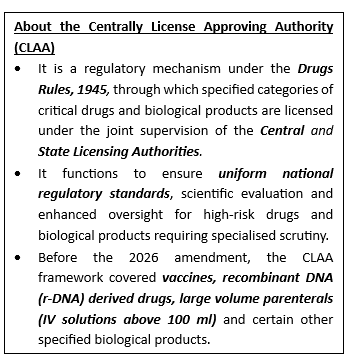
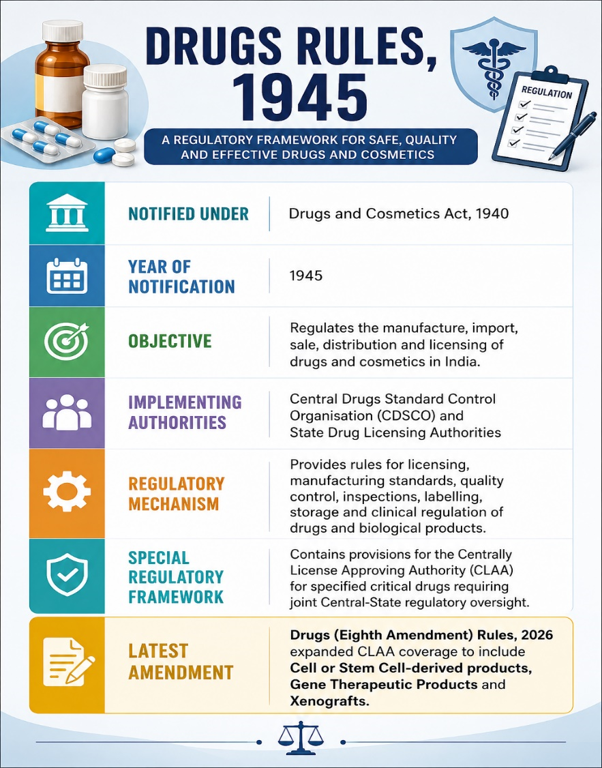
Context: The Central Government has amended the Drugs Rules, 1945, through the Drugs (Eighth Amendment) Rules, 2026, to bring Cell or Stem Cell-derived products, Gene Therapeutic Products and Xenografts under the Centrally License Approving Authority (CLAA) framework.
More on the News
- The amendment expands the existing CLAA framework, under which specified high-risk drugs and biological products are jointly regulated by the Central and State Licensing Authorities, to include advanced regenerative and gene-based therapies.
- The move aims to strengthen regulatory oversight, ensure uniform national licensing standards, safeguard patient safety, and align India’s regulatory framework with scientific advancements and global best practices.
- The amendment came into force on 29 June 2026, following consultation with the Drugs Technical Advisory Board (DTAB) and publication in the Official Gazette.
Key Features of the Drugs (Eighth Amendment) Rules, 2026
- Expansion of CLAA Coverage: Added the following categories under the CLAA framework:
- Cell or Stem Cell-derived Products
- Gene Therapeutic Products
- Xenografts
- Existing Products Already Covered under CLAA:
- Vaccines
- Recombinant DNA (r-DNA) derived drugs
- Large Volume Parenterals (IV solutions above 100 ml)
- Other specified biological products
- Joint Central-State Licensing: These advanced therapies will now require licensing under the joint supervision of the Central Licensing Authority and State Licensing Authorities, ensuring uniform regulatory oversight across the country.
- Products Covered
- Cell or Stem Cell-derived Products: Stem cell-based regenerative therapies and CAR-T Cell Therapy used for blood cancers such as leukaemia and lymphoma.
- Gene Therapeutic Products: Gene replacement and gene-editing therapies used for genetic disorders and various cancers.
- Xenografts: Animal tissue-derived products (e.g., heart valves) transplanted into humans, widely used in cardiology and orthopaedics.
- Legal Changes Introduced: The amendment revises the Drugs Rules, 1945 by
- Amending Rules 75, 75A, 76 and 76A to include the newly notified product categories under CLAA.
- Updating licensing Forms 27D, 27DA, 28D and 28DA in Schedule A to incorporate these products.
- Regulatory Rationale: Advanced cell and gene therapies involve complex manufacturing processes, specialised scientific evaluation and long-term safety monitoring.
- Therefore, they require enhanced regulatory scrutiny compared to conventional medicines.
Significance of the Amendment
- Strengthens Patient Safety: Provides enhanced regulatory scrutiny for complex and rapidly evolving therapies with significant clinical risks.
- Ensures Uniform National Standards: Joint Central-State licensing promotes consistent regulatory standards and scientific evaluation across the country.
- Keeps Pace with Biomedical Innovation: Updates India’s drug regulatory framework to accommodate advances in regenerative medicine, gene therapy and precision medicine.
- Promotes Responsible Innovation: Provides a clear and predictable licensing pathway for developers and manufacturers while maintaining quality, safety and efficacy standards.
- Enhances Regulatory Capacity: Encourages specialised scientific assessment and regulatory oversight for emerging biotechnology products.
- Aligns with Global Best Practices: Brings India’s regulatory framework closer to international standards for regulating advanced biological and gene-based therapies.
- Supports Growth of the Life Sciences Sector: Facilitates faster and responsible adoption of advanced medical technologies while safeguarding public health.