
SYLLABUS
GS-1:Modern Indian history from about the middle of the eighteenth century until the present- significant events, personalities, issues.
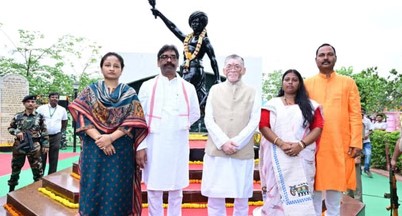
Context: Prime Minister Narendra Modi and other leaders paid tribute to tribal freedom fighter Birsa Munda on his martyrdom day (9 June), remembering his contribution to tribal rights, anti-colonial resistance, and social justice.
About Birsa Munda
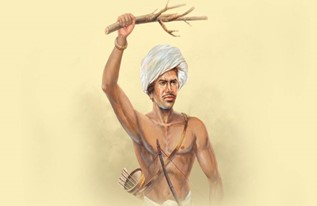
- Early Life: Born on 15 November 1875 in Ulihatu in the Chhotanagpur region.
- Belonged to the Munda tribe and experienced poverty, displacement, and exploitation faced by tribal communities.
- Received education at a German Mission school and was briefly associated with Christianity before returning to indigenous traditions.
- Religious and Social Reformer: Founded the Birsait faith, combining elements of tribal beliefs, Christianity, and reformist ideas.
- Worked to revive tribal identity, cultural pride, and social reform.
- Opposed forced religious conversions and sought to unite tribal communities around a common cultural consciousness.
- Earned the title “Dharti Aaba” (Father of the Earth)from his followers.
- He fought against the British colonial rule, exploitative landlords (zamindars), forced labour (Beth Begari), alienation of tribal lands, and social and economic oppression of Adivasis.
- Advocated protection of Jal, Jangal, Zameen (Water, Forest and Land) and restoration of traditional tribal rights.
- His famous slogan was “Abua Raj ete jana, Maharani Raj tundu jana” (Let our kingdom be established and the Queen’s rule end).
- Leader of the Ulgulan Movement: Led the famous Ulgulan (The Great Tumult) during 1899–1900in the Chhotanagpur Plateau.
- Mobilised Mundas, Oraons, Kharias, and other tribal groups against colonial exploitation.
- Introduced the idea of “Munda Disum”, envisioning freedom from all forms of exploitation and foreign domination.
- Birsa opposed exploitation by “Dikus” (outsiders), including moneylenders, landlords, traders, missionaries and colonial officials.
- Used guerrilla-style resistance against British authorities.
- Arrest and Death: Arrested by British authorities on 3 March 1900 at Jamkopai forest.
- Died under mysterious circumstances in Ranchi Jail on 9 June 1900 at the age of 25.
Legacy of Birsa Munda
- Contribution to India’s Freedom Struggle: Birsa Munda represented grassroots tribal participation and established tribal resistance as an integral part of India’s anti-colonial freedom struggle.
- Protection of Tribal Land Rights: His movement compelled the colonial administration to address tribal grievances and contributed to reforms that later culminated in the Chota Nagpur Tenancy Act, 1908.
- Symbol of Tribal Identity and Empowerment: Birsa Munda became a lasting symbol of Adivasi self-respect, dignity, and resistance, continuing to inspire movements for tribal rights and social justice.
- Recognition and Commemoration: A 14-foot statue and portrait of Birsa Munda are installed in Parliament.
- Memorials have been established at Ulihatu and Ranchi.
- The state of Jharkhand was created on 15 November 2000, coinciding with his birth anniversary.
- His birth anniversary is observed as Janjatiya Gaurav Divas to honour tribal contributions to nation-building.
- Scholarly and Cultural Influence: His life and legacy inspired significant literature, films, and academic studies, including Mahasweta Devi’s book Aranyer Adhikar, making him an important subject in tribal and anti-colonial scholarship.
Sources :
PM India
EPW
UNI India
News on Air
PIB