
SYLLABUS
GS-3: Infrastructure: Energy and Roads.
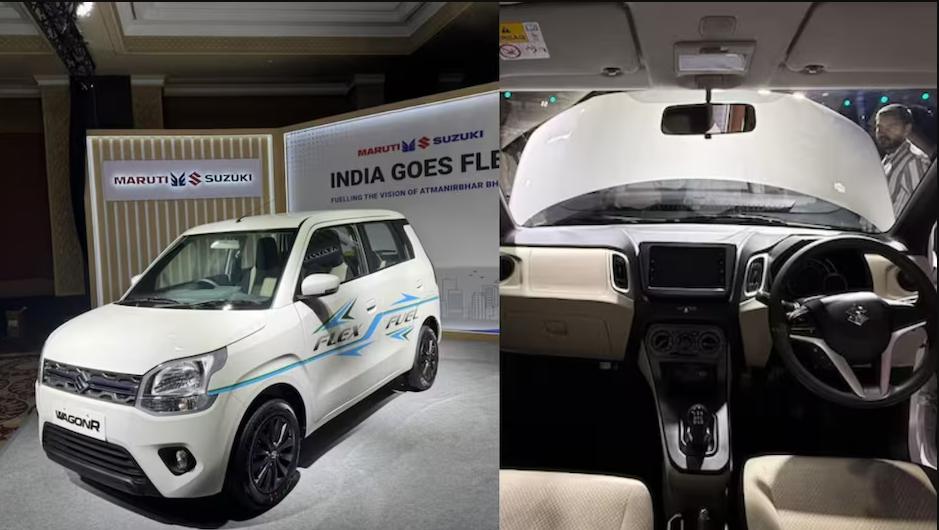
Context: India has launched its first flex-fuel vehicles, marking a significant step towards reducing crude oil imports, strengthening the rural economy through ethanol demand, and promoting low-carbon mobility.
More on the News
• India has entered a new phase of ethanol-based mobility with the launch of its first mass-market flex-fuel two-wheelers by Hero MotoCorp and the first flex-fuel passenger vehicle by Maruti Suzuki India Limited.
• The newly launched vehicles can operate on a wide range of ethanol-petrol blends, ranging from E20 to E85 in two-wheelers and E20 to E100 in passenger cars.
• The launches support the Government’s ethanol blending programme, which has increased blending levels from about 1.5% in 2014 to 20%, while contributing to reduced crude oil imports, foreign exchange savings, and lower carbon emissions.
• To facilitate adoption, the government plans to expand E85 fuel dispensing infrastructure across major urban corridors and gradually develop a nationwide flex-fuel ecosystem.
• The initiative forms part of India’s broader multi-fuel mobility strategy that includes ethanol, electric vehicles, hydrogen, biofuels, and other renewable energy solutions.
About Flexible Fuel
• It refers to a fuel system that allows vehicles to operate on varying mixtures of petrol and ethanol.
• Ethanol is a renewable biofuel primarily produced from agricultural feedstocks such as sugarcane, maize, damaged food grains, and agricultural residues.
• Fuel blends are designated according to ethanol content:
- E20: 20% ethanol + 80% petrol
- E85: 85% ethanol + 15% petrol
- E100: Nearly 100% ethanol
• Flex-fuel technology enables vehicles to automatically adjust fuel injection and combustion parameters, allowing seamless operation on different ethanol-petrol blends without manual intervention.
• Countries such as Brazil have successfully adopted high-ethanol fuel systems on a large scale.
About Flexible Fuel Vehicles (FFVs)
• Flexible Fuel Vehicles (FFVs) are specially modified internal combustion engine vehicles capable of running on petrol, ethanol, or any blend of the two.
• They use a single fuel tank and fuel system but incorporate ethanol-compatible components to withstand ethanol’s corrosive and moisture-absorbing properties.
• Key modifications include:
- Ethanol-resistant fuel tanks, fuel lines, pumps, and injectors.
- Advanced Engine Control Module (ECM) calibration that detects ethanol content and automatically adjusts fuel-air mixtures and ignition timing.
- Modified fuel injection systems for efficient combustion across different fuel blends.
• FFVs retain conventional vehicle architecture and driving characteristics, making them easier to adopt compared to entirely new propulsion technologies.
• India has also explored flex-fuel technologies for diesel vehicles using Dimethyl Ether (DME)-diesel blends through collaborative research by institutions such as Indian Institute of Technology Delhi, Indian Oil Corporation, and Ashok Leyland.
Significance
• Energy Security: FFVs reduce dependence on imported crude oil by promoting the use of domestically produced ethanol.
• Farmer Welfare: Increased demand for ethanol feedstock provides an additional source of income for farmers and strengthens the rural economy.
• Foreign Exchange Savings: Replacing imported petroleum with ethanol helps conserve valuable foreign exchange reserves.
• Environmental Sustainability: Higher ethanol usage lowers lifecycle greenhouse gas emissions and supports India’s climate and net-zero commitments.
• Atmanirbhar Bharat: FFVs promote indigenous fuel production and strengthen self-reliance in the energy and mobility sectors.
Challenges
• Limited Fuel Availability: A widespread network of E85 and higher ethanol-blend dispensing stations is still under development.
• Ecosystem Development: Large-scale adoption requires coordination among fuel suppliers, vehicle manufacturers, policymakers, and consumers.
• Consumer Awareness: Limited public awareness about FFV technology may slow market acceptance.
• Pricing and Affordability: Competitive fuel and vehicle pricing is essential to encourage consumer adoption.
• Ethanol Supply Chain: Sustained production, storage, and distribution of ethanol are necessary to meet growing demand.
Way Forward
• Expand ethanol dispensing infrastructure to improve the accessibility of higher ethanol blends across India.
• Provide fiscal and pricing support to make flex-fuel vehicles and ethanol fuels more affordable for consumers.
• Develop a comprehensive flex-fuel ecosystem through collaboration among government, industry, and fuel suppliers.
• Promote awareness and confidence regarding the safety, reliability, and benefits of flex-fuel technology.
• Scale up sustainable ethanol production through diversified feedstocks and advanced biofuel technologies to ensure long-term energy security.