

SYLLABUS
GS-2: Issues Relating to Development and Management of Social Sector/Services relating to Health; Important International Institutions, agencies and fora – their Structure, Mandate.
Context: The World Health Organization (WHO) has released the World Health Statistics 2026 report, warning that global progress towards health-related Sustainable Development Goals (SDGs) remains uneven and insufficient to achieve the 2030 targets.
More on the News
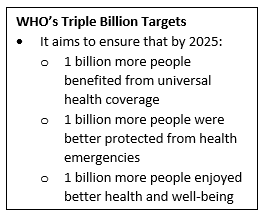
- World Health Statistics is WHO’s annual flagship publication that compiles health-related statistics and SDG indicators for WHO Member States.
- The 2026 edition monitors progress towards SDG 3 (Good Health and Well-Being) and other health-related SDG targets, while also assessing WHO’s “Triple Billion Targets”.
- The report highlights that the COVID-19 pandemic caused severe disruptions to global health systems, reversing several years of progress in life expectancy, maternal and child health, immunisation, and disease control.
- The assessment is based on country reporting systems, WHO databases, SDG indicators, and excess mortality estimates associated with the COVID-19 pandemic.
Key Findings of the Report
- Slow Progress Towards Health SDGs: WHO warned that global progress towards health-related SDGs remains uneven and insufficient to achieve the 2030 targets.
- Trends in Infectious Diseases: The report noted long-term improvements in some infectious diseases between 2010 and 2024:
- New HIV infections declined by nearly 40%.
- Tuberculosis incidence declined by around 12%.
- The number of people requiring interventions for neglected tropical diseases declined by 36%.
- However, global malaria incidence increased by 8.5% since 2015, moving away from the SDG target.
- COVID-19 and Excess Mortality
- WHO estimated around 22.1 million excess deaths globally between 2020 and 2023 due to the direct and indirect impacts of the COVID-19 pandemic — nearly three times the officially reported 7 million deaths.
- The pandemic erased nearly a decade of gains in global life expectancy and Healthy Life Expectancy (HALE).
- Maternal, Child and Non-Communicable Diseases: Since 2000,
- Maternal mortality declined by around 40%.
- Under-five mortality declined by around 51%.
- Premature mortality from four major non-communicable diseases (cardiovascular diseases, cancer, diabetes, and chronic respiratory diseases) declined by more than 20%.
- However, progress has slowed in the SDG era, and many countries remain off track to meet the targets.
- Universal Health Coverage (UHC) and Financial Burden
- Progress towards Universal Health Coverage has slowed significantly, with the global UHC service coverage index increasing only from 68 (2015) to 71 (2023).
- Around one-fourth of the global population faces financial hardship due to out-of-pocket health expenditure, while nearly 1.6 billion people were living in or pushed into poverty because of health expenses in 2022.
Policy Recommendations
- Strengthening Universal Health Coverage: Countries need to expand affordable and equitable access to healthcare services while reducing out-of-pocket expenditure and financial hardship.
- Improving Pandemic Preparedness: Greater investments are required in disease surveillance, emergency preparedness, vaccine systems, and resilient public health infrastructure.
- Bridging Health Inequalities: Governments should prioritise vulnerable populations through improved maternal health, nutrition, immunisation, and primary healthcare services.
- Strengthening Health Data Systems: WHO emphasised the need for timely mortality reporting, robust civil registration systems, and improved health data collection and monitoring mechanisms.