SYLLABUS
GS-2: Bilateral, regional and global groupings and agreements involving India and/or affecting India’s interests.
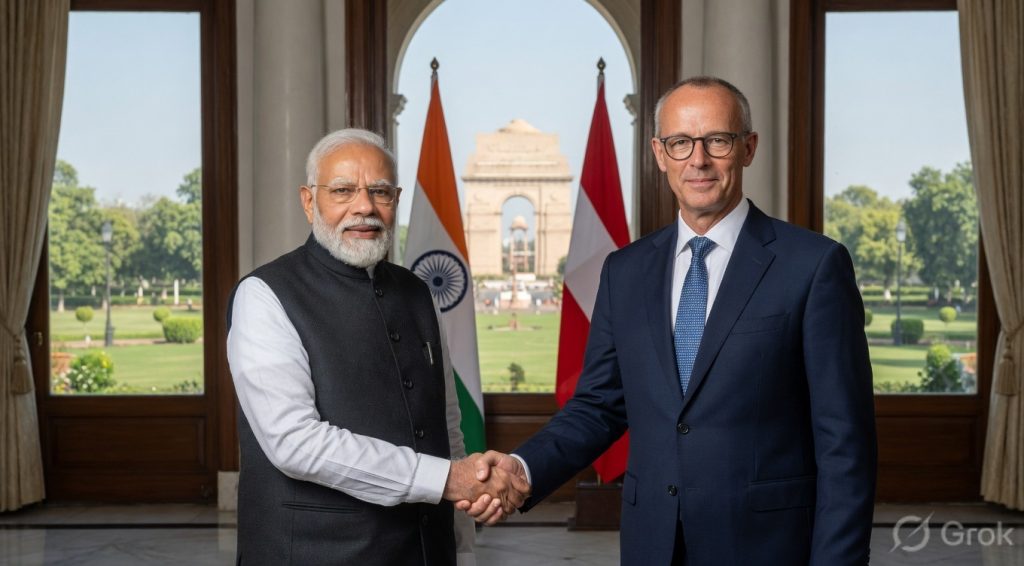
Context: At the invitation of Indian Prime Minister Narendra Modi, Federal Chancellor of Austria, Christian Stocker, paid his first official visit to India, marking the first visit by an Austrian Chancellor in over four decades.
More on the News
- The visit took place in the backdrop of strengthening India–EU relations, including the conclusion of the India–EU Free Trade Agreement (2026), which is expected to boost bilateral trade and investment.
- It builds upon the “Enhanced India–Austria Partnership” launched during Prime Minister Modi’s 2024 Vienna visit, which expanded cooperation into areas such as innovation, renewable energy, and artificial intelligence.
- Both leaders reviewed the growing trajectory of bilateral relations across sectors such as trade, technology, infrastructure, and education, and agreed to further deepen cooperation through institutional mechanisms.
- The visit also assumes significance amid a rapidly evolving global geopolitical environment marked by tensions in Ukraine and West Asia, with both sides emphasizing dialogue, diplomacy, and a rules-based international order.
Key Outcomes of the Visit
- Institutional Agreements and Frameworks:
- India and Austria concluded several agreements to strengthen structured cooperation, including an Agreement on Audiovisual Co-production to enhance cultural collaboration.
- A Fast-Track Mechanism to resolve business and investment-related issues.
- They also signed a Letter of Intent on Military Cooperation to promote defence industry collaboration, training, and policy dialogue.
- A Joint Working Group on Counter-Terrorismto deepen cooperation in combating terrorism and radicalisation.
- An MoU between the Food Safety and Standards Authority of India and Austria’s food safety authority was signed to improve regulatory practices.
- A Joint Letter of Intent on vocational education and skills was agreed to promote dual training systems and recognition of qualifications.
- Security and Strategic Cooperation:
- Both countries unequivocally condemned terrorism, including recent attacks in India, and committed to strengthening cooperation against terror financing and extremism through international frameworks.
- They agreed to launch an Institutional Cybersecurity Dialogue to address emerging cyber threats and enhance coordination in digital security.
- A partnership between India’s Centre for UN Peacekeeping and Austria’s Austrian Armed Forces International Centre (AUTINT) was also welcomed, reflecting growing collaboration in peacekeeping and global security initiatives.
- Economic and Trade Engagement:
- The leaders emphasized expanding bilateral trade and investment, supported by the newly established Fast-Track Mechanism and increasing business participation.
- They underlined the significance of the India–EU Free Trade Agreement (2026) in enhancing market access, strengthening supply chains, and creating new economic opportunities.
- Cooperation will be further promoted in sectors such as infrastructure, manufacturing, green technologies, and digital economy.
- Infrastructure and Energy Cooperation
- Both sides renewed cooperation in road infrastructure, including Intelligent Transport Systems, road safety, and traffic management.
- They highlighted Austria’s expertise in railways, tunnelling, and ropeways as valuable for India’s infrastructure expansion, while also promoting collaboration in renewable energy sectors such as green hydrogen and pumped storage.
- Technology, Innovation and Space:
- High-technology cooperation was identified as a central pillar of the partnership, with collaboration in areas such as artificial intelligence, quantum technology, semiconductors, and advanced research.
- The leaders also agreed to organise a bilateral space industry seminar in Vienna (2026) to expand cooperation in the space sector and encourage industry participation.
- Education, Skills and Mobility:
- Both countries agreed to launch a structured bilateral Dialogue on Education to strengthen academic collaboration, curriculum development, and institutional partnerships.
- They operationalised the Working Holiday Programme and promoted skill mobility through vocational training cooperation and recognition of qualifications.
- Austria’s “Focus India” initiative will further facilitate access for Indian students to technical education in Austrian universities.
- Multilateral and Global Cooperation
- The two sides reaffirmed their commitment to multilateralism, including support for UN reforms and a more representative Security Council.
- They also emphasized a rules-based international order, support for peace through diplomacy in Ukraine and West Asia, and cooperation in the Indo-Pacific in accordance with international law.
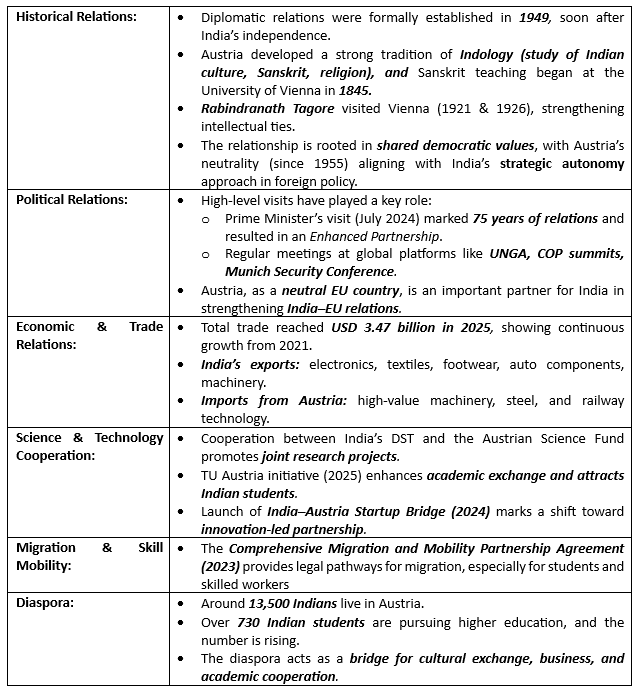
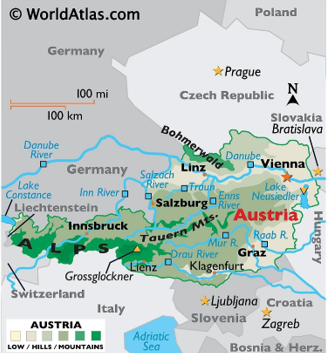
India–Austria Bilateral Relations