
SYLLABUS
GS-3:Infrastructure: Energy.
Context: The Union Cabinet, chaired by Prime Minister Narendra Modi, has approved a ₹14,500 crore Viability Gap Funding (VGF) Scheme to develop 92 GWh of grid-scale energy storage capacity across India during FY 2026–27 to FY 2030–31.
About the Viability Gap Funding (VGF) Scheme for Development of Grid-Scale Energy Storage Systems
- Financial Outlay: The scheme provides ₹14,500 crore in financial support over five years (FY 2026–27 to FY 2030–31), with an estimated total investment of ₹97,600 crore.
- Capacity Development: It aims to support the development of 92 GWh of new, yet-to-be-commissioned energy storage capacity, equivalent to 170% of India’s present grid-scale energy storage capacity.
- Technology-wise Distribution: The proposed capacity comprises: – 60 GWh through Hydro Pumped Storage Plants (PSP). – 30 GWh through Battery Energy Storage Systems (BESS). – 2 GWh through alternative energy storage technologies.
- Allocation Mechanism: Energy storage capacity will be allocated through a tariff-based competitive bidding process.
- Eligible Entities: Public and private sector electricity distribution companies will be eligible for VGF support for BESS and hydro PSP projects. Alternative energy storage projects can be implemented by both public and private sector entities.
- Domestic Content Requirement (DCR): BESS projects will have a minimum domestic content requirement of 40% to promote indigenous manufacturing and reduce dependence on imported components.
- Long-term Target: The scheme will contribute towards meeting India’s projected grid-scale energy storage requirement of approximately 411 GWh by FY 2031–32.
Need and Significance of the Scheme
- Renewable Energy Integration: Solar and wind energy are intermittent. Energy storage systems can store surplus electricity during periods of high generation and release it when generation declines, facilitating greater renewable energy integration.
- Grid Stability and Flexibility: Storage systems help balance fluctuations in electricity generation and demand, improve grid flexibility and reduce the risk of power supply disruptions.
- Reliable Round-the-Clock Power Supply: They enable electricity availability during non-solar hours and periods of low renewable energy generation, supporting reliable and affordable power supply.
- Domestic Manufacturing and Energy Security: The 40% DCR for BESS projects will encourage indigenous manufacturing, create opportunities for Indian industries and reduce dependence on imported components.
- Financial Viability and Private Investment: VGF support will improve the financial viability of capital-intensive storage projects, encourage public and private sector participation and strengthen India’s long-term energy security.
Grid-Scale Energy Storage Systems and India’s Status
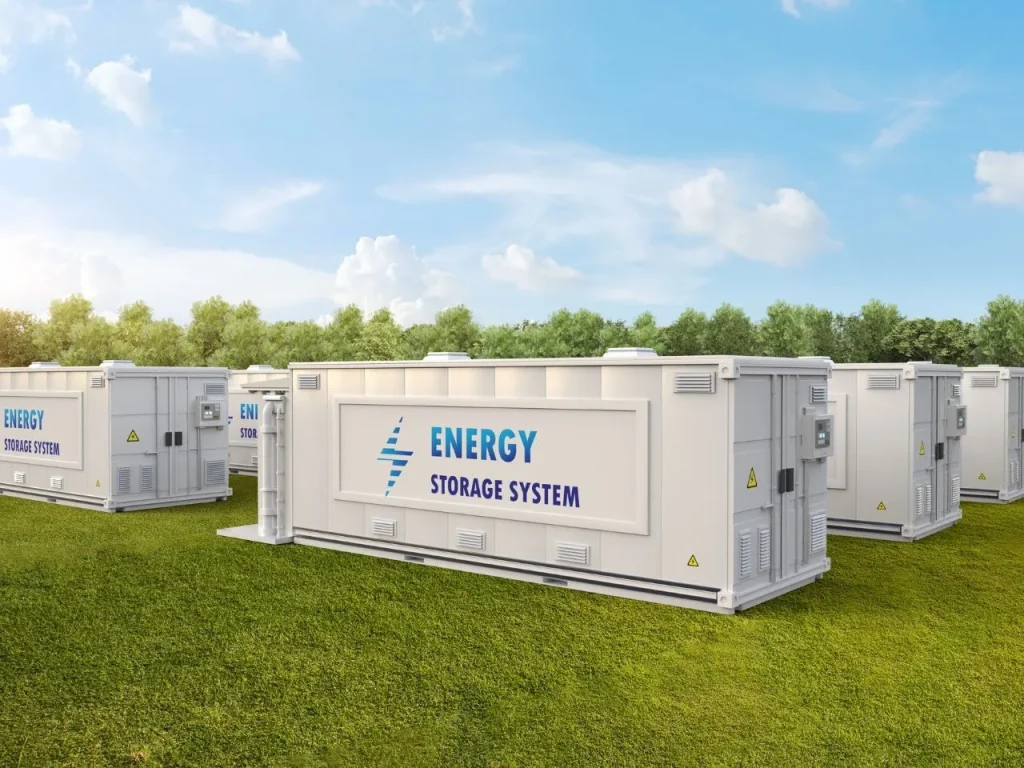
- Grid-scale Energy Storage Systems (ESS) are large-scale facilities that store electricity and release it into the power grid whenever required.
- They balance electricity supply and demand by storing surplus electricity during periods of high generation and supplying it during peak demand or low generation.
- Major Energy Storage Technologies:
- Battery Energy Storage Systems (BESS): Store electricity through electrochemical processes and release it when required. Lithium-ion batteries, particularly lithium iron phosphate (LFP) batteries, are widely used for grid-scale storage.
- Pumped Hydro Storage (PHS): Stores energy by pumping water from a lower reservoir to an upper reservoir using surplus electricity. Water is subsequently released through turbines to generate electricity.
- Alternative Technologies: Include redox flow batteries, supercapacitors and hydrogen-based storage systems.
- India’s Energy Storage Requirements and Status:
- According to the Central Electricity Authority’s (CEA) National Electricity Plan, India requires approximately 411.4 GWh of energy storage capacity by 2031–32, comprising:
- 236.22 GWh of BESS.
- 175.18 GWh of Pumped Hydro Storage.
- The requirement is projected to reach 336.4 GWh by FY 2029–30.
- India’s existing grid-scale energy storage capacity is approximately 54 GWh.
- Its installed BESS capacity is around 2.9 GW, while pumped hydro storage capacity stands at approximately 7.2 GW.
- According to the Central Electricity Authority’s (CEA) National Electricity Plan, India requires approximately 411.4 GWh of energy storage capacity by 2031–32, comprising:
- Other Government Initiatives:
- BESS VGF Scheme (2023): Initially approved ₹3,760 crore for 4 GWh of BESS capacity, subsequently enhanced to approximately 13.85 GWh within the same financial outlay following a decline in battery prices.
- BESS VGF Scheme (2025): Initiated in June 2025 to support 30 GWh of BESS capacity, with ₹5,400 crore in financial assistance from the Power System Development Fund (PSDF).
- Green Energy Corridor (Phase III): Includes a dedicated provision for deploying 50 GWh of BESS to facilitate renewable energy integration and evacuation.