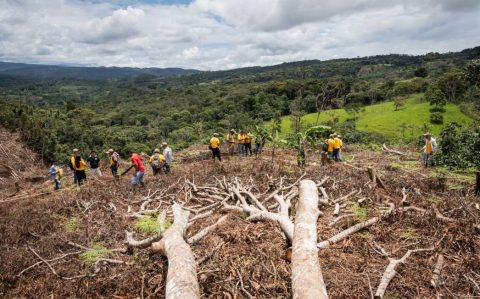
SYLLABUS GS-3: Conservation, environmental pollution and degradation, environmental impact assessment. Context: Recently, the Ministry of Housing and Urban Affairs launched the Dumpsite Remediation Accelerator Programme (DRAP) under Swachh Bharat Mission–Urban
SYLLABUS GS-3: Indian Economy and issues relating to planning, mobilization of resources, growth, development and employment. Context: Recently, the second quarterly PLFS under the new series was released, which presents
SYLLABUS GS-3: Awareness in the fields of IT, Space, Computers, robotics, nano-technology, bio-technology and issues relating to intellectual property rights; Indigenization of Technology and Developing New Technology. Context: Recently, Hindustan Aeronautics
Rhesus Macaque Context: Recently, the Standing Committee of the National Board for Wildlife (SC-NBWL), chaired by the Union Environment Minister, has recommended reinstating the Rhesus Macaque under Schedule II of
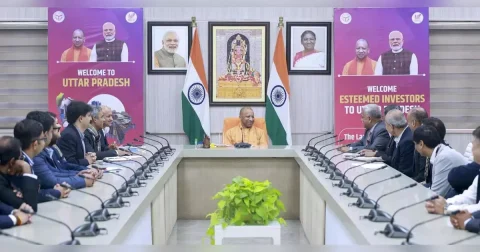
Context: Uttar Pradesh has secured the highest number of registrations for the India Skills Competition 2025, emerging as the top-performing state in the country, according to a government spokesperson. More
SYLLABUS GS-2: Issues relating to development and management of Social Sector/Services relating to Health, Education, Human Resources. Context: India observes National Cancer Awareness Day on November 7th each year,
Context: The Uttar Pradesh microfinance industry, which provides credit to bottom-of-the-pyramid borrowers, including 5.3 million women, is currently estimated at ₹32,500 crore. More on News:
Gogabeel Lake Declared India’s 94th Ramsar Site Context: Recently, the Union Minister for Environment, Forest and Climate Change announced Gogabeel Lake in Bihar as India’s 94th Ramsar Site. More on
Syllabus: GS-2: Effect of policies and politics of developed and developing countries on India’s interests, Indian diaspora. GS-3: Role of external state and non-state actors in creating challenges to internal security. Context: India
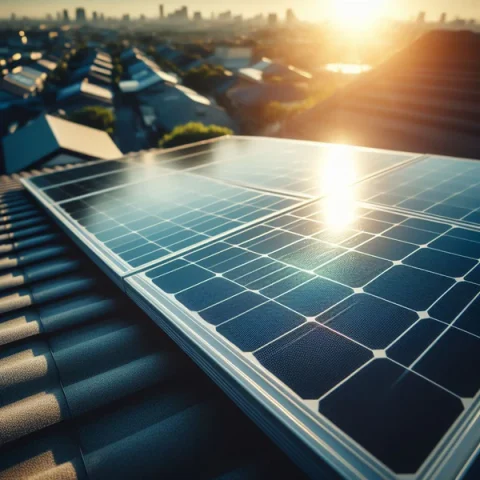
SYLLABUS GS-3: Infrastructure: Energy. Context: Recently, the Council on Energy, Environment and Water (CEEW) released two studies that highlight that India could generate about 11 million tonnes of solar waste by