
SYLLABUS
GS-2:Bilateral, regional and global groupings and agreements involving India and/or affecting India’s interests.
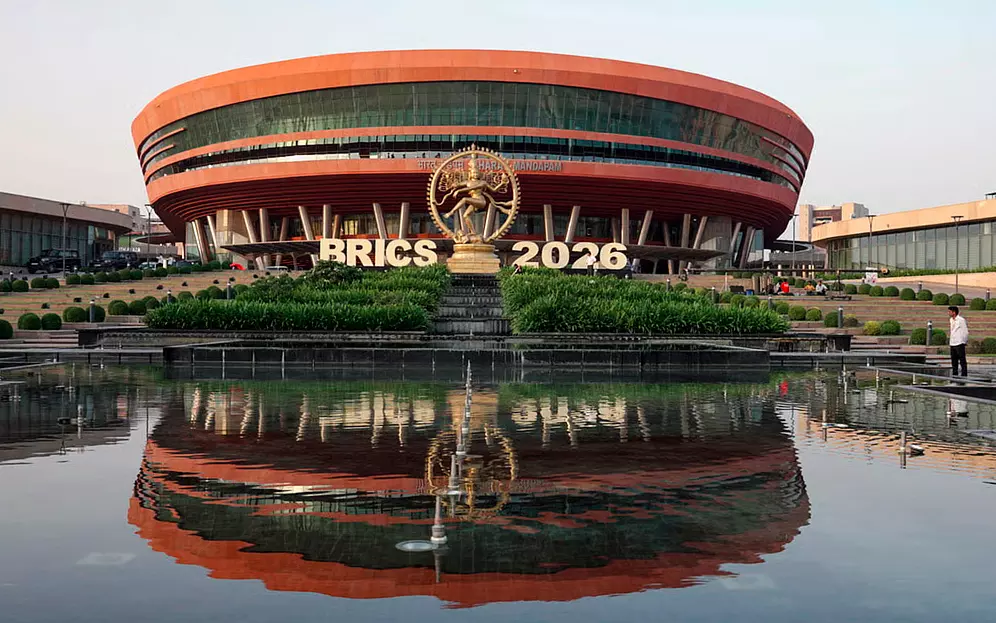
Context: India hosted the 18th BRICS Summit in New Delhi on 12–13 September 2026, culminating in the adoption of the New Delhi Declaration.
More on the News
- Theme: “Building for Resilience, Innovation, Cooperation and Sustainability.”
- Consensus amid divergences: The summit adopted a joint declaration despite the BRICS Foreign Ministers’ meeting in May 2026 failing to issue a joint statement, highlighting India’s consensus-building role amid differences, particularly over the Iran–UAE conflict.
- Next Chair: China will assume the BRICS Chairship in 2027 and host the 19th BRICS Summit.
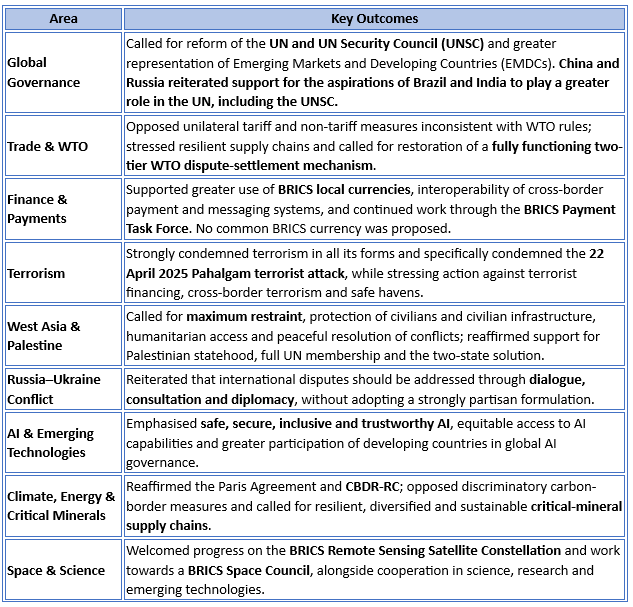
New Delhi Declaration: Key Outcomes
- The New Delhi Declaration covers political, security, economic, technological, environmental and developmental issues. Key outcomes include:
India’s BRICS Chairship: Key Initiatives
- Digital Public Infrastructure: Proposed a BRICS Digital Public Infrastructure (DPI) Repository and pilot projects to facilitate knowledge-sharing and adoption of DPI solutions among members.
- Health & Human Development: Advanced the BRICS Integrated Early Warning System for mass infectious diseases and the BRICS Mission for Healthy Lifestyle (2026–2029). A BRICS Network of Centres of Excellence on Mental Wellness was also supported, with NIMHANS as the coordinating centre.
- Industry, MSMEs & Skilling: Established the India Centre for BRICS Industrial Competencies (ICBIC) for Industry 4.0 and advanced digital-production technologies, alongside initiatives on MSME cooperation and skilling.
- Finance & Development: Advanced the proposed BRICS Risk Lab at GIFT City, the BRICS Task Force on Growth and Development and the BRICS–NDB Knowledge Portal.
- Development-oriented agenda: India pursued more than 50 tangible outcomes, including frameworks, action plans, guidelines, principles, forums and networks across the four priority areas of resilience, innovation, cooperation and sustainability.
Significance for India and the Global South
- Strategic Autonomy: BRICS enables India to engage major powers and emerging economies simultaneously, expanding its diplomatic space amid growing geopolitical fragmentation.
- Global South Leadership: The expanded grouping strengthens India’s platform to articulate developing-country concerns on finance, trade, technology, climate and development and share India’s development experience.
- Reformed Multilateralism: BRICS reinforces India’s demand for greater representation of developing countries in global institutions, including the UN, IMF, World Bank and WTO.
- Economic & Technological Resilience: Cooperation in local-currency payments, resilient supply chains, critical minerals, DPI, AI, health and advanced industries can strengthen South-South economic and technological cooperation.
- Development-oriented Cooperation: India’s Chairship sought to reposition BRICS as a complementary, development-oriented platform focused on practical and scalable solutions for the Global South rather than merely a geopolitical grouping.