
SYLLABUS
GS-2: Indian Constitution—Features, Amendments, Significant Provisions and Basic Structure; Appointment to Various Constitutional Posts, Powers, Functions and Responsibilities of Various Constitutional Bodies.
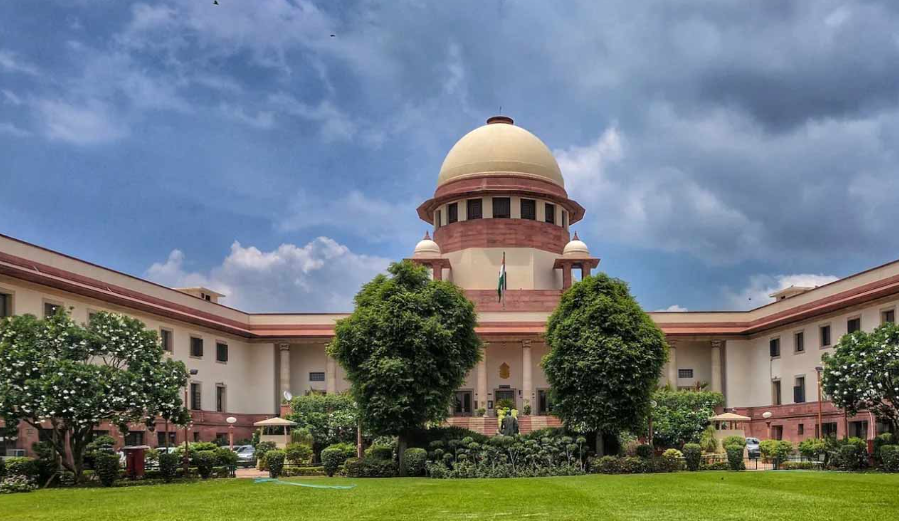
Context: Recently, the Supreme Court delivered a split verdict on whether the challenge to the Chief Election Commissioner and Other Election Commissioners (Appointment, Conditions of Service and Term of Office) Act, 2023 warrants consideration by a larger Constitution Bench.
Key Highlights of the Split Verdict
- Larger Bench Reference: The two judges of the division bench differed on the issue that the law in question raises a substantial question of law requiring a Constitution Bench under Article 145(3).
- However, despite differing on the reference, both judges agreed that the matter should be placed before the CJI for consideration of an appropriate larger Bench
- ECI Independence: The verdict examined whether the 2023 Act adequately protects the Election Commission from exclusive executive influence, an aspect linked to free and fair elections.
- Executive Dominance: The 2023 Act replaced the CJI with a Union Cabinet Minister nominated by the PM, giving the executive two members in the three-member Selection Committee comprising the PM, LoP and nominated Minister.
- Perception Test: Justice Datta observed that the ECI must not only be independent but also be seen to act independently; a PM-nominated Minister may not provide an independent counterweight to the PM.
- Constitutional Questions: The challenge raises questions concerning institutional independence, neutrality, Article 14, free and fair elections and the constitutional limits on Parliament’s power under Article 324(2).
Background of the Case
- Article 324(2): Provides for appointment of the CEC and ECs by the President, subject to a law made by Parliament; no such law prescribing the selection mechanism existed before 2023.
- Anoop Baranwal Judgment, 2023: Until Parliament enacted a law, the Supreme Court prescribed a selection committee comprising the PM, CJI and LoP, emphasising the need for an independent ECI.
- 2023 Act: Parliament replaced the CJI with a Union Cabinet Minister nominated by the PM, establishing the present PM–LoP–Minister selection mechanism.
- Present Challenge: Petitions challenge provisions of the 2023 Act, including Sections 6, 7 and 8(2), primarily on grounds relating to the independence and neutrality of the ECI.
Constitutional and Legal Framework
- Article 324: Vests the superintendence, direction and control of elections in the ECI and provides the constitutional basis for appointments.
- Article 324(2): Enables Parliament to prescribe the appointment mechanism for the CEC and ECs through legislation.
- Article 145(3): Requires a Bench of at least five judges for deciding a substantial question of law concerning constitutional interpretation.
- Basic Structure: Free and fair elections and the institutional independence necessary to conduct them have been recognised by the Supreme Court as constitutionally significant principles.
Significance of the Case
- ECI Independence: May clarify the constitutional safeguards required for an independent and neutral Election Commission.
- Parliamentary Power: Could define the limits of Parliament’s authority under Article 324(2) while framing the appointment mechanism.
- Electoral Integrity: May further establish the relationship between institutional independence of the ECI and free and fair elections.
- Constitution Bench Jurisprudence: Could clarify when an existing constitutional principle can be applied by a regular Bench and when a fresh constitutional question requires a larger Bench.
- Judicial Administration: The case has also highlighted delays in constitutional references and the proposal for a permanent five-judge Constitution Bench for core constitutional matters.