SYLLABUS
GS-1: Indian Culture – Salient aspects of Art Forms, Literature and Architecture from ancient to modern times.
GS-2: Effect of Policies and Politics of Developed and Developing Countries on India’s interests, Indian Diaspora.
Context: India and Indonesia have jointly launched the Prambanan Temple Restoration and Conservation Project at the UNESCO World Heritage-listed Prambanan Temple Complex in Yogyakarta, Indonesia.
More on the News
- Prime Minister Narendra Modi and Indonesian President Prabowo Subianto jointly inaugurated the project and unveiled a commemorative plaque marking its commencement.
- The conservation work will be undertaken by the Archaeological Survey of India (ASI) in collaboration with Indonesia’s heritage authorities.
- The project reflects the growing cultural dimension of the India–Indonesia Comprehensive Strategic Partnership.
About the Prambanan Temple
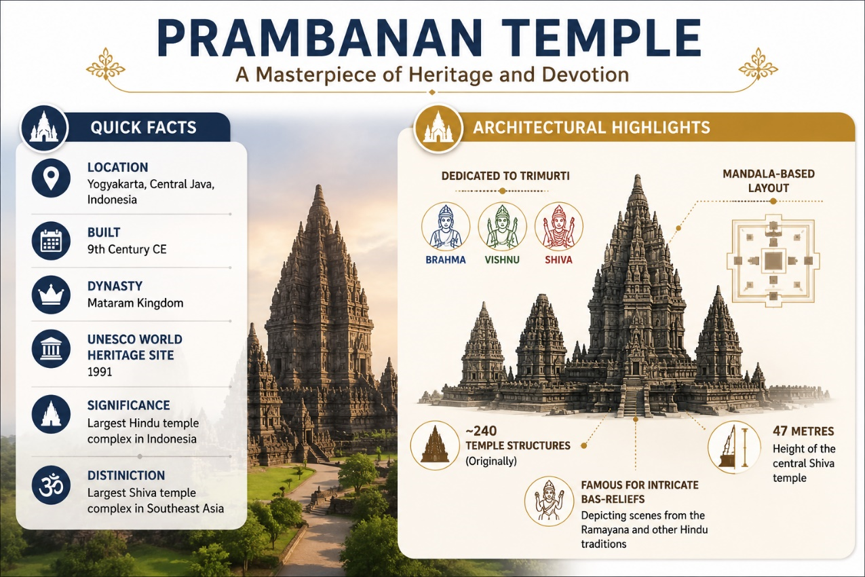
- Prambanan is located near Yogyakarta in Central Java, Indonesia, and was designated a UNESCO World Heritage Site in 1991.
- Built in the 9th century CE during the Mataram Kingdom, it represents one of the finest examples of Hindu temple architecture in Southeast Asia.
- Prambanan is the largest Hindu temple complex in Indonesia and the largest Shiva temple complex in Southeast Asia, reflecting the historical influence of Hindu civilization in the Indonesian archipelago.
- Built in the Shaivite tradition, the complex is dedicated to the Trimurti—Brahma, Vishnu, and Shiva, with the central Shiva temple serving as its most prominent shrine.
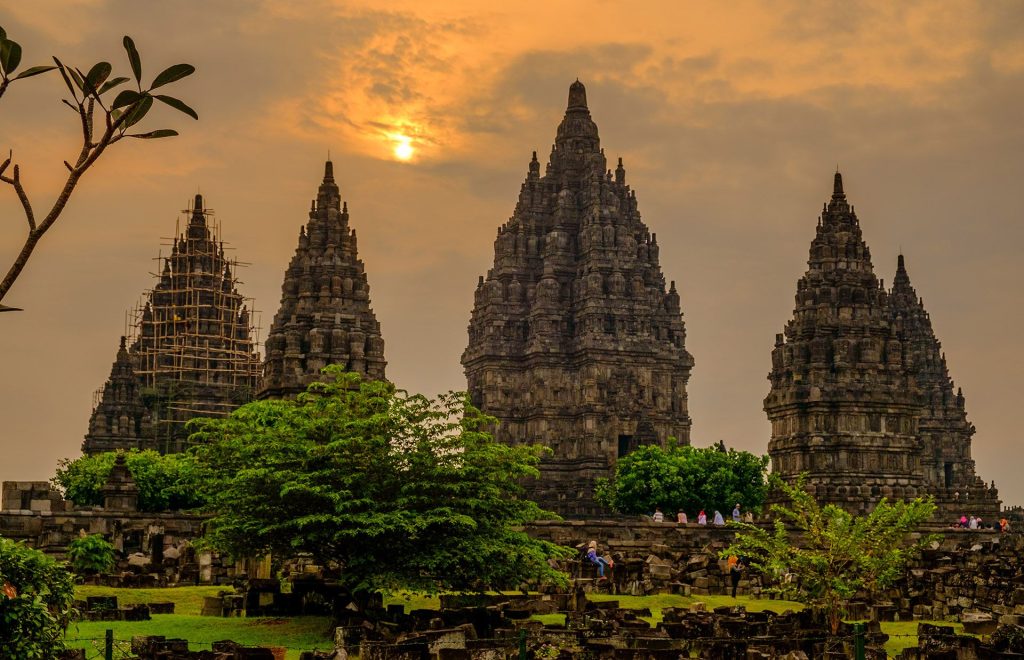
- The complex follows a mandala-based layout and originally comprised around 240 temples. Its central Shiva temple rises to about 47 metres, and the site is renowned for its towering spires and intricate bas-reliefs depicting scenes from the Ramayana and other Hindu traditions.
- Prambanan stands as a lasting symbol of the centuries-old cultural, spiritual, and civilizational links between India and Indonesia.
Significance of the Restoration Project
- Preservation of a Shared Civilizational Legacy: The project seeks to conserve one of the most significant symbols of Hindu heritage in Southeast Asia, reflecting the deep historical links between Indian and Indonesian civilizations.
- Expanding India’s Heritage Diplomacy: The initiative reinforces India’s growing role in conserving cultural heritage beyond its borders and showcases heritage conservation as an important instrument of soft power.
- Conserving a Vulnerable UNESCO Heritage Site: The project supports long-term conservation of a monument that has faced repeated damage from earthquakes, volcanic activity, weathering, and centuries of structural deterioration.
- Strengthening India–Indonesia Relations: Beyond heritage conservation, the project adds a strong cultural dimension to bilateral ties and promotes greater people-to-people engagement between the two countries.
India’s Heritage Diplomacy Initiatives
- Angkor Wat and Ta Prohm, Cambodia: ASI has undertaken major conservation and restoration work at the Angkor World Heritage Complex, particularly the Ta Prohm Temple.
- Ananda Temple, Myanmar: India undertook extensive restoration of the 12th-century Ananda Temple in Bagan after it was damaged by an earthquake.
- Wat Phou, Laos: India has supported conservation and restoration efforts at the UNESCO-listed Wat Phou Temple Complex, an important Khmer-era Hindu site.
- Borobudur Temple Documentation, Indonesia: ASI has previously undertaken extensive documentation of the Borobudur Temple Compounds in Indonesia.
- My Son Sanctuary, Vietnam: India has assisted in conservation and restoration work at the UNESCO-listed My Son temple complex, reflecting its commitment to preserving shared cultural heritage in Southeast Asia.