SYLLABUS
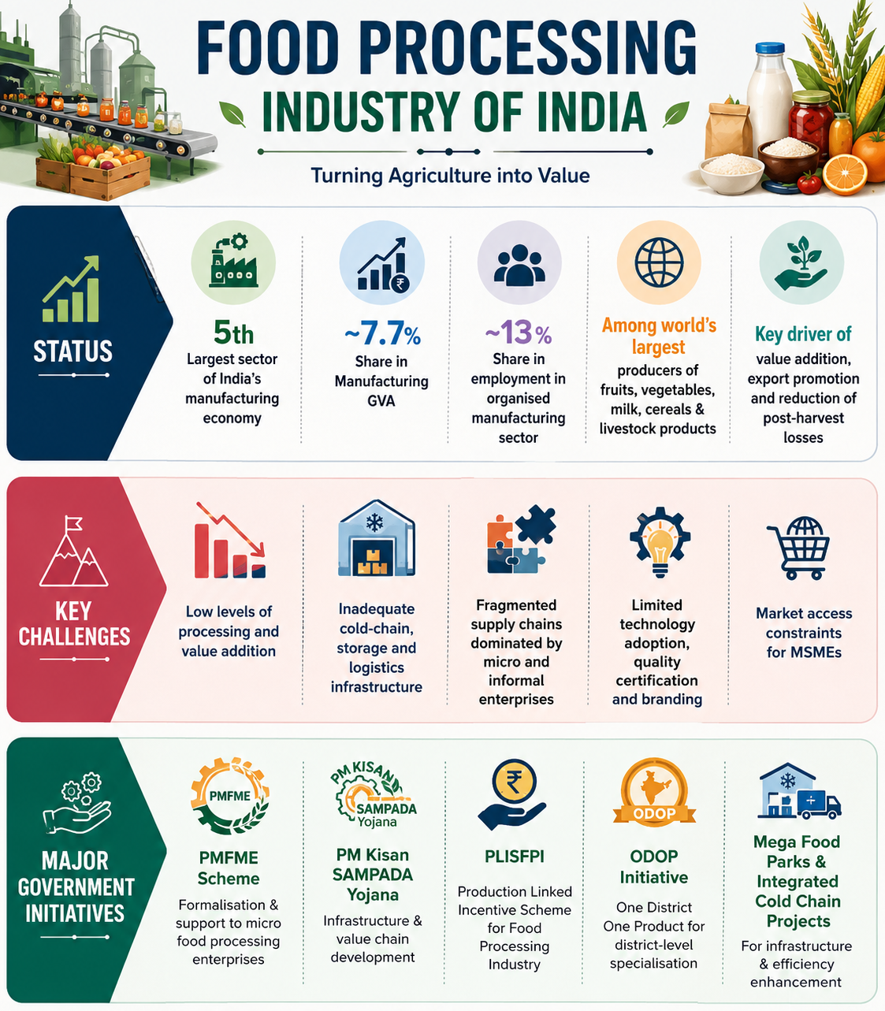
GS-3: Food Processing and Related Industries in India- Scope’ and Significance, Location, Upstream and Downstream Requirements, Supply Chain Management.
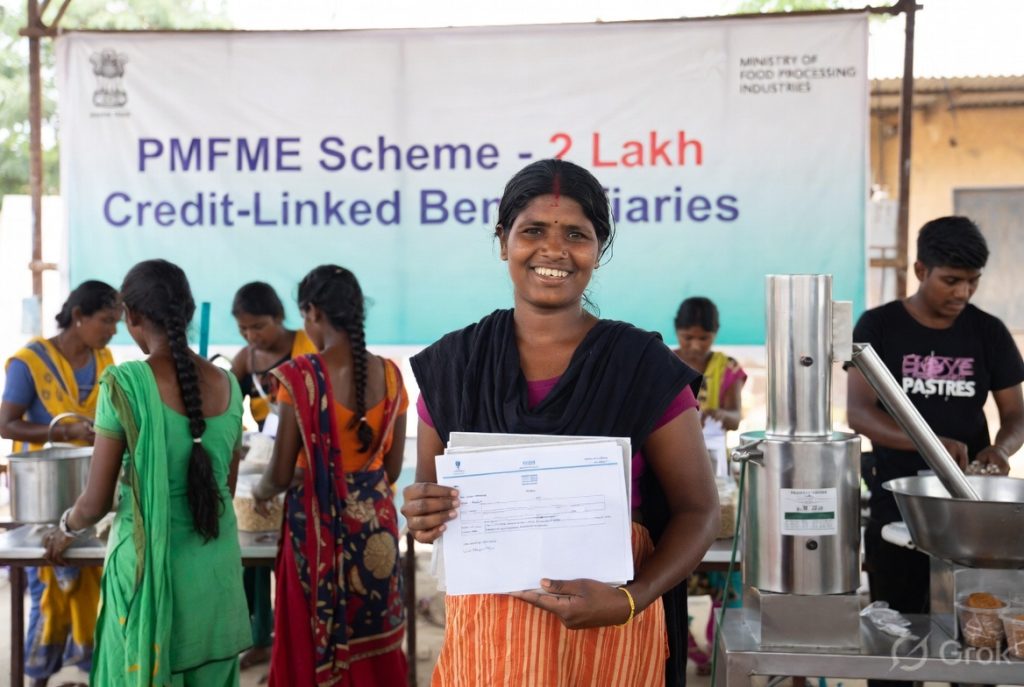
Context: The PM Formalisation of Micro Food Processing Enterprises (PMFME) Scheme has crossed the milestone of two lakh credit-linked beneficiaries, marking a significant achievement in formalising and strengthening India’s micro food processing sector.
More on the News
- More than 2 lakh micro food processing enterprises have received loan sanctions under the scheme, leveraging project investments of over ₹20,300 crore.
- The scheme has generated nearly 11 lakh direct and indirect employment opportunities.
- Around 90% beneficiaries are first-generation entrepreneurs and 44% are women entrepreneurs.
- More than 75,000 PMFME-supported enterprises have entered the formal economy through registrations under Udyam, Udyam Assist, FSSAI, and GST.
- The Scheme’s Seed Capital support has benefitted more than 4.18 lakh Self Help Group members.
About the PMFME Scheme
Launch and Objective
- Launched in 2020 under the Aatmanirbhar Bharat Abhiyan and implemented by the Ministry of Food Processing Industries (MoFPI).
- Aims to formalise and enhance the competitiveness of micro food processing enterprises in the unorganised sector through financial, technical, and business support.
Funding Pattern and Outlay
- A Centrally Sponsored Scheme with an outlay of ₹10,000 crore for the period 2020–21 to 2025–26.
- Funding pattern: 60:40 between Centre and States; 90:10 for North-Eastern and Himalayan States; 100% Central assistance for Union Territories.
Key Features
- Adopts the One District One Product (ODOP) approach to promote district-specific food products and value chains.
- Provides 35% credit-linked capital subsidy on eligible project cost, subject to a maximum of ₹10 lakh per unit.
- Provides Seed capital support of up to ₹40,000 per SHG member for working capital and small tools.
- Support for common infrastructure, branding, marketing, capacity building, and handholding.
Coverage
- Supports individual entrepreneurs, Self-Help Groups (SHGs), Farmer Producer Organisations (FPOs), cooperatives, and producer companies across the food-processing value chain.
Significance of the Scheme
- Formalising India’s Food Processing Ecosystem: The scheme facilitates the transition of micro food enterprises from the informal to the formal economy through access to finance, registrations, quality standards, and institutional support.
- Promoting Rural Entrepreneurship: By supporting first-generation entrepreneurs and local food-processing units, the scheme strengthens rural industrialisation and local value addition.
- Strengthening the ODOP Value Chain: The ODOP approach promotes district-specific products, improves branding and market access, and helps build region-based food-processing clusters.
- Women-Led and Inclusive Growth: Significant participation of women entrepreneurs and community institutions such as SHGs and FPOs contributes to inclusive economic development.
- Employment Generation and Value Addition: Expansion of local processing capacity creates employment opportunities, enhances farmer incomes, and supports agricultural value addition.