

SYLLABUS
Paper I Prelims: Current events of national and international importance.
Context: Canadian poet, essayist and translator Anne Carson won the 2026 Nobel Prize in Literature for her innovative body of work that blends classical traditions with new forms of contemporary literature.
Key Highlights of Nobel Laureate 2026
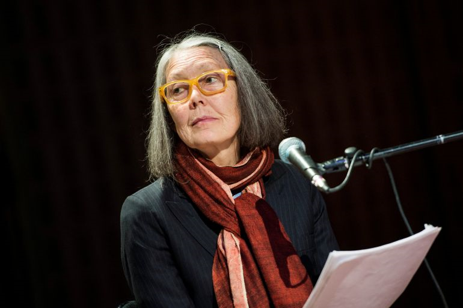
- Laureate: Anne Carson, a Canadian poet, essayist, translator and classicist.
- Awarding Institution: Swedish Academy, Stockholm, Sweden.
- Citation: “For her bold and inventive oeuvre that, in playful dialogue with the classical tradition, has created new forms for contemporary literature.”
- Literary Contributions
- Genre-Defying Writing: Carson blends poetry, prose, fiction, literary criticism and translation, challenging conventional literary boundaries.
- Classical Influence: Her works draw extensively on ancient Greek literature, mythology and philosophy, reinterpreting classical texts through contemporary perspectives.
- Innovative Literary Style: She combines different voices, historical periods and literary genres, using word origins and meanings as important sources of inspiration.
- Translation: Her translations of classical Greek works are recognised as independent literary creations, including If Not, Winter (2002), Electra (2001) and Bakkhai (2015).
- Notable Works
- Eros the Bittersweet (1986): Explores the relationship between desire, love and poetry through classical Greek literature.
- The Glass Essay (1995): A long poem that combines grief, unrequited love and literary reflection on Emily Brontë.
- Autobiography of Red: A Novel in Verse (1998): Reimagines the Greek myth of Geryon as a contemporary coming-of-age narrative.
- The Beauty of the Husband: A Fictional Essay in 29 Tangos (2001): Examines a troubled marriage through a blend of poetry and prose.
- Nox (2010): An experimental work combining photographs, letters and poetry to commemorate her deceased brother.
- Float (2016): A collection of 22 chapbooks that can be read in any order.
About the Nobel Prize
- The Nobel Prizes were established through the will of Alfred Nobel, the Swedish inventor, scientist and entrepreneur.
- In his 1895 will, Nobel directed that his fortune should be used to reward those who had conferred the “greatest benefit to humankind.”
- The first Nobel Prizes were awarded in 1901.
- Nobel originally specified five prize categories: Physics, Chemistry, Physiology or Medicine, Literature and Peace.
- The Sveriges Riksbank Prize in Economic Sciences in Memory of Alfred Nobel was established in 1968 and is administered within the Nobel Prize system, although it was not one of the prizes specified in Nobel’s original will.
- The Nobel Peace Prize is awarded by the Norwegian Nobel Committee.
- The Nobel Prizes are officially handed out on 10 December, the anniversary of Alfred Nobel’s death.
- The term Nobel laureate comes from the ancient Greek tradition of awarding laurel wreaths to victors as a sign of honor.