
SYLLABUS
GS-3: Conservation, Environmental Pollution and Degradation, Environmental Impact Assessment.
Context: The Ken-Betwa River Linking Project (KBLP) has recently witnessed protests by tribal communities in Madhya Pradesh over concerns relating to displacement, rehabilitation, forest rights and environmental impacts.
More on the News
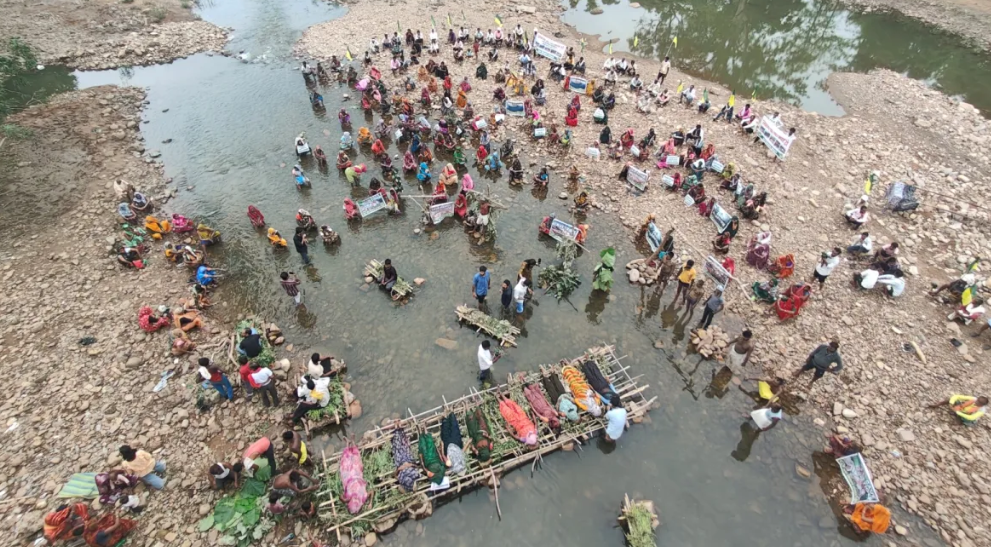
- Tribal communities and other project-affected families have staged protests at the proposed Daudhan Dam site in Chhatarpur district, Madhya Pradesh, demanding fair rehabilitation, compensation and protection of their rights.
- Protesters have adopted various forms of agitation, including Jal Satyagraha, Chita Andolan (symbolic funeral pyre protest), Faansi Andolan (symbolic noose protest), Chulhabandi (kitchen shutdown) and hunger strikes.
- The protests have reignited the debate on balancing large infrastructure projects with environmental conservation, tribal rights and sustainable water resource management.
Understanding the Ken-Betwa River Linking Project
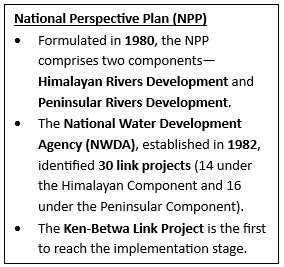
- Part of the River Interlinking Programme: The project is the first river-linking project under implementation as part of India’s National Perspective Plan (NPP), which aims to transfer water from surplus river basins to water-deficit basins through a network of reservoirs and canals for irrigation, drinking water supply and regional development.
- Project Evolution: The NWDA identified the project as a priority in the early 1980s. The Centre and the Governments of Madhya Pradesh and Uttar Pradesh agreed to prepare a Detailed Project Report (DPR) in 2005, a tripartite Memorandum of Agreement (MoA) was signed in March 2021, and the Union Cabinet approved the project in December 2021.
- Project Rationale: The project is based on the premise of transferring water from the Ken River basin, considered relatively water-surplus, to the water-deficit Betwa basin through an inter-basin transfer, with the objective of addressing chronic water scarcity in the Bundelkhand region.
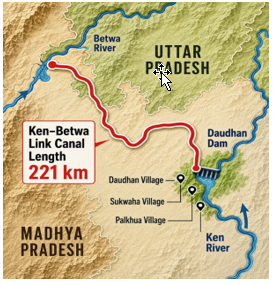
- Key Components: The project envisages construction of the Daudhan Dam on the Ken River, a 221-km link canal, tunnels and associated infrastructure.
- It also includes the Lower Orr Project, Kotha Barrage and Bina Complex Multipurpose Project. A Special Purpose Vehicle (SPV)—the Ken-Betwa Link Project Authority (KBLPA)—has been constituted for project implementation.
- Expected Benefits: The project is expected to provide annual irrigation to about 10.62 lakh hectares, supply drinking water to nearly 62 lakh people, generate 103 MW of hydropower and 27 MW of solar power, and improve water security and agricultural productivity in the drought-prone Bundelkhand region.
Why is the Project Facing Opposition?
- Displacement and Rehabilitation: Thousands of project-affected families, particularly tribal communities, have raised concerns over displacement, alleging inadequacies in compensation, rehabilitation and long-term livelihood restoration.
- Compensation and Land Acquisition Issues: Protesters have questioned land valuation, compensation procedures and the pace of rehabilitation, demanding greater transparency and fair implementation of resettlement measures.
- Forest Rights Concerns: Tribal communities have alleged that Community Forest Resource (CFR) rights and other rights under the Scheduled Tribes and Other Traditional Forest Dwellers (Recognition of Forest Rights) Act, 2006 have not been fully recognised or settled before displacement.
- Ecological Concerns: The project involves submergence of forest areas, including parts of the Panna Tiger Reserve, and has raised concerns regarding impacts on wildlife habitats, including the Ken Gharial Sanctuary, vulture habitats and broader ecosystem connectivity. Government agencies, however, maintain that environmental and wildlife clearances have been granted subject to mitigation measures and landscape management plans.
- Procedural and Governance Issues: Protesters have sought greater transparency, wider public consultation and meaningful participation of Gram Sabhas in decisions relating to land acquisition, rehabilitation and project implementation.
Significance of the Project
- Template for India’s River Interlinking Programme: As the first river-linking project under implementation, the KBLP will serve as a benchmark for future projects envisaged under the National Perspective Plan.
- Enhancing Water Security in Bundelkhand: The project aims to address chronic water scarcity by improving irrigation and drinking water availability in one of India’s most drought-prone regions.
- Promoting Integrated Water Resources Management: By facilitating inter-basin transfer of water, the project seeks to optimise water resource utilisation across river basins with varying water availability.
- Driving Regional Socio-economic Development: Increased irrigation, improved water availability and power generation are expected to boost agricultural productivity, employment opportunities and rural development in Madhya Pradesh and Uttar Pradesh.