
SYLLABUS
GS-3: Indigenization of Technology and Developing New Technology; Security Challenges and their Management in Border Areas.
Context: India has signed a Letter of Offer and Acceptance (LOA) with the US to procure the Javelin anti-tank guided missile (ATGM) system for the Indian Army through the Foreign Military Sales (FMS) route.
Key Highlights of the India–US Javelin Deal
- Agreement: The Indian Army signed the LOA on 28 August 2026, making India a customer of the Javelin system through the US FMS programme.
- Procurement package: The purchase involves the procurement of nearly 100 FGM-148 Javelin anti-tank guided missile systems worth $93 million.
- Operational focus: The acquisition is intended to strengthen the Indian Army’s man-portable anti-armour capability, providing an advanced fire-and-forget system for engaging armoured targets.
- Industrial cooperation: The agreement opens discussions on mutually beneficial co-production and greater defence-industrial cooperation between Indian and US companies.
- Long-pending acquisition: India’s interest in Javelin dates back to 2010; earlier efforts were affected by differences over technology transfer and production arrangements, with India subsequently pursuing the Israeli Spike ATGM.
Understanding the Javelin Anti-Tank Missile System
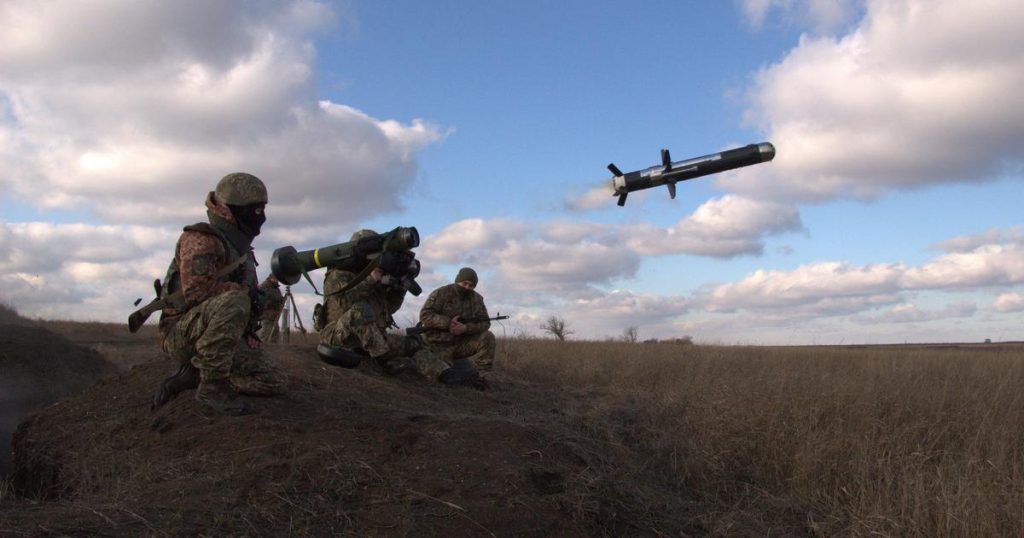
- Javelin (FGM-148) is a single-person, man-portable, medium-range, fire-and-forget ATGM designed against armoured vehicles and fortified positions. It is produced by the Javelin Joint Venture of RTX and Lockheed Martin.
- Fire-and-forget: Its infrared seeker enables lock-on-before-launch, allowing the missile to guide itself after firing and the operator to take cover or reposition.
- Top-attack capability: The missile can strike the upper surfaces of armoured vehicles, where protection is generally weaker; it can also operate in a direct-attack mode.
- Soft launch: Its soft-launch mechanism permits firing from enclosed spaces, enhancing tactical flexibility for infantry units.
- Complementary to indigenous capability: Javelin provides an immediate imported capability while India’s indigenous MPATGM continues towards induction, allowing India to address short-term requirements without abandoning long-term indigenisation.
Significance of the Deal
- Addresses an immediate capability gap: Javelin provides a mature, combat-tested anti-armour capability while India’s indigenous MPATGM is still progressing towards full-scale induction.
- Enhances infantry survivability: The combination of man-portability, fire-and-forget guidance and top-attack capability allows anti-tank teams to engage armour and relocate without remaining exposed for continuous guidance.
- Deepens defence-industrial partnership: The deal moves beyond a conventional buyer–seller relationship by opening avenues for co-production and greater participation of Indian defence industry.
- Highlights the buy–make balance: The acquisition illustrates India’s need to balance urgent operational requirements through imports with the longer-term objective of developing indigenous defence technologies and manufacturing capabilities.
Challenges and Concerns
- Import dependence: Foreign procurement can create dependence on external suppliers for replenishment, spares and lifecycle support.
- Technology-transfer concerns: India’s earlier Javelin negotiations were affected by disagreements over technology transfer; therefore, future industrial cooperation needs to generate meaningful domestic capability, not merely assembly.
- Limited scale: Even an immediate procurement of Javelin systems cannot by itself meet the Army’s broader long-term requirement for modern anti-armour weapons.
- Procurement delays: The 16-year Javelin journey highlights the difficulty of balancing operational urgency, technology-transfer demands and indigenous-development timelines.
Way Forward
- Ensure rapid induction: Expedite delivery, training and logistics support to address the immediate operational requirement.
- Maximise industrial gains: Use the procurement to build Indian capabilities in manufacturing, components, maintenance and lifecycle support.
- Accelerate indigenous ATGMs: Fast-track development and induction of MPATGM and other indigenous anti-armour systems.
- Build layered anti-armour capability: Integrate ATGMs with drones, battlefield surveillance, precision weapons and vehicle-mounted systems.
- Improve acquisition processes: Use lessons from the prolonged procurement journey to reduce avoidable delays while retaining technology and indigenisation objectives.