SYLLABUS
GS-2: Important International Institutions, Agencies and Fora, Their Structure, Mandate; Bilateral, Regional and Global Groupings and Agreements Involving India and/or Affecting India’s Interests.
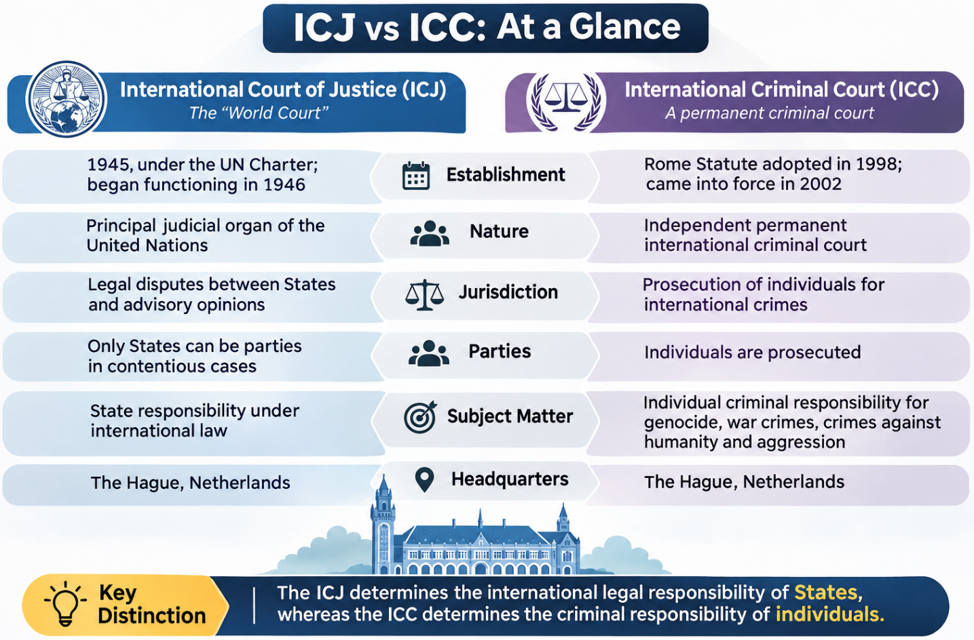
Context: The International Court of Justice (ICJ) ruled that Myanmar committed genocide against its Rohingya Muslim community during the 2017 clearance operations in northern Rakhine State.
Key Highlights of the ICJ Ruling
- Genocidal Acts and Intent: The Court established genocidal acts under the 1948 UN Genocide Convention, including killings, causing serious bodily or mental harm and imposing measures intended to prevent births.
- Failure to Prevent and Punish Genocide: Myanmar violated its obligations to prevent genocide by individuals acting alongside its security forces and to punish genocide and other acts enumerated under Article III of the Convention.
- Failure to Enact Domestic Legislation: Myanmar was found to have violated its obligation to enact legislation necessary to give effect to the Genocide Convention.
- Investigation and Prosecution: Myanmar must take immediate and effective steps to investigate persons reasonably suspected of committing acts contrary to the Convention and, where warranted, prosecute and punish them.
- Restitution and Repatriation: Measures include facilitating the safe, voluntary and dignified return of displaced Rohingya, family reunification, restoration or replacement of lost property, tracing disappeared persons, dignified recovery and reburial of bodies, rehabilitation of victims and protection against discrimination and persecution.
- Compensation and Non-Repetition: Myanmar must compensate the Rohingya for damage not remedied through restitution and provide assurances and guarantees of non-repetition.
Background of the Rohingya Crisis and the ICJ Case
- Who are the Rohingya? The Rohingya are a predominantly Muslim ethnic minority primarily residing in Myanmar’s Rakhine State. They have faced decades of discrimination, restrictions on citizenship and movement, and widespread statelessness.
- 2017 Military Clearance Operations: On 25 August 2017, Myanmar’s military launched clearance operations in northern Rakhine State following attacks by the Arakan Rohingya Salvation Army (ARSA) on security posts. The operations involved widespread killings, sexual violence and destruction of villages, forcing more than 700,000 Rohingya to flee to Bangladesh.
- The Gambia’s Case (2019): On 11 November 2019, The Gambia instituted proceedings against Myanmar before the ICJ, alleging violations of the 1948 Convention on the Prevention and Punishment of the Crime of Genocide (Genocide Convention).
Significance and Implications of the Judgment
- State Accountability: The ruling marks the first time in its 80-year history that ICJ judges have determined that a state committed genocide, strengthening accountability for violations of international law.
- Genocide Convention: Reinforces the obligations of States to prevent and punish genocide and enact domestic legislation giving effect to the Convention.
- Justice for Rohingya: Provides international legal recognition of the atrocities suffered by the community and establishes obligations for restitution and compensation.
- Challenges of Enforcement: Although ICJ judgments are binding and final, the Court has no independent enforcement machinery. Implementation will depend significantly on Myanmar’s compliance and international cooperation.
- Implications for Gaza Genocide Case: The judgment’s interpretation of genocidal intent may inform the ICJ’s ongoing proceedings in South Africa v. Israel concerning alleged genocide in Gaza.