
SYLLABUS
GS-3: Conservation, environmental pollution and degradation, environmental impact assessment.
Context: The Ministry of Environment, Forest and Climate Change (MoEFCC) and the National Biodiversity Authority (NBA) have launched a five-year (2025–2030) project to strengthen grassroots biodiversity governance through community-led planning and innovative financing.
About the Project
• The project titled “Strengthening Institutional Capacities for Securing Biodiversity Conservation Commitments” is a joint initiative of the Government of India, the Global Environment Facility (GEF), and the United Nations Development Programme, with a grant of USD 4.88 million.
• It seeks to integrate biodiversity conservation into Gram Panchayat Development Plans (GPDPs), ensuring that conservation becomes a core component of village-level governance rather than a standalone environmental activity.
• The governance architecture follows a bottom-up approach, with Panchayati Raj Institutions (PRIs) playing a central managerial role, supported by Biodiversity Management Committees (BMCs).
• The project also adopts a “Whole-of-Government” and “Whole-of-Society” approach, ensuring convergence across departments, institutions, and communities.
• The project is rooted in two ecologically rich landscapes:
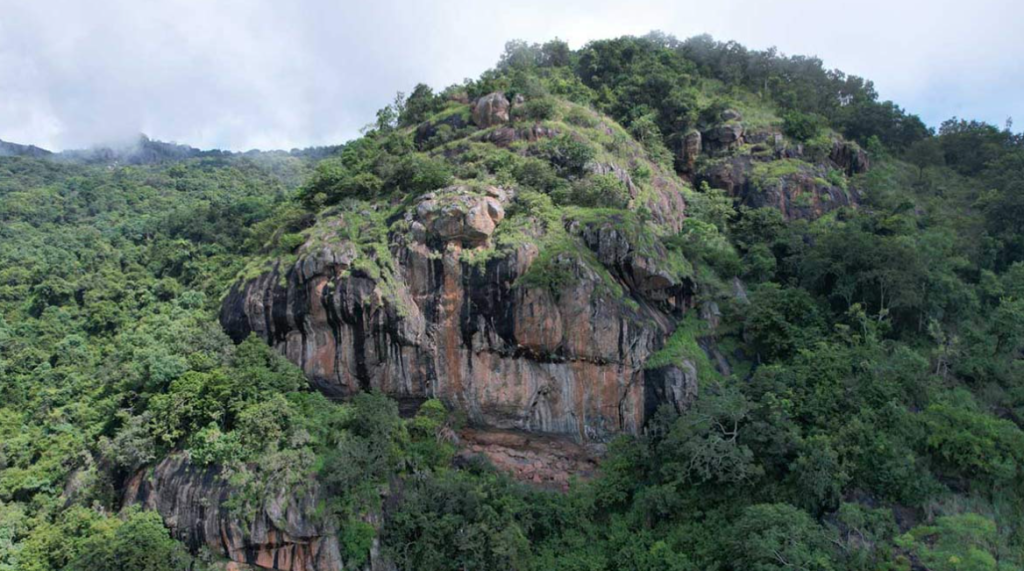
- Tamil Nadu (Sathyamangalam Landscape): Located at the confluence of the Western and Eastern Ghats, covering Mudumalai Tiger Reserve and Sathyamangalam Tiger Reserve, this region includes forest-fringe communities who have traditionally acted as stewards of critical wildlife corridors, especially for elephants and tigers.
- Meghalaya (Garo Hills Region): Encompasses Nokrek Biosphere Reserve, Balpakram National Park, and Siju Wildlife Sanctuary, forming a mosaic of government forests and Reserve Forests where conservation is integrated into Village Employment Councils (VECs), equivalent to gram panchayats.
• These landscapes serve as pilot regions for community-led, landscape-level biodiversity governance models.
• Key Objectives and Strategic Components:
- Greening GPDPs: Mainstreaming biodiversity into local developmental plans to create community-owned and funded conservation frameworks.
- Institutional Strengthening: Enhancing the capacities of PRIs and BMCs and establishing multi-stakeholder platforms involving forest departments, revenue authorities, elected representatives, and civil society.
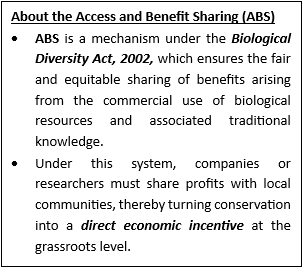
- Innovative Financing Mechanisms: Promoting Access and Benefit Sharing (ABS), CSR co-financing, and green micro-enterprises to link conservation with sustainable livelihoods.
- Knowledge Management & Replication: Systematically documenting innovations and best practices for nationwide scaling through NBA and MoEFCC platforms.
- Inclusive Governance: Strengthening the economic and leadership roles of women, Scheduled Castes, and tribal communities in biodiversity governance.
Policy Alignment and Global Linkages
• India’s Updated National Biodiversity Strategy and Action Plan (NBSAP 2024–2030).
• The 30×30 target under the Kunming-Montreal Global Biodiversity Framework.
• India’s Nationally Determined Contributions (NDCs) under the Paris Agreement.
• State-level visions such as Tamil Nadu Vision 2030 and Meghalaya Vision 2030.
Significance
• Operationalizes Global Biodiversity Goals: Provides a practical model for achieving the 30×30 target through community-led conservation and OECMs.
• Decentralizes Environmental Governance: Embeds biodiversity into GPDPs, transforming over 2.6 lakh Gram Panchayats into active conservation units.
• Strengthens Climate Action: Links local biodiversity conservation with India’s climate commitments under NDCs and adaptation strategies.
• Promotes Sustainable Livelihoods: Creates economic incentives through ABS, CSR funding, and green micro-enterprises.
• Reduces Human-Wildlife Conflict: Enhances community stewardship in ecologically sensitive corridors like Sathyamangalam and Garo Hills.
• Empowers Marginalized Communities: Strengthens participation and leadership of women, Scheduled Castes, and tribal groups.
• Enables Scalable Governance Models: Captures and replicates successful biodiversity financing and governance innovations across India’s districts.
• Supports Inclusive Development Vision: Aligns conservation with the broader goal of “Viksit Bharat” through sustainable and participatory growth.