
SYLLABUS
GS-2: Government policies and interventions for development in various sectors and issues arising out of their design and implementation.
GS-3: Conservation, Environmental Pollution and Degradation, Environmental Impact Assessment.
Context: The Supreme Court has observed that planned commercial cultivation within forest areas cannot, by itself, justify occupation under the Forest Rights Act (FRA), 2006, which recognises the traditional rights of eligible forest-dwelling communities.
More on the News
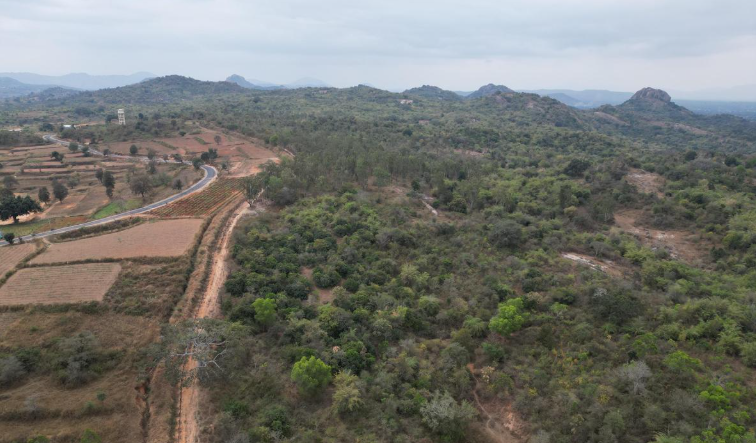
- Background of the Case: In A. John Kennedy & Others v. State of Tamil Nadu & Others, the Supreme Court examined claims under the FRA in the Megamalai forest region of Tamil Nadu, particularly in relation to silk cotton cultivation.
- Supreme Court’s Findings: The Court distinguished the traditional collection of naturally occurring minor forest produce from planned commercial cultivation. It observed, prima facie, that commercial crop cultivation cannot be recognised as a forest right to justify continued occupation.
Understanding the Forest Rights Act, 2006
- Objective: Enacted to address the historical injustice faced by forest-dwelling communities by recognising their traditional rights over forest land and resources, which remained inadequately recorded during colonial and post-independence forest consolidation.
- Eligible Beneficiaries:
- Forest Dwelling Scheduled Tribes (FDSTs): Members or communities of Scheduled Tribes who primarily reside in and depend on forests or forest land for bona fide livelihood needs.
- Other Traditional Forest Dwellers (OTFDs): Members or communities who have primarily resided in and depended on forest land for bona fide livelihood needs for at least three generations (75 years) before 13 December 2005.
- Rights Recognised under Section 3:
- Individual Rights: Right to hold and live on forest land under individual or common occupation for habitation or self-cultivation for livelihood.
- Community Rights: Rights over grazing, fishing, water bodies, traditional seasonal resources and minor forest produce (MFP).
- Community Forest Resource (CFR) Rights: Right to protect, regenerate, conserve and manage traditionally protected community forest resources.
- Habitat Rights: Rights of Particularly Vulnerable Tribal Groups (PVTGs) and other pre-agricultural communities over their traditional habitats.
- Institutional Framework under Section 6:
- Gram Sabha: Initiates the recognition process by receiving, verifying and consolidating claims and preparing maps of the claimed areas.
- Sub-Divisional Level Committee (SDLC): Examines Gram Sabha resolutions and prepares the record of forest rights for consideration by the DLC.
- District Level Committee (DLC): Finally approves the record of forest rights.
- State Level Monitoring Committee: Monitors the recognition and vesting of forest rights.
- Conservation Role (Section 5): Empowers Gram Sabhas and forest-right holders to protect wildlife, forests, biodiversity, water sources and ecologically sensitive areas.
- FRA–PESA Linkage: The Panchayats (Extension to Scheduled Areas) Act, 1996 (PESA) strengthens Gram Sabha-led self-governance in Scheduled Areas, complementing the FRA’s recognition of forest rights.
Significance of the Supreme Court’s Observations
- Clarifying the Scope of Forest Rights: Distinguishes traditional livelihood-based rights, including self-cultivation for livelihood and collection of minor forest produce, from planned commercial cultivation.
- Preventing Misuse of FRA: Clarifies that commercial cultivation alone cannot establish eligibility or justify continued occupation of forest land.
- Protecting Genuine Claimants: Reinforces the need to determine claims through the statutory mechanism rather than treating mere occupation or cultivation as sufficient proof of eligibility.
- Strengthening Forest Conservation: Emphasises the need to protect the ecological integrity of the Megamalai forest and its critical tiger habitat while implementing the FRA.
Challenges in the Implementation of FRA
- Difficulties in Establishing Eligibility: OTFDs must establish 75 years of primary residence and dependence on forest land. Historical under-recording of customary occupation and inadequate documentation can complicate the verification of claims.
- Inadequate Recognition of Community Rights: Implementation often gives greater administrative attention to individual land titles, while CFR rights, customary access to forest resources and PVTG habitat rights also require recognition.
- Conflict between Conservation and Livelihoods: Forest-dwelling communities depend on forests for livelihood and cultural practices, while encroachments and commercial activities can threaten forest ecosystems. Delayed recognition of legitimate rights can further complicate this balance.
Way Forward
- Evidence-Sensitive Verification: Use historical records, community evidence, customary practices, maps and other permissible forms of evidence while assessing claims, rather than relying excessively on formal land documents.
- Strengthening Gram Sabhas: Ensure timely constitution of Gram Sabhas and strengthen their capacity to receive, verify and recommend individual and community forest rights claims.
- Prioritising Community Rights: Expedite recognition of CFR and PVTG habitat rights alongside individual forest rights.
- Balancing Conservation and Livelihoods: Protect recognised customary rights while preventing unauthorised commercial occupation and ecological degradation in forest areas.