SYLLABUS
GS-2: Bilateral Agreements involving India and/or affecting India’s interests; Effect of Policies and Politics of Developed and Developing Countries on India’s interests.
Context: India’s strategic connectivity ambitions centred on Iran’s Chabahar Port have come under renewed strain amid escalating regional tensions and the expiry of the US sanctions waiver, raising concerns over the project’s future despite India’s continued commitment to developing the port.
More on the News
- Recent US airstrikes in Iran reportedly damaged areas near the Chabahar Free Trade Zone, raising concerns over the security of India’s strategic connectivity project.
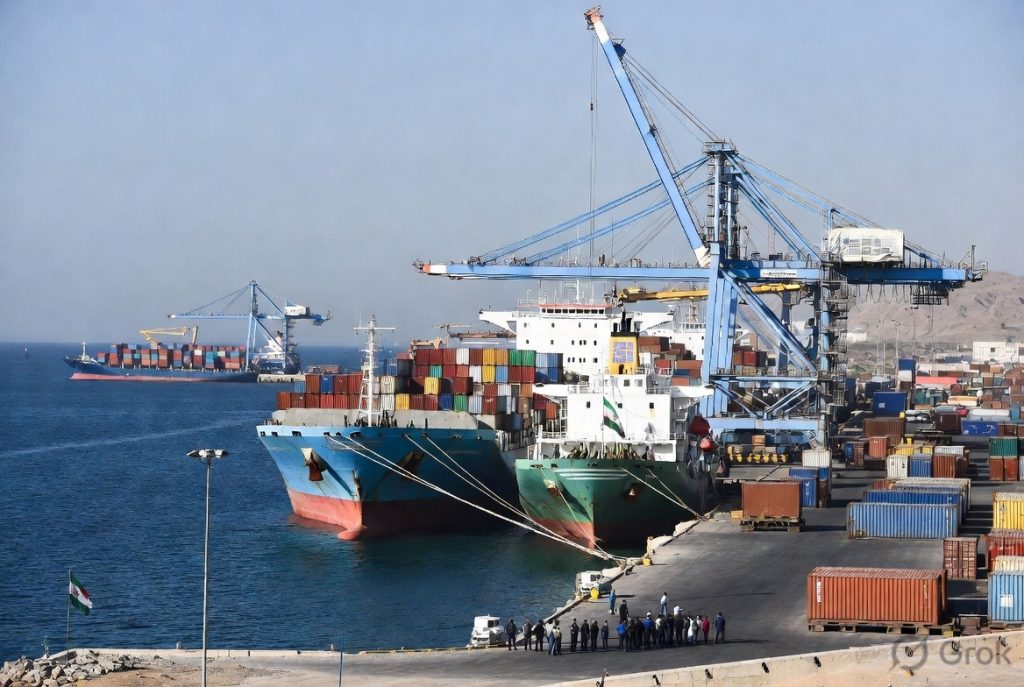
- However, India has clarified that the Shahid Beheshti Terminal, operated by India Ports Global Limited (IPGL), was not damaged and continues to function normally.
- The US sanctions waiver, originally granted in 2018 to facilitate Afghanistan’s economic development, was withdrawn in September 2025, restored through a six-month exemption, and expired in April 2026, renewing uncertainty over India’s operations at Chabahar.
- These developments underscore the growing impact of regional geopolitical tensions on connectivity initiatives linking South Asia with Central Asia and Eurasia.
About Chabahar Port
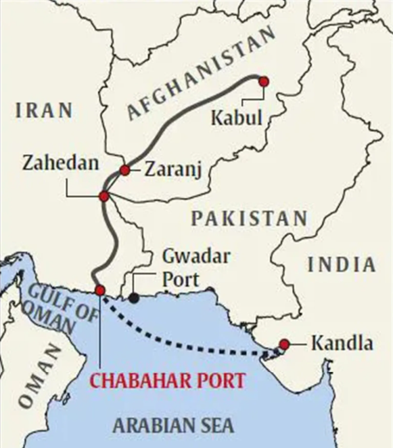
- Strategic Location: Chabahar is Iran’s only oceanic deep-water port, located in Sistan-Baluchestan Province on the Gulf of Oman, outside the Strait of Hormuz.
- Port Structure: The port comprises Shahid Beheshti and Shahid Kalantari terminals, with India Ports Global Limited (IPGL) operating the Shahid Beheshti Terminal.
- India’s Engagement: India has been developing Chabahar since 2003. In May 2024, India and Iran signed a 10-year agreement enabling IPGL to equip and operate the Shahid Beheshti Terminal—India’s longest overseas port management contract.
- Institutional Framework: The India-Iran-Afghanistan Trilateral Agreement (2016) provides the framework for developing Chabahar as a regional trade and transit hub.
- Indian Investment: India has committed US$120 million for equipping and upgrading the terminal and extended a US$250 million line of credit for related infrastructure projects.
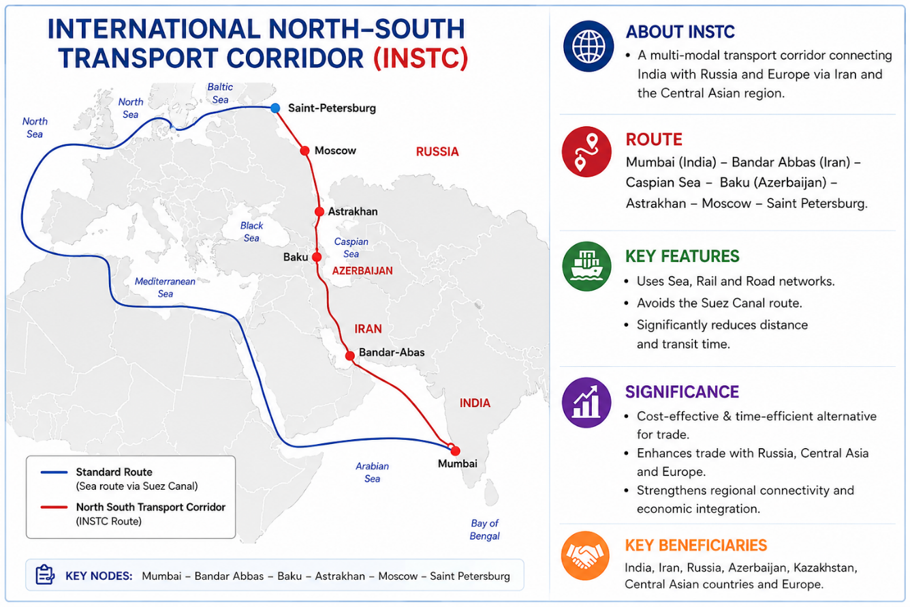
- Regional Connectivity Hub: Chabahar provides India direct access to Afghanistan, Central Asia and Eurasia, bypassing Pakistan, and serves as a key maritime node of the International North-South Transport Corridor (INSTC).
Importance of Chabahar for India
- Bypasses Pakistan: Provides India direct access to Afghanistan and Central Asia without relying on Pakistani territory, enhancing India’s strategic autonomy.
- Strengthens Regional Connectivity: Acts as a critical gateway for the International North-South Transport Corridor (INSTC), reducing transit time and transportation costs for trade with Central Asia, Russia and Europe.
- Strategic Counterbalance: Located close to Pakistan’s Gwadar Port, Chabahar strengthens India’s strategic presence in the northwestern Indian Ocean amid China’s growing footprint through the China-Pakistan Economic Corridor (CPEC).
- Diversifies Trade and Energy Connectivity: Diversifies India’s trade routes, facilitates access to resource-rich Central Asia and improves supply-chain resilience in the region.
- Humanitarian Connectivity: Chabahar has enabled India to supply wheat, medicines and humanitarian assistance to Afghanistan despite the absence of overland access through Pakistan.
Why is Chabahar Facing Geopolitical Headwinds?
- Escalating Regional Conflict: The Iran-US-Israel confrontation has heightened security risks, increasing uncertainty over shipping, port operations and regional trade.
- Expiry of US Sanctions Waiver: The lapse of the sanctions exemption has complicated financing, shipping, insurance and private-sector participation, affecting the port’s commercial viability.
- Strategic Balancing Challenge: India must preserve its strategic partnership with the US while sustaining long-standing ties with Iran, making Chabahar increasingly difficult to operationalise amid competing geopolitical interests.
- Risk of Strategic Disadvantage: Prolonged uncertainty over Chabahar could enhance the strategic relevance of China’s investments in Gwadar Port under the CPEC, potentially weakening India’s connectivity advantage in the region.
Way Ahead
- Institutionalise Operational Certainty: India should continue diplomatic engagement with the US and Iran to secure a predictable framework for Chabahar’s uninterrupted operation while addressing sanctions-related concerns.
- Accelerate Multimodal Connectivity: Expediting rail and logistics links connecting Chabahar with the INSTC would improve cargo movement and enhance the port’s commercial viability.
- Strengthen Regional Economic Integration: Expanding cooperation with Iran, Central Asian countries and other INSTC partners can increase cargo volumes and establish Chabahar as a preferred regional transit hub.
- Sustain Long-Term Strategic Commitment: Continued investment, infrastructure development and policy continuity are essential to establish Chabahar as a reliable gateway to Afghanistan, Central Asia and Eurasia despite geopolitical uncertainties.