
SYLLABUS
GS-2: Issues and challenges pertaining to the federal structure, devolution of powers and finances up to local levels and challenges therein.
GS-3: Indian Economy and issues relating to planning, mobilization of resources.
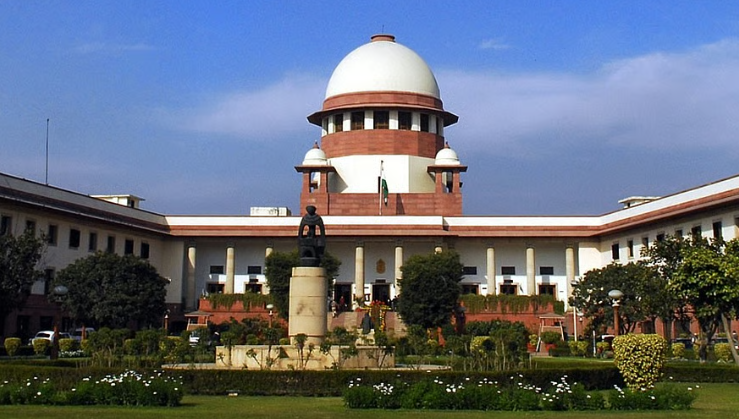
Context: A seven-judge Constitution Bench of the Supreme Court has reaffirmed the legal position established in 1974 that States can levy an additional sales tax calculated as a percentage of the existing sales tax payable.
More on the News
- Background of the Case: In Arjun Flour Mills v. State of Odisha, the Supreme Court examined challenges to additional sales-tax provisions, particularly Section 5A of the Orissa Sales Tax Act, 1947.
- Nature of the Levy: Section 5A required dealers with an annual gross turnover exceeding ₹10 lakh to pay an additional surcharge of 10% of the total sales tax payable.
- Core Constitutional Question: Whether a surcharge calculated on sales tax already payable amounts to an impermissible ‘tax on tax’ or remains a tax on the sale or purchase of goods under Entry 54 of List II.
- Supreme Court’s Decision: The Bench held that the legal position was already settled by S. Kodar v. State of Kerala (1974).
Understanding Basic Taxation Concepts and the Constitutional Framework
- Sales Tax: An indirect tax imposed on the sale or purchase of goods. Under the earlier constitutional framework, States exercised this power under Entry 54 of List II (State List).
- Surcharge: An additional levy imposed over and above an existing tax. In the present case, it was calculated as a percentage of the sales tax payable by a dealer, effectively enhancing the rate of the existing tax.
- Cess: A tax or levy imposed for a specified purpose, with its proceeds earmarked for that purpose. For instance, the Punjab Social Security Cess was intended to finance social security measures through a dedicated fund.
- Surcharge vs Cess: Both are additional levies, but their purpose and statutory structure differ. A surcharge generally raises revenue for general government purposes, whereas a cess is ordinarily earmarked for a specified purpose.
- Constitutional Distribution of Taxing Powers:
- Article 246: Distributes legislative powers between Parliament and State Legislatures through the Seventh Schedule.
- Entry 54, List II: Under the pre-GST framework, empowered States to impose taxes on the sale or purchase of goods, subject to Entry 92A of List I.
- Entry 82, List I: Empowers Parliament to impose taxes on income other than agricultural income.
- Impact of the 101st Constitutional Amendment, 2016: The introduction of GST substantially altered the earlier distribution of indirect-tax powers. Entry 54 of List II was narrowed to sales of specified petroleum products and alcoholic liquor for human consumption.
Evolution of Judicial Position
- S. Kodar v. State of Kerala (1974): A five-judge Bench upheld additional sales tax on dealers crossing a prescribed turnover threshold, holding that calculating it as a percentage of existing sales tax did not change its character as a tax on sales.
- Hoechst Pharmaceuticals v. State of Bihar (1983): The Supreme Court upheld a surcharge calculated as a percentage of sales tax payable, treating it as an enhancement of the existing levy.
- India Cements Ltd. v. State of Tamil Nadu (1990): The Supreme Court struck down a cess on royalty, holding that royalty was a tax, and the State lacked legislative competence to impose such a levy.
- Kesoram Industries (2004) and Mineral Area Development Authority (2024): Kesoram Industries clarified that the reference to royalty as a tax in India Cements was an inadvertent error. Subsequently, a nine-judge Bench in Mineral Area Development Authority held that royalty is not a tax but contractual consideration payable for mineral rights
- Arjun Flour Mills Reference (2026): The seven-judge Bench held that S. Kodar continues to govern the issue.
Significance of the Judgment
- Reaffirmation of State Taxing Powers: Confirms the continuing validity of the principle that an additional sales-tax levy calculated as a percentage of existing tax can constitute an enhancement of the sales-tax rate.
- Clarification of ‘Tax on Tax’: Establishes that the method used to calculate a levy does not determine its constitutional character; the subject matter of taxation remains decisive.
- Resolution of Judicial Uncertainty: Clarifies that India Cements did not establish a general prohibition on levies calculated with reference to another levy.