
SYLLABUS
GS-3: Indigenization of Technology and Developing New Technology; Awareness in the fields of IT, Space, and Computers.
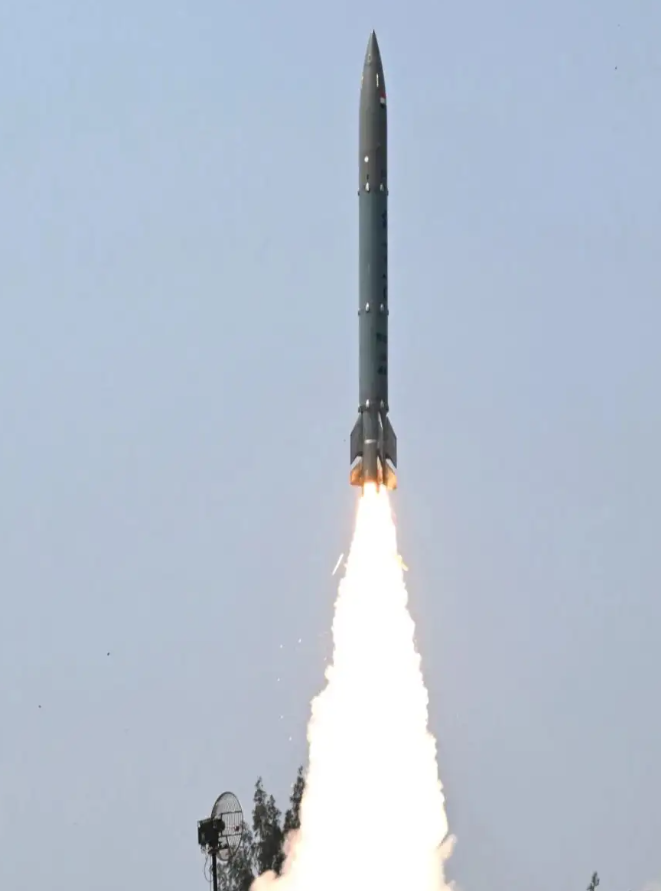
Context: The Defence Research and Development Organisation (DRDO) successfully flight-tested the indigenously developed quasi-ballistic missile Pralay from Dr. APJ Abdul Kalam Island off the Odisha coast, as part of its user evaluation trials.
About the Pralay Missile
• Pralay is an indigenously developed, solid-propellant, canisterised, surface-to-surface quasi-ballistic missile designed to carry conventional warheads.
• It has been developed by the Research Centre Imarat (RCI), Hyderabad, along with other DRDO laboratories.
• Bharat Dynamics Limited (BDL) is one of its development-cum-production partners and has manufactured the missile system.
• The missile is designed to carry different types of conventional warheads against various targets.
• The successful completion of its user evaluation trial has paved the way for its imminent induction into the armed forces.
Key Features of the Pralay Missile
• Range: It has an operational range of approximately 150–500 km.
• Payload Capacity: It can carry about 500–1,000 kg of conventional warheads (some reports give 350–1,000 kg). It can strike targets at around 350 km with the full payload, and the range extends to about 500 km with a lighter payload.
• Propulsion: It uses a solid-propellant propulsion system.
• Guidance and Navigation: It employs advanced guidance and navigation technologies to ensure high precision.
• Speed: It can achieve reported hypersonic terminal speeds of approximately Mach 5–6.1.
• Manoeuvrability: It can perform mid-flight and terminal manoeuvres, making its trajectory less predictable and complicating interception.
• Deployment: Its canisterised design facilitates storage, transportation and launch readiness.
About Ballistic Missiles
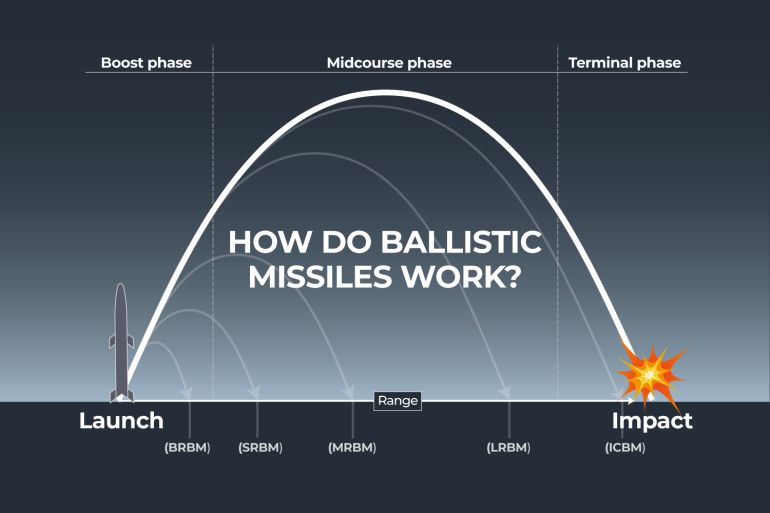
• These are missiles that follow a ballistic trajectory and are powered only during the initial phase of flight, with most of their journey being unpowered.
• They can be launched from fixed sites or mobile platforms, including land-based vehicles, aircraft, ships and submarines.
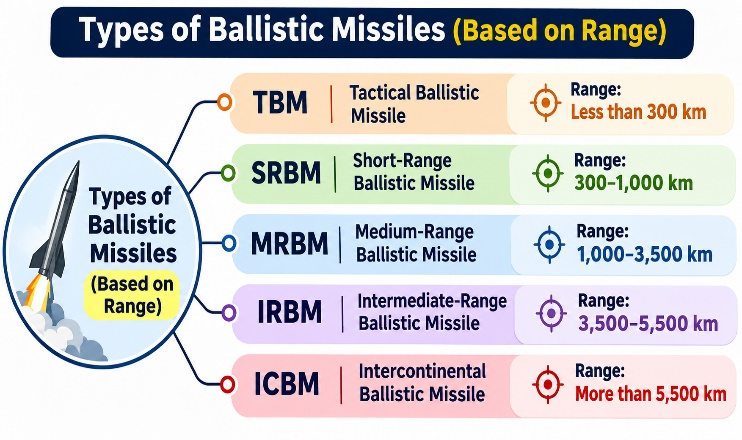
• Short-range ballistic missiles generally remain within the Earth’s atmosphere, while most longer-range ballistic missiles travel outside the atmosphere.
• Difference from Cruise Missiles: Ballistic missiles follow a ballistic trajectory after their initial powered phase, whereas cruise missiles remain aerodynamically powered and guided throughout their flight.
About the Quasi-Ballistic Missiles
• A quasi-ballistic missile follows a relatively low and shallow ballistic trajectory while remaining within the Earth’s atmosphere.
• Unlike traditional ballistic missiles, it can perform sustained manoeuvres during flight, including changes in altitude and direction.
• These mid-flight and terminal manoeuvres make its trajectory less predictable, improve targeting flexibility and complicate interception.