SYLLABUS
GS-3: Conservation, Environmental Pollution and Degradation, Environmental Impact Assessment.
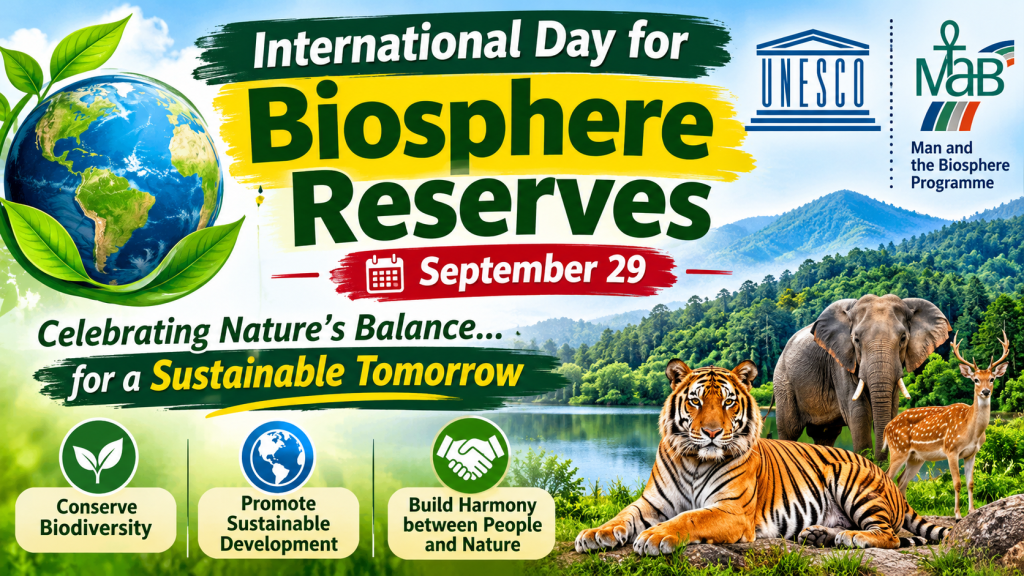
Context: The International Day for Biosphere Reserves is observed annually on 3 November to promote biodiversity conservation and sustainable development.
About the International Day for Biosphere Reserves
- The day was proclaimed by UNESCO during its 41st General Conference in 2021.
- It highlights the role of biosphere reserves in conserving biodiversity, promoting scientific research and supporting sustainable livelihoods.
- UNESCO’s World Network of Biosphere Reserves (WNBR) comprises 797 reserves across 145 countries, covering over 5% of Earth’s terrestrial surface.
- Around 90% of these reserves overlap with Key Biodiversity Areas (KBAs).
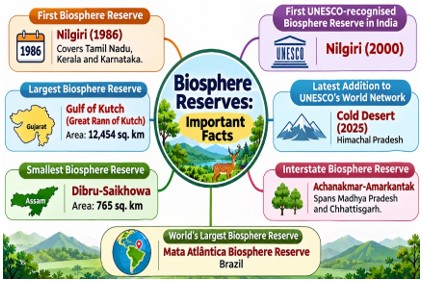
- The Mata Atlântica Biosphere Reserve in Brazil is the world’s largest biosphere reserve.
About Biosphere Reserves
- Biosphere reserves are representative terrestrial, marine or coastal ecosystems designated by national governments for biodiversity conservation and sustainable development.
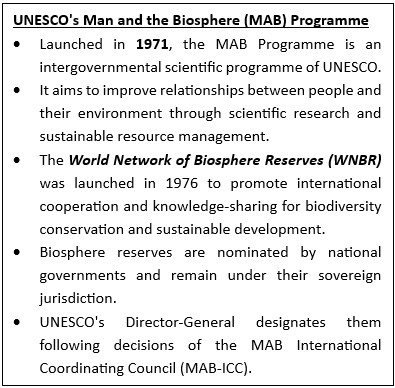
- They are internationally recognised under UNESCO’s Man and the Biosphere (MAB) Programme.
- They function as living laboratories for demonstrating sustainable development and balancing human activities with nature conservation.
- Their designation does not change the legal status or ownership of land, forests and natural resources.
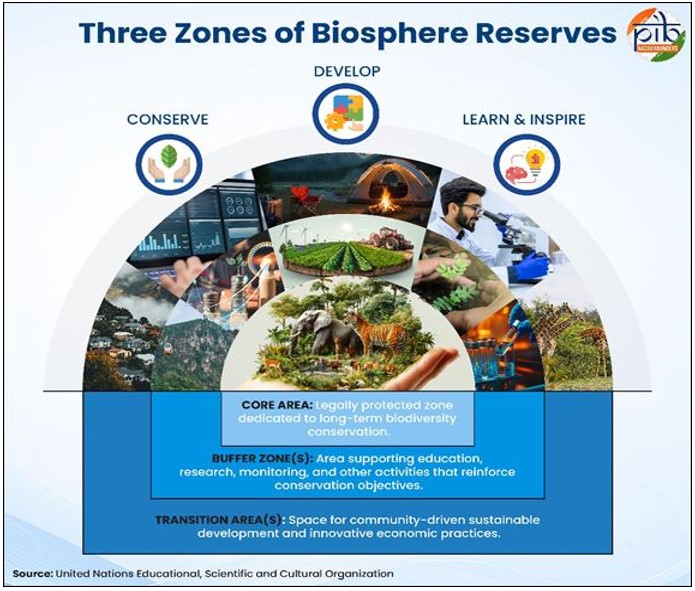
- Three Main Functions:
- Conservation: Protect biodiversity, genetic resources, ecosystems, landscapes and cultural diversity.
- Sustainable Development: Promote economic activities that respect ecological limits and local cultural values.
- Scientific Support: Promote research, environmental monitoring, education, training and knowledge exchange.
- Difference from Other Protected Areas: National Parks and Wildlife Sanctuaries primarily protect wildlife and habitats, whereas biosphere reserves integrate biodiversity conservation with sustainable development and community participation.
India’s Biosphere Reserves
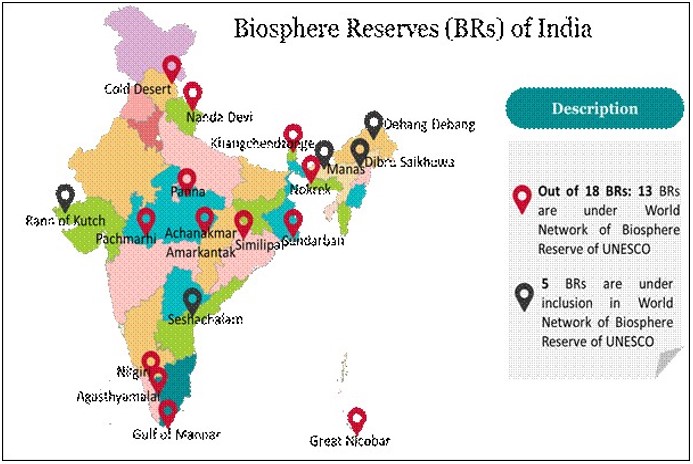
- India has 18 nationally notified Biosphere Reserves, of which 13 are included in UNESCO’s WNBR.
- India has the highest number of UNESCO-recognised biosphere reserves in South Asia.
- India accounts for approximately 7–8% of recorded global species while occupying only 2.4% of Earth’s land area.