SYLLABUS
GS-2: Important International institutions, agencies and fora- their structure, mandate.
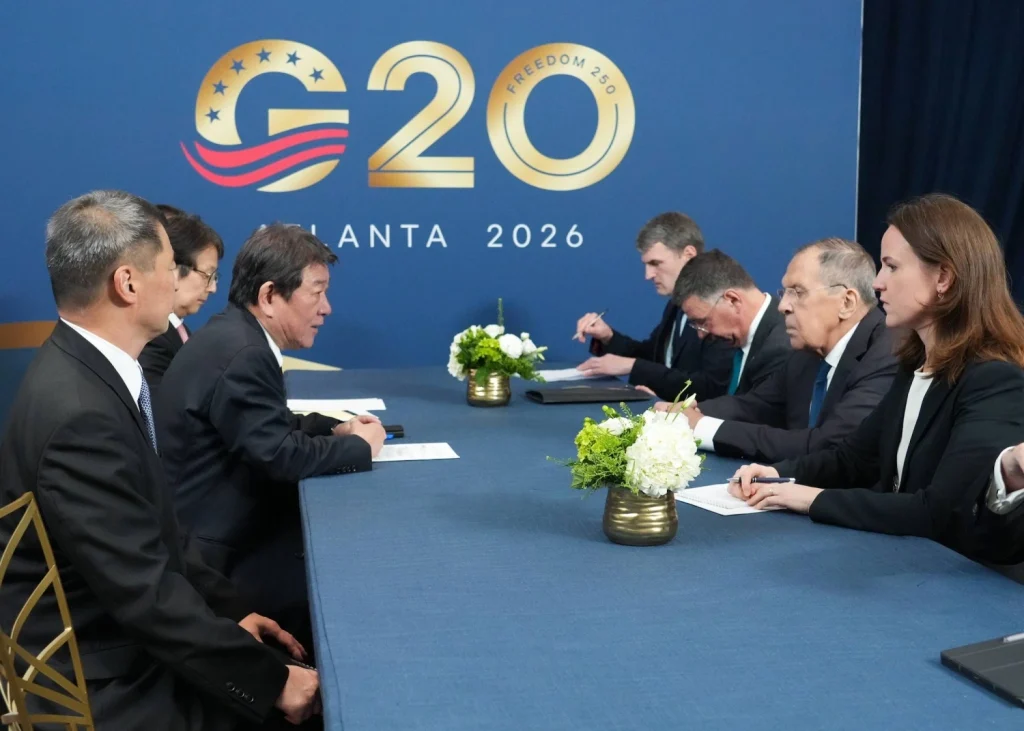
Context: The G20 Foreign Ministers’ Meeting, held in Atlanta, the United States, on October 30–31, 2026, concluded without a joint communique due to geopolitical divisions, particularly over the Russia–Ukraine conflict.
More on the News
- The meeting concluded with a Chairman’s Statement instead of a joint communique due to geopolitical differences among members.
- Foreign Ministers’ Meeting: It is a ministerial-level meeting of G20 members that provides a platform for foreign ministers to discuss international political, economic and security issues and strengthen multilateral cooperation.
Major Key Outcomes
- Energy Security: Emphasised affordable, accessible and reliable energy supplies, alongside investment in future energy technologies, including civil nuclear energy, small modular reactors and micro-reactors.
- Supply Chain Resilience: Focused on strengthening supply chains for critical minerals, food and fertilisers through greater transparency, investment, diversification, processing, refining and recycling.
- Raised concerns over arbitrary export restrictions, excessive subsidies and non-market policies disrupting global supply chains.
- Freedom of Navigation: Emphasised safe and uninterrupted navigation through strategic waterways, including the Strait of Hormuz, Bab el-Mandeb, Red Sea, Black Sea and South China Sea, to protect global trade and energy flows.
- Preventing Food Weaponisation: Highlighted the need to prevent the use of food and agricultural trade as instruments of geopolitical and economic coercion.
- Geopolitical Differences: Members failed to reach consensus on the Russia–Ukraine conflict, the US–Israeli war against Iran, US tariffs and China’s actions in the South China Sea.
- The traditional group photograph was cancelled following European objections to the participation of Russian Foreign Minister Sergey Lavrov.
- The US also faced criticism for not inviting South Africa.
- Other Developments: The US highlighted the mobilisation of $2 billion to combat the Ebola outbreak.
- The next G20 Leaders’ Summit will be held in Miami, the US, in December 2026, followed by the UK’s G20 presidency in 2027.
- India’s Position: EAM S. Jaishankar highlighted concerns over rising energy costs and supply disruptions, emphasising reliable LPG supplies for clean cooking and India’s National Critical Minerals Mission.
- He proposed a G20 Critical Minerals Circularity Initiative and called for cooperation in energy storage, small modular reactors, green hydrogen and biofuels.
Quad Meeting on the Sidelines
- Foreign ministers of India, the US, Japan and Australia discussed resilient supply chains, maritime cooperation, trusted infrastructure and critical minerals.
- They welcomed the US commitment of $10 million for critical-mineral recovery infrastructure in India and ASEAN countries and announced the first-ever Quad Business Leaders’ Forum.
About the G20
- The G20 was established in 1999 following the Asian Financial Crisis (1997–98), initially as a forum for Finance Ministers and Central Bank Governors.
- Its first Leaders’ Summit was held in 2008.
- Composition: It comprises 19 countries, the European Union (EU) and the African Union (AU), representing major advanced and emerging economies.
- Representation: Its members account for approximately 85% of global GDP, 75% of international trade and around two-thirds of the world’s population.
- Organisational Structure: The G20 has two main tracks:
- Finance Track: Focuses on global economic and financial issues.
- Sherpa Track: Focuses on broader policy areas, including development, trade, energy, climate change and health.
- Presidency: The presidency rotates annually among members.
- The United States holds the presidency in 2026, followed by the United Kingdom in 2027.
- Secretariat: The G20 has no permanent secretariat or headquarters.
- Its presidency is supported by the Troika, comprising the previous, current and incoming presidencies.
G20 and India
- India is a founding member of the G20 and hosted the 18th G20 Leaders’ Summit in New Delhi in September 2023, under the theme Vasudhaiva Kutumbakam – One Earth, One Family, One Future.
- During its presidency, India facilitated the inclusion of the African Union as a permanent G20 member, strengthening the representation of developing countries.
- India advocates Global South interests, global governance reforms, food and energy security, inclusive growth and LiFE (Lifestyle for Environment).