SYLLABUS:
GS-3: Conservation, Environmental Pollution and Degradation, Environmental Impact Assessment.
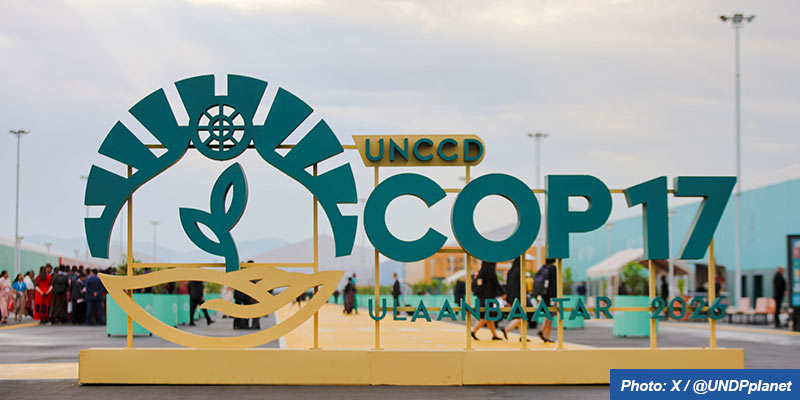
Context: The 17th Conference of the Parties to the Convention on Biological Diversity (CBD COP17) concluded in Yerevan, Armenia, on October 31, 2026, adopting nearly 50 decisions and the Yerevan Pathway to accelerate implementation of the Kunming-Montreal Global Biodiversity Framework (KMGBF) by 2030.
Key Outcomes of COP17
- Yerevan Pathway: It provides a roadmap to accelerate KMGBF implementation until 2030.
- The first global review found that the world is off track on 22 of the 23 biodiversity targets, highlighting the need for harmful subsidy reform, better alignment of national budgets with conservation and increased support for developing countries.
- Biodiversity Finance: Countries reaffirmed the target of mobilising at least USD 200 billion annually by 2030, including USD 30 billion annually in international finance from developed to developing countries.
- Developed countries failed to meet their earlier commitment of USD 20 billion annually by 2025; COP17 announced nearly USD 2 billion in new biodiversity funding.
- Indigenous Communities: COP17 adopted the Sevan Guidelines, operational rules for the permanent subsidiary body on Article 8(j), established at COP16.
- It provides Indigenous Peoples and local communities a formal platform to contribute their knowledge and advice to global biodiversity policy.
- Digital Sequence Information (DSI): DSI refers to digital genetic information, such as DNA and RNA sequences, derived from biological resources.
- COP17 reaffirmed company contribution rates of 1% of profits or 0.1% of revenue to the Cali Fund, but the fund remained largely empty, with pledges of only USD 10,565.
- Biodiversity Monitoring: An ad hoc technical expert group was established to operationalise the biodiversity monitoring framework and support countries in preparing their eighth national reports.
- Additional optional indicators were also recognised.
- Other Decisions: Countries adopted decisions on protected areas, forest biodiversity, invasive alien species, sustainable wildlife management, synthetic biology and biosafety.
- They also agreed on voluntary guidance for nature-based solutions to climate change.
- Next Conference: The next COP18 will be held in Ecuador in 2028.
- India’s Stand at COP17: India’s National Statement emphasised aligning KMGBF implementation with national priorities, circumstances and legislation.
- It called for predictable finance, capacity-building and technology transfer from developed countries.
- India supported DSI benefit-sharing through the multilateral mechanism, including the Cali Fund.
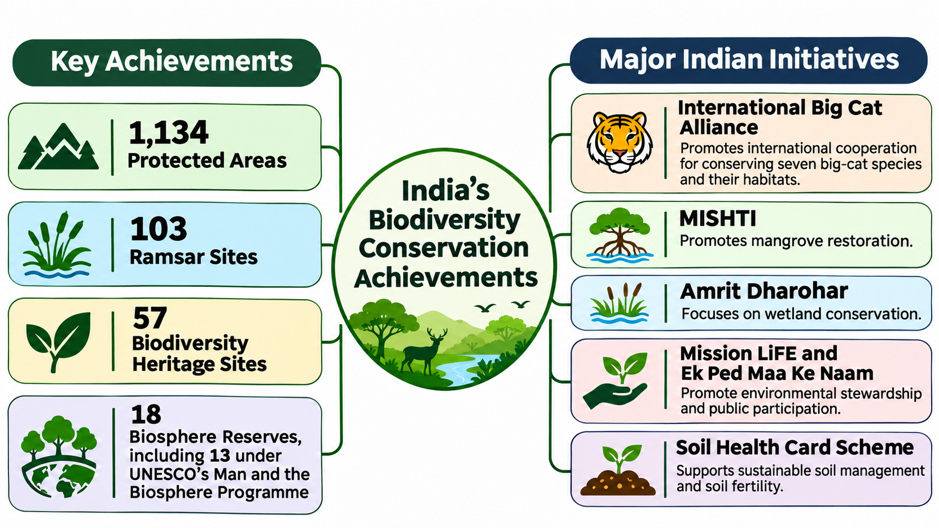
- Its updated National Biodiversity Strategy and Action Plan sets 23 National Biodiversity Targets and 142 indicators.
About the Convention on Biological Diversity (CBD)
- The CBD is a legally binding international treaty adopted at the United Nations Conference on Environment and Development (Earth Summit), Rio de Janeiro, Brazil, in 1992.
- It entered into force on December 29, 1993.
- It has 196 Parties: The United States has signed but not ratified the Convention.
- Its Secretariat is located in Montreal, Canada.
- Three Main Objectives: The CBD has three principal objectives:
- Conservation of Biological Diversity: Protection of ecosystems, species and genetic resources.
- Sustainable Use of Biodiversity: Ensuring the sustainable use of biological resources.
- Fair and Equitable Sharing of Benefits: Ensuring equitable sharing of benefits arising from the utilisation of genetic resources.
- Institutional Structure:
- Conference of the Parties (COP): The governing body of the CBD. It meets every two years to review implementation, set priorities and adopt decisions.
- Secretariat of the CBD: Based in Montreal, Canada. It supports governments in implementing the Convention, organises meetings and coordinates international cooperation.
- Major Agreements under the CBD:
- Cartagena Protocol on Biosafety (2000; entered into force in 2003) Safe handling, transport and use of living modified organisms (LMOs).
- Nagoya Protocol (2010; entered into force in 2014) Access to genetic resources and fair and equitable benefit-sharing.
- Kunming-Montreal Global Biodiversity Framework (2022)
About the Kunming-Montreal Global Biodiversity Framework (KMGBF), 2022
- Adopted at CBD COP15 in Montreal, Canada, in December 2022.
- It provides a global roadmap to halt and reverse biodiversity loss by 2030 and achieve a world living in harmony with nature by 2050.
- It contains 4 long-term goals for 2050 and 23 targets for 2030.
- Important targets include:
- Target 2: Restore at least 30% of degraded terrestrial, inland water, coastal and marine ecosystems by 2030.
- Target 3 (30×30 Target): Conserve at least 30% of terrestrial and inland water areas and 30% of marine and coastal areas by 2030. –
- Target 18: Identify and eliminate, phase out or reform harmful incentives, including subsidies, and reduce them by at least USD 500 billion annually by 2030.
- Target 19: Mobilise at least USD 200 billion annually from all sources for biodiversity by 2030.