
SYLLABUS
GS-2: Functions and responsibilities of the Union and the States, issues and challenges pertaining to the federal structure, devolution of powers and finances up to local levels and challenges therein.
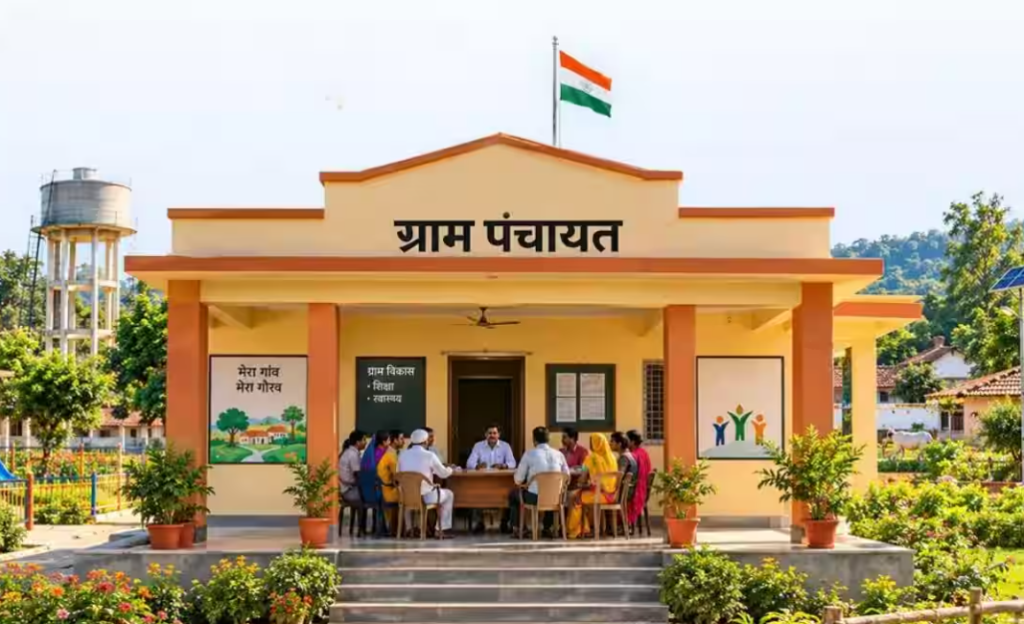
Context: The Union Cabinet has approved the Pradhan Mantri Viksit Gram Swaraj Yojana (PM VGSY), a Centrally Sponsored Scheme to transform Gram Panchayats into empowered, digitally enabled, accountable and self-reliant institutions, aligned with the vision of Viksit Bharat.
About the Pradhan Mantri Viksit Gram Swaraj Yojana
• Implementation period: 2026–27 to 2030–31, coinciding with the Sixteenth Finance Commission period.
• Total outlay: ₹7,395.55 crore, comprising a Central share of ₹4,869.48 crore and a State share of ₹2,526.07 crore.
• Coverage: All States and Union Territories, including traditional rural local government institutions in non-Part IX areas where Panchayats do not exist.
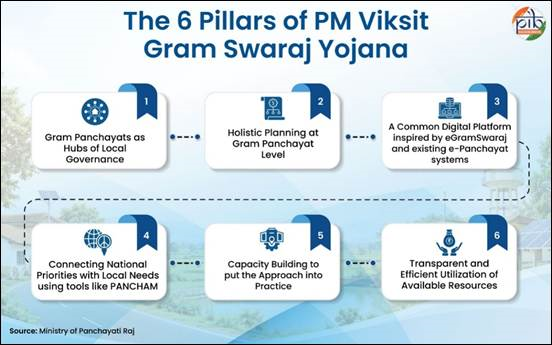
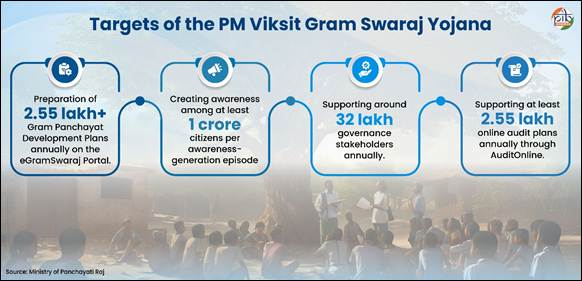
• Direct beneficiaries: Around 32 lakh elected representatives, Panchayat functionaries and other stakeholders across more than 2.55 lakh Panchayats and Traditional Local Bodies.
• Core objective: Strengthen grassroots governance through integrated planning, digital transformation, capacity building, citizen participation and transparent financial management.
Key Features of the Scheme
• The scheme focuses on six pillars of grassroots transformation:
Digital Platforms
• eGramSwaraj: Launched in 2020, this application supports Panchayat planning, budgeting, accounting, monitoring, asset management and online payments, with integration across government digital platforms.
• PANCHAM: A WhatsApp-based platform launched in January 2026 that provides scheme updates, training content, surveys and Panchayat service information.
• AuditOnline: Launched in 2020, it facilitates online audits of Panchayati Raj accounts according to applicable State audit laws and rules.
Implementation Mechanism
• State Governments and Union Territory Administrations will submit Annual Action Plans for appraisal and approval by the designated Central Empowered Committee, with existing institutions and digital systems supporting implementation.
• No permanent posts will be created, although need-based contractual personnel may be engaged at State, District and Block levels.
Need and Significance of the Scheme
• Strengthening Grassroots Democracy: Empowers Gram Panchayats to prepare participatory development plans and respond to local priorities.
• Better Utilisation of Funds: Builds Panchayats’ capacity to utilise the approximately ₹4.35 lakh crore in Rural Local Body grants recommended by the Sixteenth Finance Commission for 2026–27 to 2030–31.
• Improved Coordination: Aligns Central and State departmental interventions to identify development gaps and reduce fragmentation.
• Digital and Citizen-Centric Governance: Improves access to information, government scheme awareness and community participation.
• Transparency and Self-Reliance: Strengthens auditing, public disclosure and OSR mobilisation for accountable financial management.
• Inclusive Rural Development: Connects national initiatives and available resources with village aspirations to improve public services and advance Viksit Bharat.