SYLLABUS
GS-2: Bilateral, Regional and Global Groupings and Agreements involving India and/or affecting India’s Interests.
GS-3: Indian Economy and Issues Relating to Planning, Mobilization of Resources, Growth, Development, and Employment.
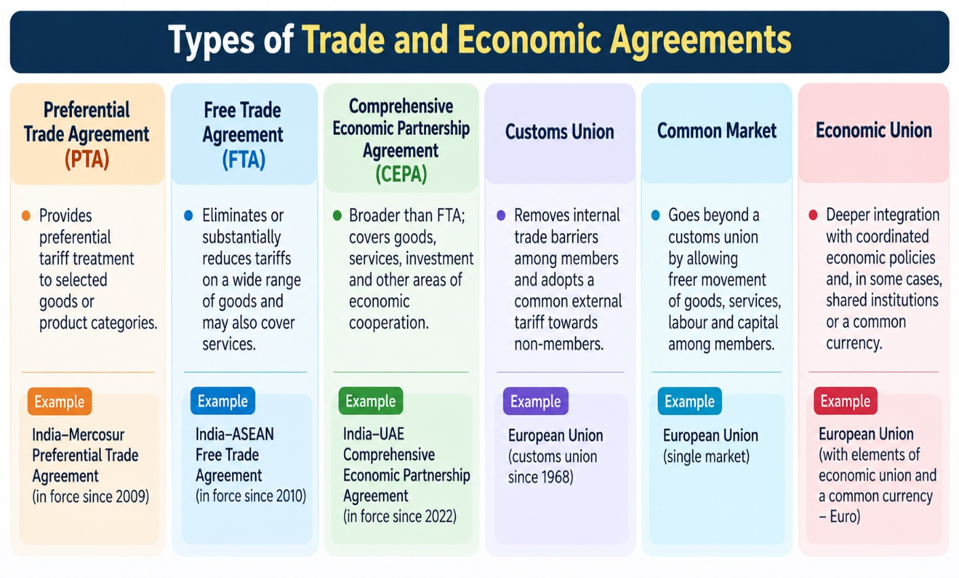
Context: India and Mexico recently signed the Terms of Reference (ToR), formally launching negotiations for a Preferential Trade Agreement (PTA) to expand bilateral trade, investment and economic cooperation.
Key Highlights of the Proposed PTA
- Negotiating framework: The ToR establishes the scope, modalities and roadmap for negotiations.
- Key areas: Market access for goods, rules of origin, customs procedures and trade facilitation, dispute settlement, sanitary and phytosanitary (SPS) measures, technical barriers to trade (TBT) and trade remedies.
- Potential sectors: Automobiles, chemicals, electronics, pharmaceuticals, agri-food, energy, critical minerals, medical devices and advanced manufacturing.
- Background: The initiative follows the understanding reached between Prime Minister Narendra Modi and Mexican President Claudia Sheinbaum at the G7 Summit in Canada in June 2025 to deepen bilateral ties.
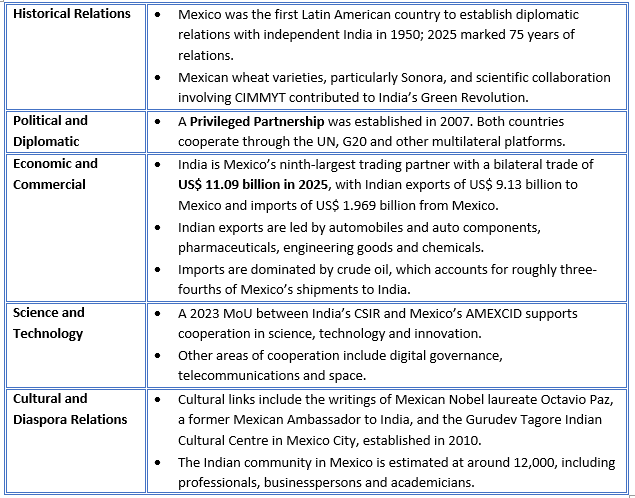
India–Mexico Bilateral Relations
Strategic Significance of India–Mexico Relations
- Export diversification: A PTA could improve market access for Indian goods and help exporters diversify markets amid shifting global trade patterns. Automobiles, pharmaceuticals, engineering goods and chemicals are important areas of opportunity.
- Near-shoring and supply chains: Mexico’s integration into North American value chains and its links with Latin American markets make it a potential manufacturing and investment base for Indian firms. Any preferential access to other markets would, however, depend on the applicable trade rules.
- Balanced economic engagement: The agreement could create opportunities for both Indian exporters and Mexican products in India, while encouraging greater diversification beyond the current concentration of Mexico’s exports to India in crude oil.
- Technology and development cooperation: The legacy of agricultural research associated with the Green Revolution and the CSIR–AMEXCID framework provides a foundation for deeper cooperation in science, technology and innovation.
Challenges and the Way Ahead
- Trade concentration: Indian exports are concentrated in a few major product categories, while crude oil accounts for a large share of Mexico’s shipments to India. Broader product diversification could make bilateral trade more resilient.
- Tariff and regulatory barriers: Negotiations must address market access, rules of origin, customs procedures, technical standards and sanitary and phytosanitary requirements to make trade easier and more predictable.
- Domestic sensitivities: Both sides will need to balance improved market access with the interests of sensitive domestic industries. Appropriate rules of origin and trade remedies can help address concerns about circumvention and injurious import surges.
- Effective implementation: Clear commitments, regular negotiations and business-to-business engagement will be essential to translate the proposed PTA into tangible gains for exporters and investors.