SYLLABUS
GS-3: Science and Technology- developments and their applications and effects in everyday life; Awareness in the fields of nano-technology, bio-technology.
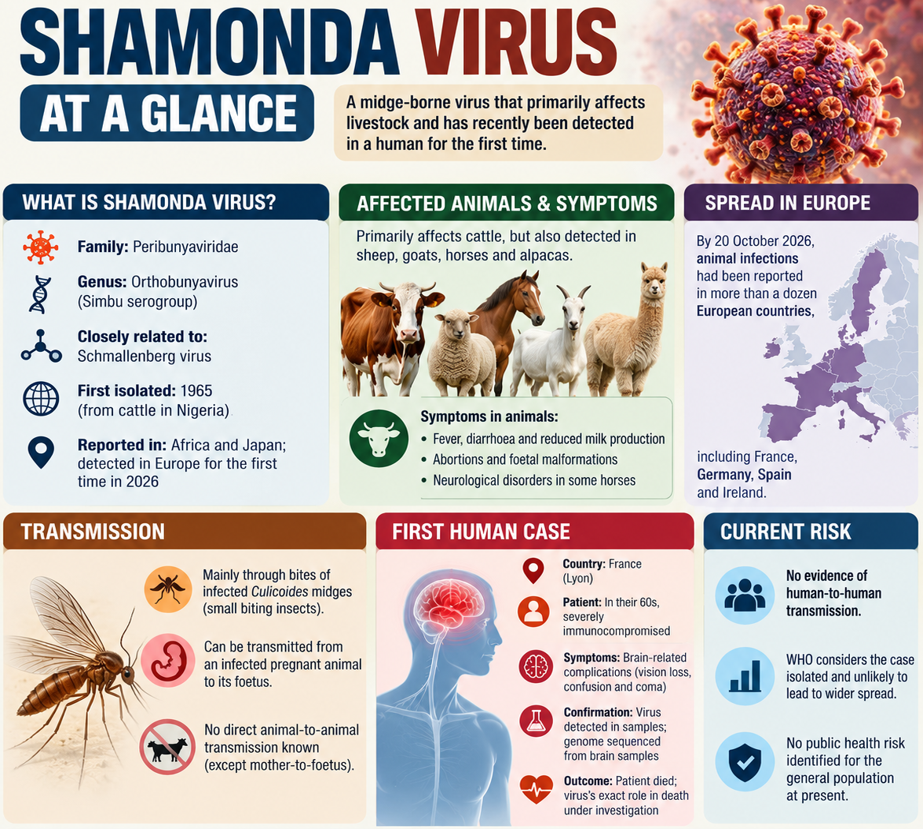
Context: France reported the first documented human infection with Shamonda virus in October 2026 in a severely immunocompromised patient who subsequently died, prompting investigations into the virus’s potential to infect humans.
Understanding Shamonda Virus
- Nature and Classification: Shamonda virus (SHAV) belongs to the Peribunyaviridae family, Orthobunyavirus genus and Simbu serogroup. It is closely related to Schmallenberg virus.
- Origin and Distribution: First isolated from cattle in Nigeria in 1965, it has been reported in animals in parts of Africa and Japan. It was detected in European livestock for the first time in 2026.
- Spread in Europe: By 20 October 2026, animal infections had been reported in more than a dozen European countries, including France, Germany, Spain and Ireland.
- Animal Hosts: The virus primarily affects cattle, but has also been detected in sheep, goats, horses and alpacas.
- Symptoms in Animals: Infected livestock may develop fever, diarrhoea and reduced milk production. Serious complications include abortions and foetal malformations; neurological disorders have also been reported in some horses.
Transmission and the First Human Case
- Transmission: The virus is thought to spread among animals through bites from infected Culicoides midges. The precise vector species involved remains under investigation.
- Mother-to-Foetus Transmission: The virus is not known to spread directly between animals, except through transmission from an infected pregnant animal to its foetus.
- The French Case: A severely immunocompromised patient receiving treatment for a serious illness at a hospital in Lyon developed brain-related complications and subsequently died. Laboratory investigations confirmed the infection.
- Suspected Route: Authorities consider a bite from an infected midge the leading hypothesis, given the virus’s circulation among animals in eastern France. Other possible sources are still being investigated.
Public-Health Significance and Current Risk
- First Documented Human Infection: The case establishes that Shamonda virus can infect a human, but its clinical effects in humans remain poorly understood.
- Human-to-Human Transmission: No evidence of such transmission has been identified. A single case does not establish that the virus can spread efficiently between people.
- Current Risk Assessment: WHO considers the case isolated and unlikely to lead to wider spread based on current information. French authorities have not identified a health risk to the general population.
- Surveillance Gap: Shamonda virus is not listed under WOAH’s disease-specific reporting obligations or the EU Animal Health Law framework for disease-specific mandatory surveillance. Available data may therefore not fully reflect its spread among animals.
Treatment, Prevention and Surveillance
- Treatment and Vaccines: WHO reports that no treatments or vaccines for Shamonda virus are currently available. The outcome of one human case does not establish the infection’s fatality risk in humans.
- Vector Exposure: Reducing exposure to biting midges and following veterinary advice can help limit vector contact in affected animal settings. The precise transmission pathways remain under study.
- Animal Surveillance: Monitoring livestock for fever, reduced milk production, abortions and foetal abnormalities can help identify suspected infections; laboratory testing is needed for confirmation.
- One Health Approach: Coordination among human-health, veterinary and environmental authorities is essential to investigate cross-species infections and strengthen early detection.