
India–New Zealand Sign MoC on Electronic Origin Data Exchange
Context: India and New Zealand signed a Memorandum of Cooperation (MoC) on electronic origin-data exchange on 19 October 2026 to facilitate bilateral trade under their Free Trade Agreement (FTA).
More on the News
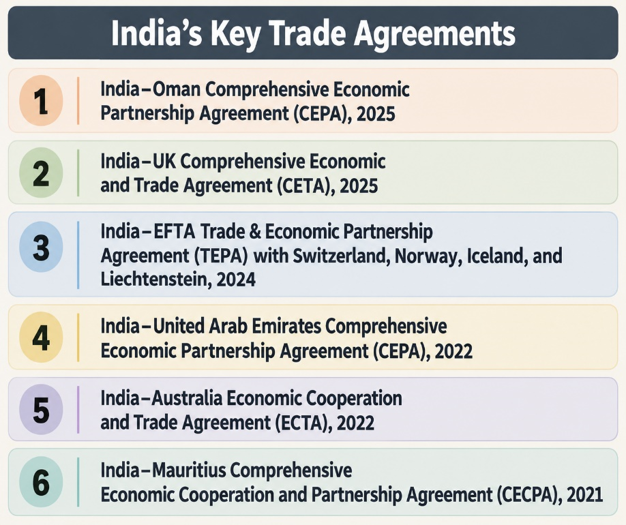
- The MoC was signed by Central Board of Indirect Taxes and Customs (CBIC) and New Zealand Customs Service Comptroller and Chief Executive Christine Stevenson.
- It aims to strengthen customs cooperation, improve the exchange and verification of origin-related information, reduce information gaps and facilitate access to preferential tariff benefits under the FTA.
- The arrangement supports interim verification processes while both countries continue developing a future electronic exchange mechanism. It does not create new requirements for exporters or importers.
About the India–New Zealand Free Trade Agreement (FTA)
- The FTA was signed on 27 April 2026 and came into force on 20 October 2026.
- Market Access: New Zealand provides duty-free access across 100% of tariff lines covering Indian exports, benefiting textiles, leather, footwear, engineering goods, pharmaceuticals and processed foods.
- India’s Tariff Concessions: India offers concessions on 70.03% of its tariff lines, covering approximately 95% of New Zealand’s current exports to India, while excluding sensitive products such as dairy, sugar and edible oils.
- Investment Commitment: New Zealand has committed to facilitating USD 20 billion in investment into India.
- Trade Target: Both countries aim to double bilateral trade in goods and services to NZ$7 billion (approximately ₹35,000 crore) by 2030.
- Rules of Origin: Preferential tariffs apply only to eligible goods satisfying the FTA’s rules of origin and applicable documentation requirements.
Exercise KONKAN-26 Concludes off Plymouth, UK
Context: The India–UK bilateral maritime exercise KONKAN-26 concluded off Plymouth, United Kingdom, on 15 October 2026.
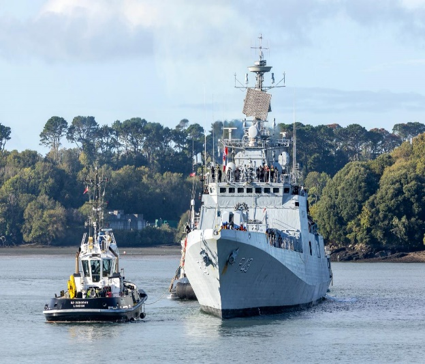
About Exercise KONKAN-26
- Duration: 8–15 October 2026.
- Participating Ships: INS Trishul (Indian Navy stealth frigate) and HMS Sutherland (Royal Navy Duke-class anti-submarine warfare frigate).
- Conducted By: Royal Navy’s Fleet Operational Standards and Training (FOST).
- Sea Phase: 12–15 October 2026, featuring tactical exercises, communication procedures, anti-surface asymmetric warfare, anti-submarine warfare and weapon firings.
Singapore–India Maritime Bilateral Exercise (SIMBEX-2026)
Context: The 33rd edition of SIMBEX-2026 commenced in Visakhapatnam on 21 October 2026 to strengthen maritime cooperation between India and Singapore.
About SIMBEX-2026
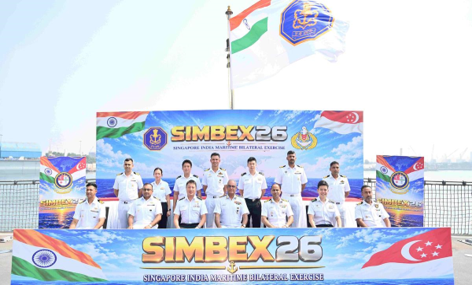
- Participants: Indian Navy and Republic of Singapore Navy (RSN); RSS Supreme represented the RSN.
- Origin: Established in 1994 as Exercise Lion King.
- Duration: 21–26 October 2026.
- Opening Ceremony: Held onboard INS Nilgiri and INS Kamorta on 21 October.
- Harbour Phase (21–23 October): Professional interactions, Subject Matter Expert Exchanges (SMEEs), cross-deck visits and planning conferences.
- Sea Phase (24–26 October): Conducted in the Bay of Bengal, featuring anti-submarine, anti-surface and anti-air warfare drills, seamanship evolutions and tactical manoeuvres.
IBSAMAR IX 2026 Concludes
Context: The ninth edition of the India-Brazil-South Africa Maritime Exercise (IBSAMAR IX 2026) concluded on 20 October 2026 at Simon’s Town, South Africa, strengthening trilateral naval cooperation and maritime interoperability.
About the India-Brazil-South Africa Maritime Exercise (IBSAMAR I X 2026)
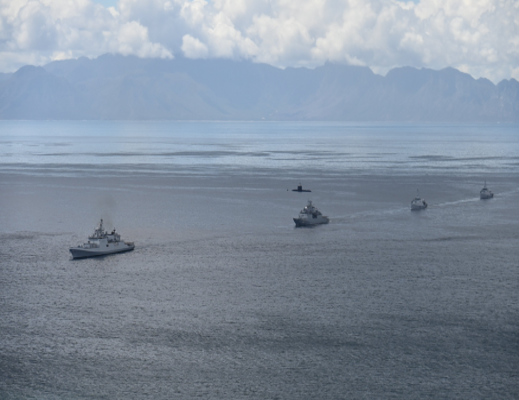
- Participating Navies: Indian Navy, Brazilian Navy and South African Navy.
- Duration: Ten days of joint activities conducted during the harbour and sea phases.
- Key Activities: Professional exchanges, operational interactions and joint maritime training to improve interoperability and mutual understanding.
- Key Objective: To strengthen operational cooperation, build confidence among naval personnel and enhance the ability of the three navies to operate together.
- Key Highlight: The Commanding Officer of INS Tarkash emphasised that IBSAMAR translates longstanding diplomatic relations into meaningful naval cooperation through joint training, professional exchanges and mutual learning.