
SYLLABUS
GS-3: Major crops-cropping patterns in various parts of the country, transport and marketing of agricultural produce and issues and related constraints; e-technology in the aid of farmers.
Context: India has moved towards farm-level implementation of its agricultural carbon market, with 2,550 farmers in Punjab and Haryana receiving digital payments for adopting regenerative farming practices.
About India’s First Soil-Carbon Paymentss
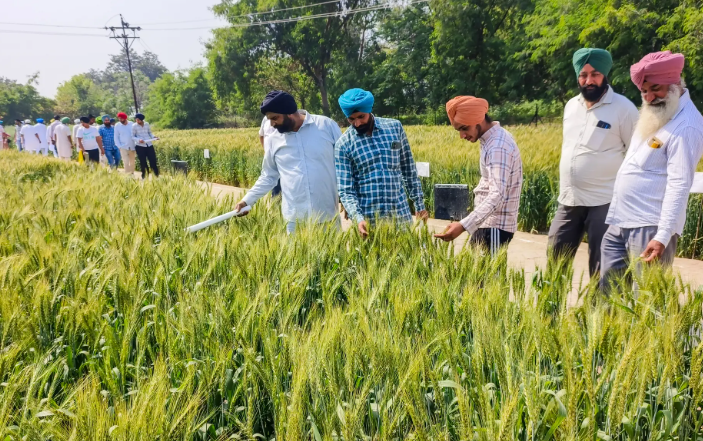
- The first soil-carbon payments were released at Punjab Agricultural University (PAU), Ludhiana, under the ‘Aadi’ farmer carbon programme.
- Implementation: Department of Agricultural Research and Education (DARE) and Director General, Indian Council of Agricultural Research (ICAR), initiated Direct Benefit Transfer (DBT) payments to participating farmers.
- Programme: Aadi was launched by Grow Indigo in 2019 with technical guidance from ICAR.
- Participating Farmers: A total of 2,550 smallholder farmers from Punjab and Haryana received digital payments.
- Payment Amount: Farmers received approximately ₹3,000–₹15,000 based on their share of carbon credits generated from their fields.
- Total Payment: More than ₹2.9 crore was distributed to participating farmers.
Key Features
- Regenerative Farming Practices: Between 2019 and 2022, participating farmers adopted practices such as Direct Seeded Rice (DSR), reduced tillage and improved crop-residue management.
- Scientific Measurement and Verification: Reductions in greenhouse-gas emissions and increases in soil carbon were measured and independently verified before carbon credits were issued.
- Carbon Credit Generation: The Aadi programme covers more than two million acres and over 100,000 farmers across seven states. It has issued agricultural carbon credits under the Verra VM0042 methodology.
- Advance Payment Mechanism: Grow Indigo released payments from its own funds before the carbon credits were fully sold, allowing farmers to receive payments without waiting for the sale proceeds. Farmers could choose between an assured upfront payment and 75% of the net carbon revenue after the credits were sold.
- Scientific Support: ICAR institutions, including the Indian Agricultural Research Institute (IARI), contributed to greenhouse-gas accounting, crop-simulation modelling, soil-sampling protocols, field-team training and remote-sensing approaches.
Significance
- Additional Income for Farmers: Carbon payments provide an economic incentive for adopting sustainable agricultural practices and create an additional income opportunity for smallholder farmers.
- Water Conservation: Direct Seeded Rice can reduce irrigation requirements compared with conventional rice transplanting. The programme estimates that practices adopted during 2019–2022 helped save 45 billion litres of water.
- Reduction in Air Pollution: Improved crop-residue management can reduce stubble burning. The programme estimates that more than two lakh tonnes of crop residue were kept out of fires, avoiding approximately 1,000 tonnes of PM2.5 emissions.
- Promotion of Climate-Resilient Agriculture: Practices such as minimum soil disturbance, residue retention and improved soil management can contribute to soil health, resource conservation and climate resilience.
- Linking Environmental Outcomes with Economic Incentives: The initiative demonstrates how scientifically measured improvements in soil carbon can be converted into carbon credits and linked to direct financial benefits for farmers, supporting the wider adoption of regenerative agriculture in India.