
SYLLABUS
GS-2: Functions and responsibilities of the Union and the States, issues and challenges pertaining to the federal structure, devolution of powers and finances up to local levels and challenges therein.
Context: The Centre has proposed a new constitutional provision, Article 371(K), to provide additional constitutional safeguards to Ladakh.
More on the News:
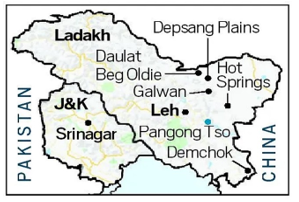
- Stakeholder Discussions: The proposal emerged from discussions between the Ministry of Home Affairs, the Leh Apex Body (LAB) and the Kargil Democratic Alliance (KDA).
- Sui Generis Model: It envisages a sui generis governance model designed specifically for Ladakh, while keeping the demand for full statehood as a long-term aspiration.
- Legislative Powers: The proposed arrangement would establish a directly elected governing body with legislative powers over land, culture and language, forests, environment and natural resources.
- In-Principle Stage: The proposal remains at the in-principle stage, with no draft prepared yet and key questions regarding executive, financial, planning, police and law-and-order powers still unresolved
Why Has Ladakh Been Demanding Constitutional Safeguards?
- Post-2019 Changes: Ladakh’s demand for greater political and constitutional protection gained momentum after the Jammu and Kashmir Reorganisation in August 2019, when it became a separate Union Territory without a legislature.
- Political Representation: Before 2019, Ladakh had four MLAs in the erstwhile Jammu and Kashmir Legislative Assembly. After becoming a Union Territory, its administration came to be largely managed by bureaucrats, raising concerns over political representation and democratic participation.
- Land, Employment and Identity: Concerns over land, employment, demography and cultural identity were further strengthened by changes in domicile rules in Jammu and Kashmir.
- Ladakh has two Hill Councils — Leh and Kargil, but they are not covered by the Sixth Schedule, and their powers remain limited.
- Ladakh representatives reiterated their demands for statehood, Sixth Schedule protection, and a separate Ladakh Administrative and Police Service.
About Sixth Schedule
- Constitutional Provision: The Sixth Schedule, provided under Article 244, establishes Autonomous District Councils (ADCs) with a degree of legislative, judicial and administrative autonomy in specified tribal areas.
- Applicability and Powers: The Sixth Schedule currently applies to tribal areas in Assam, Meghalaya, Mizoram and Tripura.
- The councils can exercise powers relating to land, forests, water, agriculture, village administration, social customs, inheritance and mining.
- Ladakh and Sixth Schedule: In September 2019, the National Commission for Scheduled Tribes recommended bringing Ladakh under the Sixth Schedule, citing its predominantly tribal population and distinct cultural heritage.
- However, no region outside the Northeast has so far been included under the Sixth Schedule.
How Would Article 371(K) Differ from the Sixth Schedule?
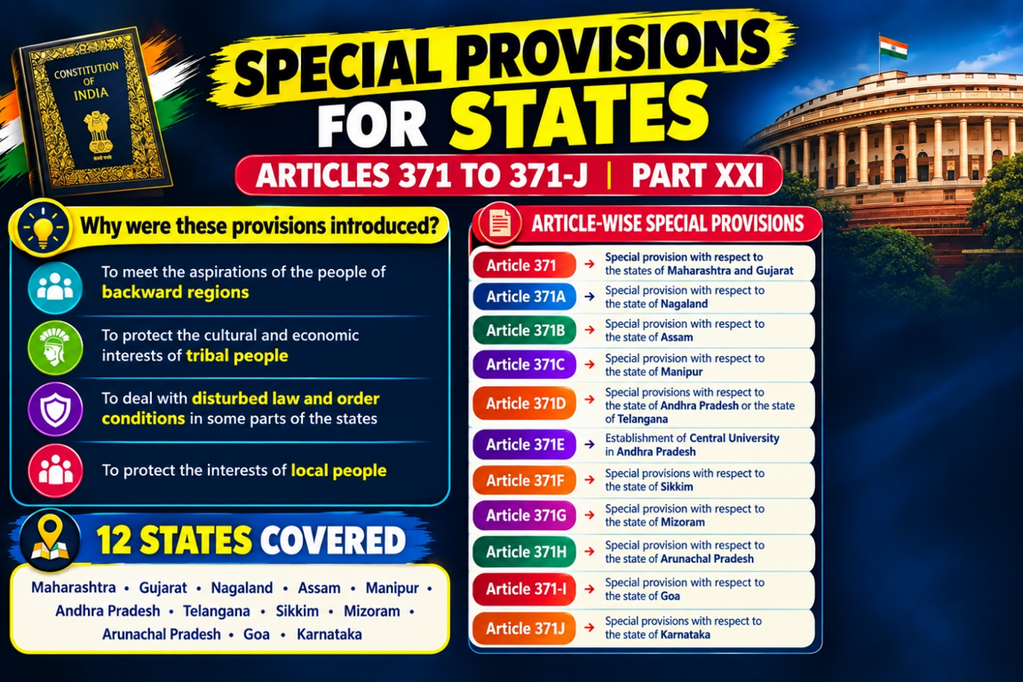
- The proposed Article 371(K) would create a separate constitutional arrangement specifically for Ladakh, rather than simply extending the Sixth Schedule to the Union Territory.
- The Sixth Schedule provides for autonomous district-level institutions with constitutionally defined powers, whereas the proposed Article 371(K) appears to envisage a directly elected governing body at the Union Territory level with legislative authority over specified subjects.
- The precise distinction, however, will depend on the wording of the draft constitutional provision.
Key Issues in the Proposed Article 371(K)
- Extent of Powers: The most important issue is the actual extent of powers that the proposed elected body would exercise.
- Unresolved Powers: The Centre and Ladakh representatives have yet to reach agreement on its executive, financial and planning powers, along with its role in police and law and order.
- Unclear Autonomy: Until a detailed draft is prepared, it remains unclear how much autonomy the proposed body would actually enjoy.
- Parliamentary Amendment: Introducing Article 371(K) would require a constitutional amendment by Parliament, as the executive cannot enact it independently.
Significance for Ladakh
- The proposed Article 371(K) could provide Ladakh with a tailor-made constitutional framework for protecting its land, culture, environment, natural resources and local interests, while also strengthening democratic representation.
- Its significance lies particularly in the fact that it would potentially create a special constitutional arrangement for a Union Territory.
- Thus, instead of extending the Sixth Schedule to Ladakh, the proposal seeks to establish a separate constitutional model designed specifically for the region.