
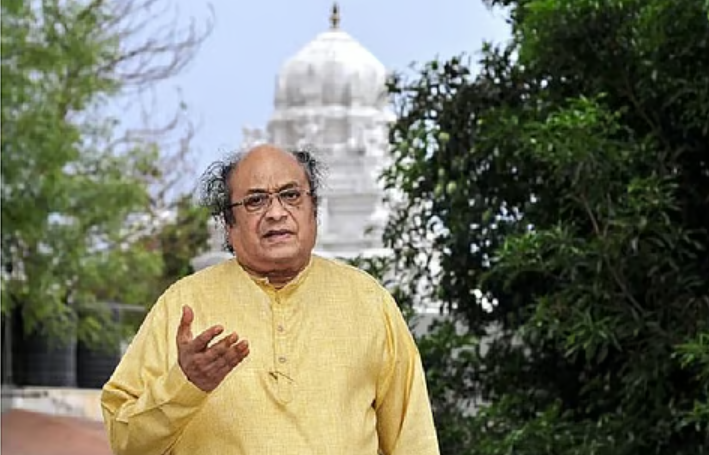
Context: Senior Hindi–Bhojpuri poet and lyricist Satyanarayan, the writer of Bihar’s State song “Mere Bharat ke Kanthhaar”, passed away at his Patna residence on 28 August 2026. The Bihar government announced a State-honour funeral.
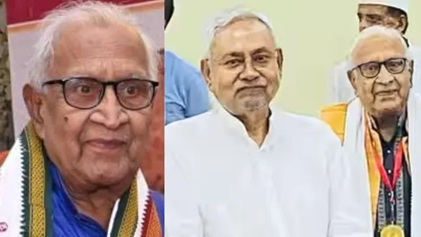
Key Contributions
- He wrote Bihar’s State song, popularly beginning: “Mere Bharat ke Kanthhaar, tujhko shat-shat vandan Bihar.”
- The song was officially adopted as Bihar’s State song in March 2012.
- Its music was composed by Pandit Hariprasad Chaurasia and Pandit Shivkumar Sharma.
- His poetry combined Bihar’s civilisational heritage, cultural pride, social consciousness and patriotic sentiment.
- He was known for his literary association with the 1974 Jayaprakash Narayan (JP) Movement, where his poems gained popular resonance.
Life and Recognition
- Satyanarayan was born on 13 September 1935 in Kaulodihari village of Bhojpur district, Bihar. He studied in Patna and continued writing poetry alongside his government service.
- He received several literary recognitions, including Bihar’s Nagarjun Award for 2020–21, and served twice as chairman of the Bihar Rajya Hindi Pragati Samiti.
Satyanarayan was remembered as an influential geetkar—a poet of lyrical verse—and a gifted anchor of poetry gatherings. His command over the work of major Hindi poets and his ability to recite, connect and conduct literary events made him a prominent figure in Bihar’s literary-cultural life.
Salmonella: More Than Typhoid
Context: Salmonella infections are a growing public-health concern in India because attention is often limited to typhoid and diarrhoea, while non-typhoidal Salmonella infections remain underdiagnosed and can cause severe bloodstream infections, especially among vulnerable groups.
Transmission and Risk
- Typhoidal Salmonella: Reservoir – humans; causes typhoid/enteric fever.
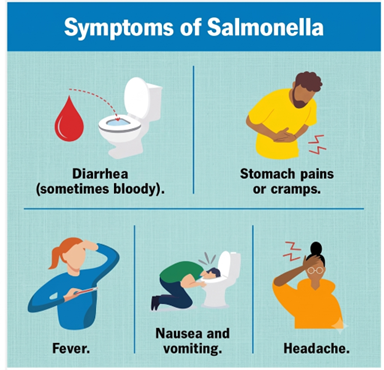
- Non-typhoidal Salmonella: Reservoir – poultry, eggs, meat, animals, contaminated water/environment; causes diarrhoea, fever, abdominal cramps and vomiting, sometimes invasive disease.
- Transmission commonly occurs through the faecal–oral route. Contamination can happen across the whole food chain—from farms, slaughterhouses and food processing to transport, storage, restaurants and household kitchens. Raw meat contaminating ready-to-eat food is a major risk; infected food handlers can also transmit the pathogen.
Major Concerns
- Hidden burden: NTS gastroenteritis is often mild and self-limiting, so cases do not reach surveillance systems or laboratories. This leads to underestimation of its public-health burden.
- Invasive infection: Young children, older adults and immunocompromised persons face a greater risk of bloodstream infection and severe illness.
- Antimicrobial resistance (AMR): Resistance in Salmonella, including reduced effectiveness of fluoroquinolones and emerging resistance to ceftriaxone, narrows treatment options. A recent Indian clinical series reported ciprofloxacin non-susceptibility in 40% of blood isolates.
- Food-system gaps: Surveillance and testing are weaker in informal food markets, making traceability and outbreak detection difficult.
Prevention and Response
A One Health strategy is essential, linking human health, animal health, food safety and environmental monitoring.
- Ensure safe water, sanitation and regular handwashing.
- Separate raw foods from cooked or ready-to-eat foods; cook poultry, meat and eggs thoroughly; refrigerate perishable food safely.
- Strengthen food-handler training, inspections, cold chains, slaughterhouse hygiene and Food Safety and Standards Authority of India enforcement.
- Expand laboratory culture and antimicrobial-susceptibility testing; the Widal test should not be used alone to diagnose typhoid.
- Avoid indiscriminate antibiotics: uncomplicated NTS illness generally requires fluids and electrolyte replacement, while antibiotics should be reserved for severe, invasive or high-risk cases.
India–U.S. Javelin Missile Deal
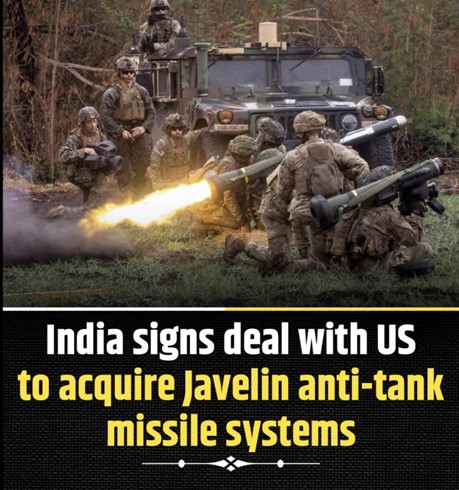
Context: India has signed a Letter of Offer and Acceptance (LOA) with the United States to procure Javelin anti-tank guided missile systems for the Indian Army through the U.S. Foreign Military Sales (FMS) route. The limited acquisition is being made under the emergency-procurement framework to strengthen critical operational capability after Operation Sindoor.
Key Facts
- Weapon: FGM-148 Javelin anti-tank guided missile.
- Type: Shoulder-fired, medium-range, fire-and-forget missile.
- Targets: Tanks, armoured vehicles and fortified positions.
- Procurement: By Indian Army through U.S. Foreign Military Sales (FMS).
- Procurement mode: Sixth tranche of emergency procurement.
- Financial ceiling: Up to ₹300 crore per equipment category.
- The Javelin uses an infrared seeker to lock on to a target before launch. Its fire-and-forget capability allows the operator to move to cover immediately after firing, improving survivability on the battlefield.
- It is designed to engage armoured targets and hardened defensive positions.
- LOA: A formal document through which the buyer accepts the offer under the U.S. FMS programme.
- FMS: A U.S. government-to-government mechanism for export of defence articles, services and training to eligible foreign partners.
- ATGM: A guided missile designed to destroy tanks, armoured vehicles or fortified targets.
Praggnanandhaa Wins Grand Chess Tour
Context: Indian Grandmaster R. Praggnanandhaa won the 2026 Grand Chess Tour Finals in St. Louis, becoming the first Indian to claim the prestigious title. He produced a remarkable comeback to defeat defending champion and World No. 2 Fabiano Caruana of the United States by 15–13 in the final.

Key Facts
- Grand Chess Tour (GCT): An elite international circuit of chess tournaments with events across classical, rapid and blitz formats.
- Classical chess: Longer time control; the most traditional competitive format.
- Rapid chess: Each player has a shorter time allotment than classical chess, usually more than 10 minutes but less than 60 minutes.
- Blitz chess: Very fast format, generally with 10 minutes or less per player.
- Fabiano Caruana: American Grandmaster and former World Championship challenger.
Significance
- This is Praggnanandhaa’s first Grand Chess Tour Finals title and one of the biggest achievements of his career.
- He received the winner’s prize of $200,000 and secured a place in the 2027 Grand Chess Tour.
- The achievement highlights his ability across classical, rapid and blitz formats—an essential feature of the Grand Chess Tour Finals.
- In the semifinal, he defeated Germany’s Vincent Keymer 19–9; Caruana had beaten Wesley So 18–12 to set up the title clash.
- The result reinforces India’s emergence as a major chess power, following the rise of a strong generation of young Indian grandmasters.